Unlocking the Business Case: Sustainable and Digital Finance to Prevent Modern Slavery and Human Trafficking | Sharon Prince

Climate Week NYC, which occurs every year in New York City during the second week of the U.N. General Assembly, brings together global leaders from business, tech, politics, academia, nonprofits and civil society, to propose bold action to address climate change. The increased risks to human health and safety from extreme weather is forcing people from their homes in search of work and more habitable environments. This migration makes them more vulnerable to forced labor and trafficking.

Grace Farms’ Design for Freedom recognizes the interrelatedness of climate change and forced labor. The built environment accounts for nearly 40% of global greenhouse gas emissions and consumes a third of global energy, according to Building Materials and the Climate: Constructing a New Future, a report by UNEP, Yale Center for Ecosystems + Architecture, and the Global Alliance for Buildings and Construction (GlobalABC).

Ethical decarbonization, a new industry-wide term that emerged from Design for Freedom’s work, acknowledges the direct and inseparable relationship between the carbon in our building materials linked to climate change and the suffering of forced labor in extracting and manufacturing building materials.

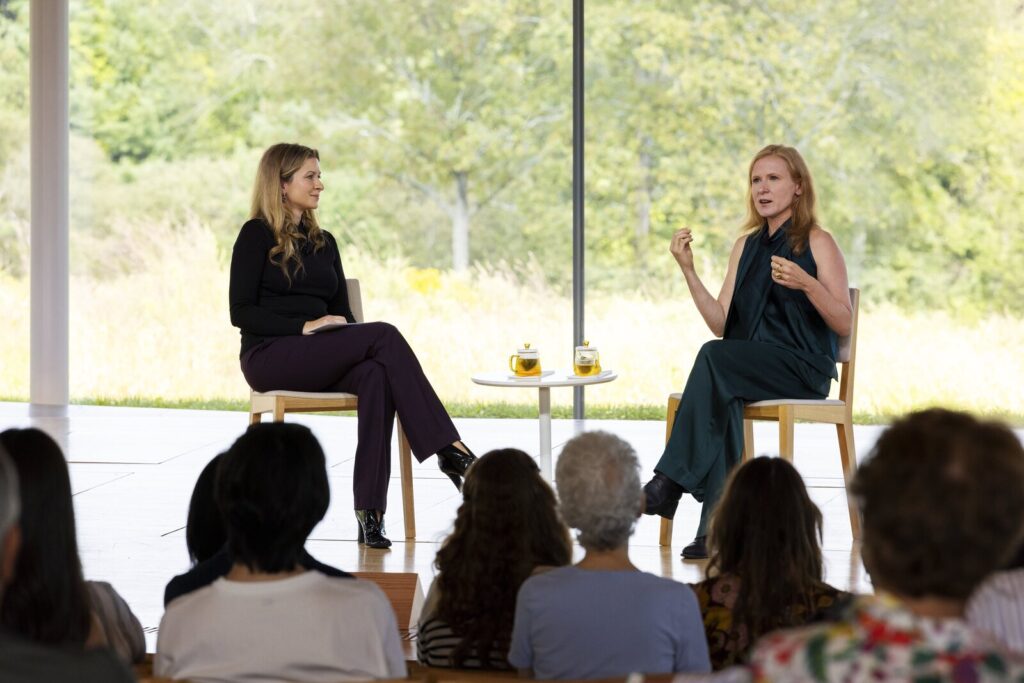
Sharon Prince, CEO and Founder of Grace Farms, will attend Climate Week’s important discussions, especially as it relates to the built environment and the finance sector and their roles in climate change. On July 15, Prince was part of a prestigious panel that addressed the crucial role the financial industry can play in creating a more ethical, sustainable, and even innovative future. Besides Prince, panelists included representatives from Patagonia, Tony’s Chocolonely, Verité, Freedom Fund, IBM, and Nasreen Sheikh, modern slavery survivor and Founder of the Empowerment Collective and Local Women’s Handicrafts. The in-person event was held at the United Nations Headquarters in New York.

Below are Prince’s full remarks:

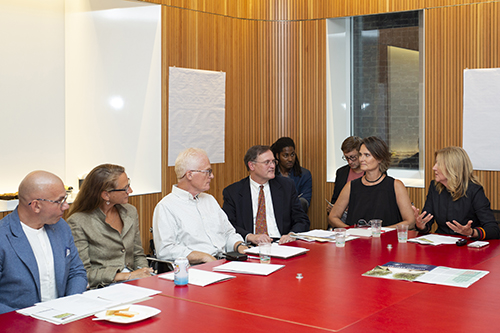
Sharon Prince addresses the prestigious panel along with Nasreen Sheikh, Founder of the Empowerment Collective and Local Women’s Handicrafts; Wendy Savage, Senior Director, Social Impact & Transparency at Patagonia; Declan Croucher, Senior Director, Advisory & Chief Commercial Officer at Verité; Erin Phelps, Senior Adviser to the CEO at the Freedom Fund, and Aidaly Sosa Walker, Tony’s Chocolonely VP of Marketing USA & CA.

The financial industry is critical to creating a more ethical, sustainable, and even innovative future. Let’s stop accepting the ‘slavery discount.’ Let’s create a future where the buildings we build tell a story of dignity, not exploitation. — Sharon Prince

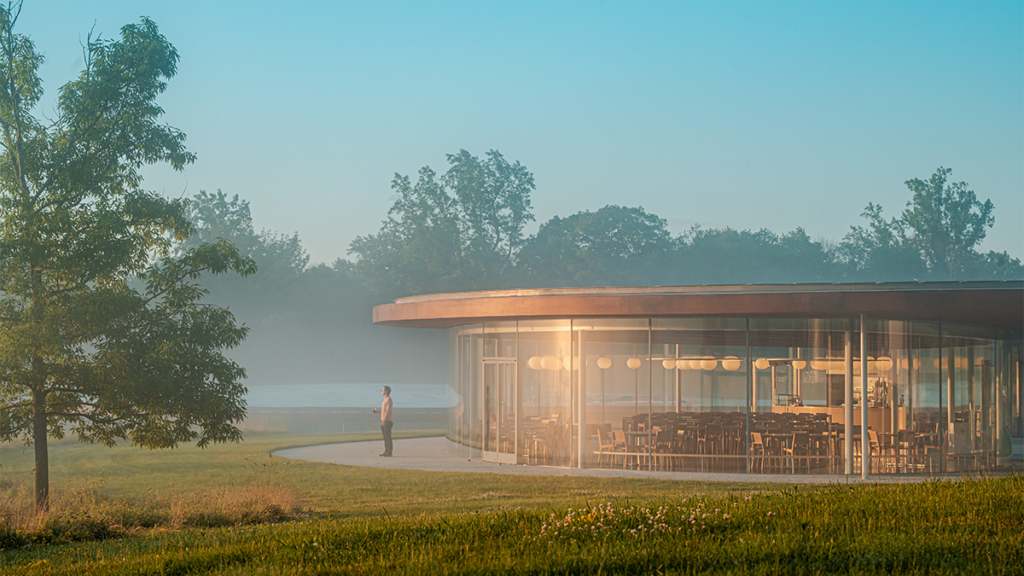
Good afternoon, I’m Sharon Prince, CEO and Founder of Grace Farms, a cultural and humanitarian center in New Canaan, Connecticut. We bring people together in a hopeful space on 80 acres free and open to the public, partly to address some of the most pressing humanitarian issues of our time, including modern slavery and human rights abuses.

Tony’s Chocolonely VP of Marketing USA & CA, Aidaly Sosa Walker, with Sharon Prince, CEO and Founder of Grace Farms. They were both part of a prestigious panel that addressed the crucial role the financial industry can play in creating a more ethical, sustainable, and innovative future. It was held at the United Nations Headquarters in New York.

Our work through leading the Design for Freedom movement focuses on one of the most overlooked areas of exploitation in the global economy: the building materials supply chain. While the construction sector is addressing environmental sustainability, it has been given a labor transparency pass on its colossal supply chain.

“Are our buildings ethically sourced, as well as sustainably designed?”

The central question we ask is: “Are our buildings ethically sourced, as well as sustainably designed?” Today, it is nearly impossible to claim a construction project is free of forced or child labor—because the vast global supply chain behind building materials is opaque, fragmented, and largely unchecked for worker exploitation.

Forced labor is embedded at the very beginning of the construction process—in the extraction and production of materials like steel, timber, copper, concrete, and solar panels. Addressing job site labor is only half the equation.

Grace Farms is playing a key convening role across sectors, including the financial sector—partnering with those with lived experience, like my fellow panelist Nasreen Sheikh. Just as the food and fashion industries were called to account, shelter—our third human essential—must now be next.

Sharon Prince, CEO and Founder of Grace Farms, with Nasreen Sheikh, modern slavery survivor and Founder of the Empowerment Collective and Local Women’s Handicrafts, outside the United Nations’ plaza in New York City.

Our relationship with FAST goes back more than eight years and in many ways, FAST was created at Grace Farms. We partnered with the UN University and the Permanent Mission of Liechtenstein to co-host a convening to disrupt financial ties to human trafficking which led to the proposal of 25 specific recommendations that were published in a UNU workshop report. This work followed a convening and report “Fighting Human Trafficking in Conflict: 10 Ideas for Action by the United Nations Security Council,” leading to the passage of UN Security Council Resolution 2331. Both were co-hosted at Grace Farms with a multi-sectoral approach.

As conflict increases globally, hundreds of billions will be spent on reconstruction. We have a choice: either we finance and rebuild with transparency and legality—or brutal exploitation will accelerate.

The uncomfortable truth is that modern slavery is sustained and even exacerbated by our existing financial systems. 

The uncomfortable truth is that modern slavery is sustained and even exacerbated by our existing financial systems.  There is currently no agreement of decision-critical human rights metrics for the investment sector. It is therefore often difficult for investors to introduce and monitor human rights measures and impact.

Even so, most construction projects are financed in some manner creating a tremendous opportunity for the financial sector to de-risk exploitation, normalize fair labor inputs, and accelerate innovation at the same time.  The financial sector, particularly sustainable and digital financing, holds a unique position of influence to determine which projects are financed. The use of big data and other innovative technologies can drive fair labor inputs which we demonstrate in our interoperability chart aligning with the phases of a construction project.

When speaking with industry leaders about sourcing ethically, they often ask, “Will this cost me more or delay my project?” My question is, “Are you okay with accepting the slavery discount?” Because right now, the exploitation of workers is effectively subsidizing our returns on investment.

Globally, forced labor is estimated to generate $63 billion annually by exploiting 28 million people.

The scale is staggering. Globally, forced labor is estimated to generate $63 billion annually by exploiting 28 million people. Construction, worth $13 trillion annually, is the largest consumer of raw materials. The global construction materials market was valued at $1.32 trillion in 2023 and is expected to grow to $1.73 trillion by 2030.  That scale is our greatest challenge—and our greatest opportunity to shift the marketplace.

The Design for Freedom movement is organized around three core principles:

  1. Find and Address Embedded Forced Labor – Know where your materials come from and how they are made.
  2. Pursue Ethical Decarbonization – Align sustainability with human rights, so that we’re not trading one form of harm for another.
  3. Prioritize Circularity – Shorten supply chains, which reduces the risk of exploitation at the extractives.

Our Design for Freedom Report issued in 2020 identified a dozen building materials at high risk for forced labor, including steel, copper, timber, solar panels, concrete, rubber, textiles and electronics. Many of these materials come from remote regions with weak protections and corruption, where workers have little voice in their labor conditions.

Our new Design for Freedom International Guidance & Toolkit, soon to also be released in Vietnamese, offers practical tools aligned with UN Guiding Principles and OECD frameworks.

Our Design for Freedom Working Group includes nearly 100 leaders across the ecosystem of the built environment. We’ve launched pilot projects with burgeoning teams—owners, architects, construction firms—actively working to address embedded labor risk from the demand and supply side, including large scale suppliers — Assa Abloy and Shaw Floors.  Two ongoing projects examples are the University of Virginia’s Karsh School of Democracy to The Brij 1million sq. foot project in New Delhi. This is where the financial sector can step in—applying new data and tech to projects in real time.

We’ve also partnered with AceLab to integrate Design for Freedom principles into their AI-powered Materials Hub—helping architects prioritize delivery, sustainability and human rights requirements in procurement. AI is being trained on real project data from leaders like SHoP, BIG and Bloomberg to create an industry-specific ethical framework.

We advise investors to require fair labor audits of high-risk materials and to include ethical labor standards in the Owner’s Project Requirements (OPR).  Product certifications like FSC and PEFC wood added core (fair) labor requirements to their environmental chain of custody audits—thus providing a double benefit to the increase in pricing to owners.

Construction is responsible for 50% of global resource extraction, 40% of solid waste and 37% of global carbon emissions.

Embracing circularity in construction directly reduces environmental and worker exploitation risks. Construction is responsible for 50% of global resource extraction, 40% of solid waste and 37% of global carbon emissions. By identifying and reusing existing building materials, we cut emissions and protect labor rights. Some building materials—like interior textiles—overlap with sectors where transparency has already advanced.

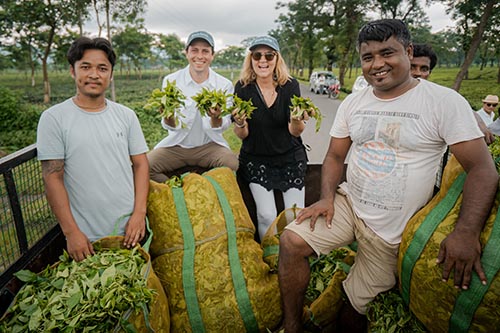
Grace Farms Tea & Coffee, a Certified B Corp, and the only premium tea brand in the U.S. certified by Fair Trade International donates 100% of profits to support Design for Freedom. We now distribute in 26 Whole Foods and serve corporate partners like Google and JPMorgan. With more profits, we can invest in more research – we seeded a DFF project with Stanford University to scientifically determine labor’s fingerprint in concrete.

Construction has thin margins and is one of the least modernized sectors in which innovation continues to be stymied.  When you drive costs lower without examining materials, you raise human cost and limit innovation. Take one example – solar panels. When prices are artificially depressed through exploitative labor, market incentives for research and development disappear.

Every building tells a story of humanity—either of dignity or exploitation.

By incorporating ethical labor standards into investment decisions, we can ensure that every building, every material, and every project reflects the dignity of workers.

The financial industry is critical to creating a more ethical, sustainable, and even innovative future. Let’s stop accepting the “slavery discount.” Let’s create a future where the buildings we build tell a story of dignity, not exploitation.

Thank you.

To watch the panel discussion: https://lnkd.in/eucvjaT9

(feature photo, United Nations)

_____________________

More about Sharon Prince

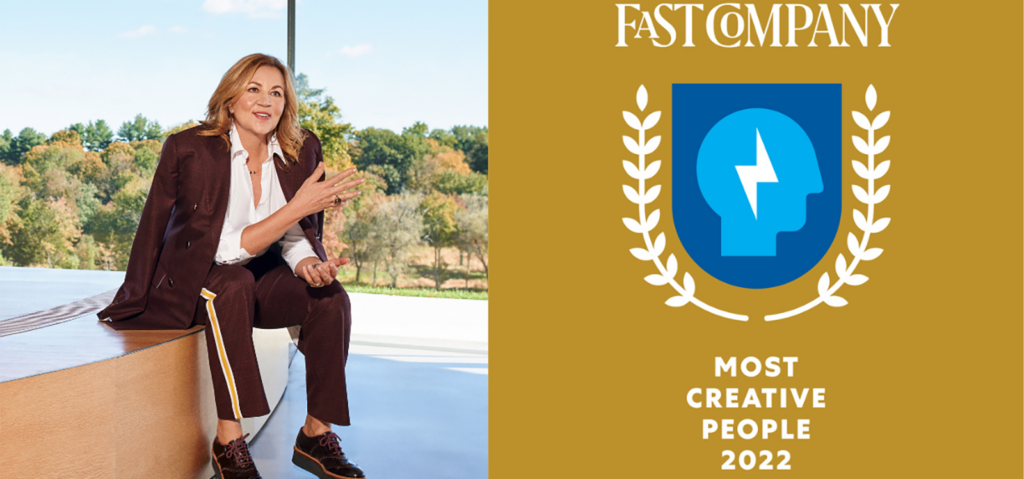
Learn more about Prince and why Fast Company named this CEO to its list of the Most Creative People in Business 2022: For Cleaning up Construction.

_____________________

About Grace Farms

Grace Farms is a cultural and humanitarian center located in New Canaan, CT.

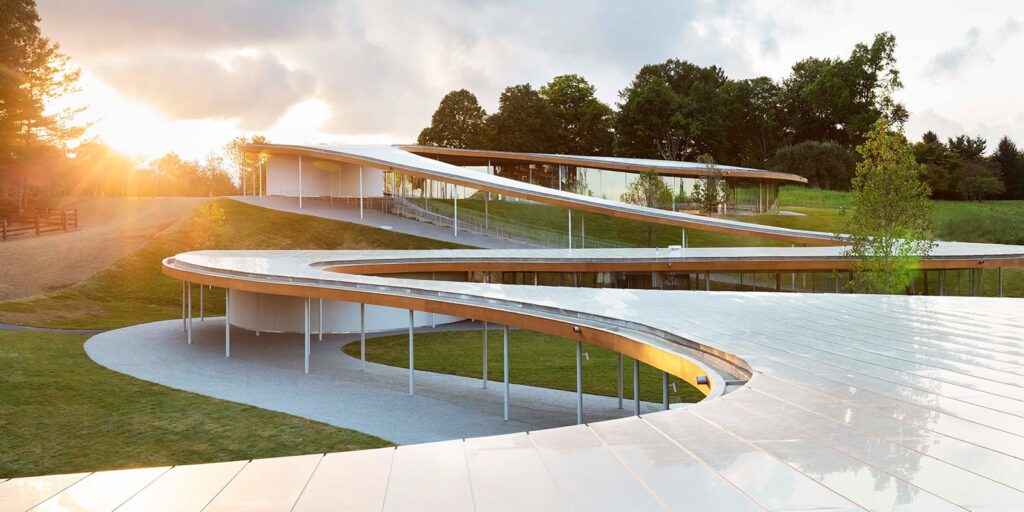
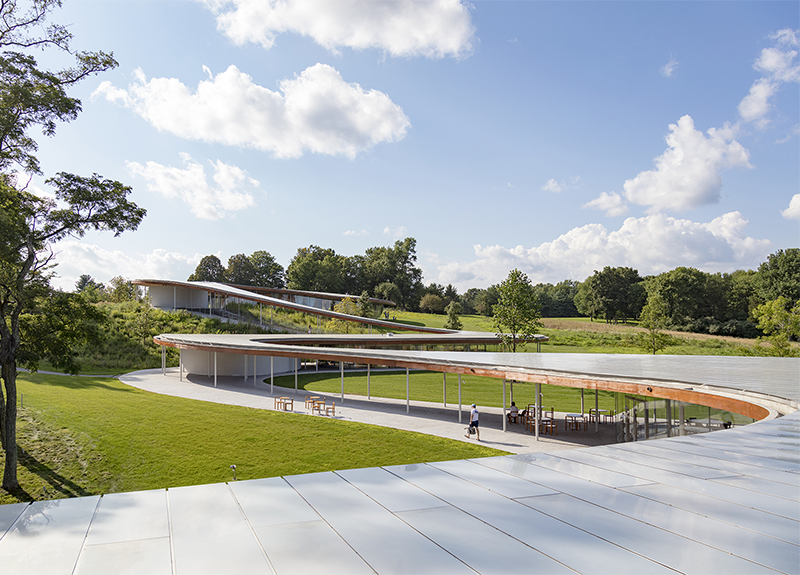
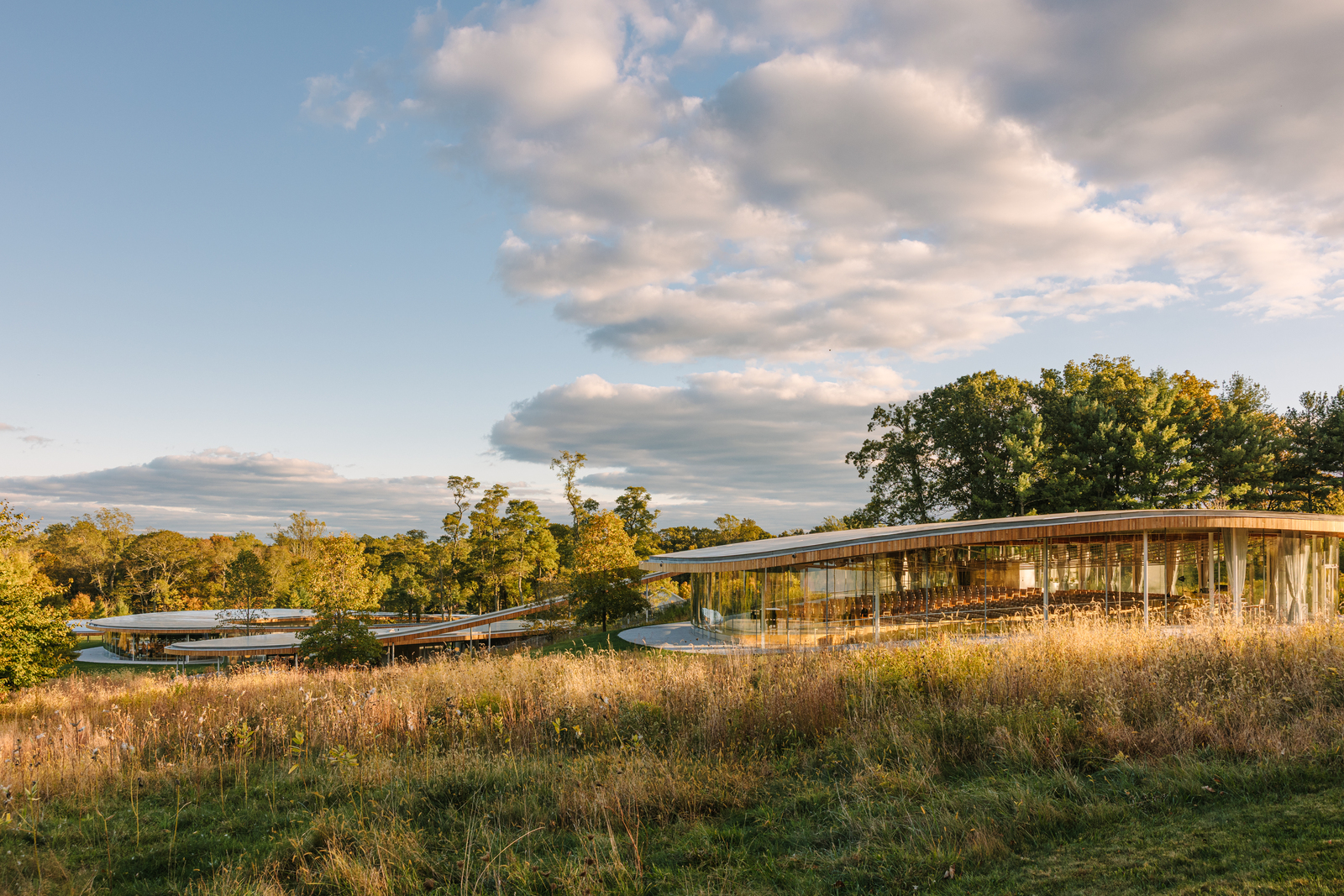
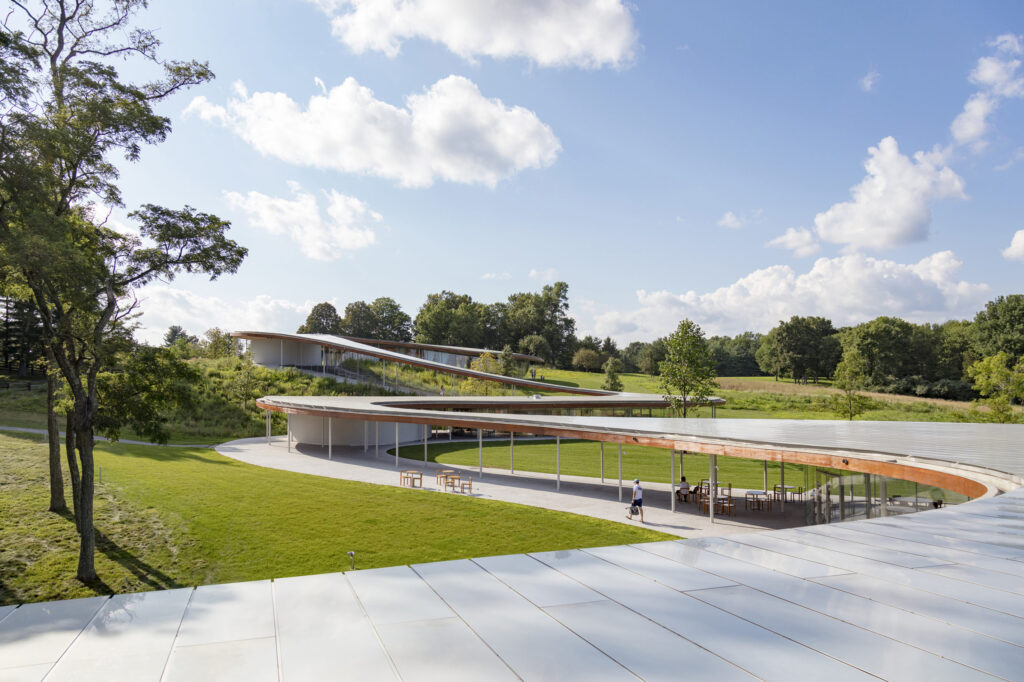
We bring together people across sectors to explore nature, arts, justice, community, and faith at the SANAA-designed River building on 80 acres of publicly accessible, preserved natural landscape.

Grace Farms, with its open architecture, breaks down barriers between people and sectors and invites conversation, curiosity, and proximities. This collaborative approach to comprehensively address humanitarian issues and generate new outcomes is reflected across all of our initiatives and the place of Grace Farms.

Membership

Grace Farms members can visit without advance registration and enjoy a 20% discount on paid programs, retail, and dining, invitations to members-only gatherings, complimentary events, and a welcome gift from Grace Farms Tea & Coffee.

Becoming a member helps us advance our mission to pursue a more peaceful world and supports the preservation of the River building and its surrounding 80 acres.

For more information, visit gracefarms.org/membership.

Visit our calendar of events to learn more about upcoming programs.

Sign-up for our newsletter

Follow us

@gracefarmsct #gracefarms
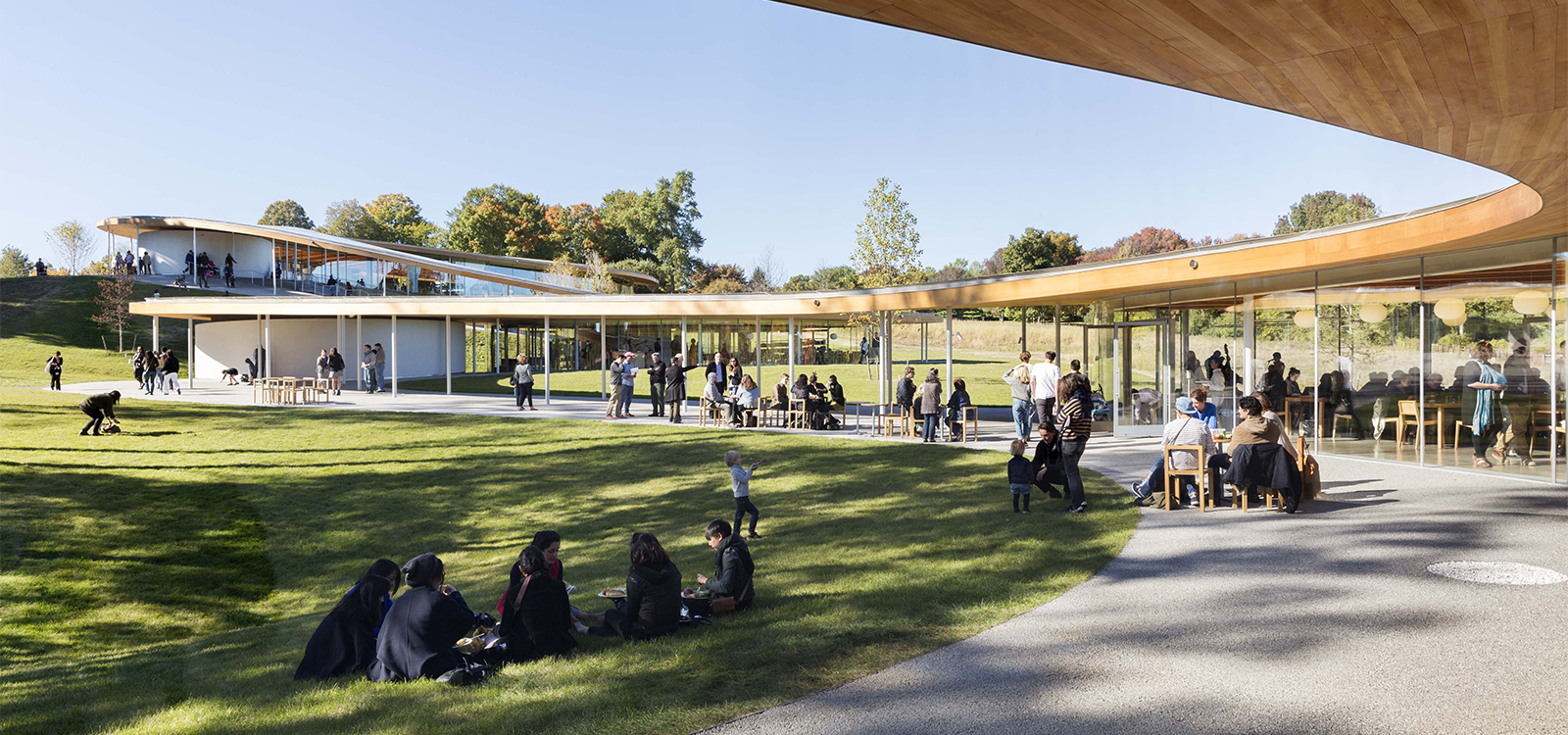
Small Wonders | Protecting Our Beneficial Insects

Our approach to our landscape is: Restoration, Exploration and Preservation. One thing we really pay attention to is the natural systems that have worked for millions of years – Director of Horticulture, Kimberly Kelly

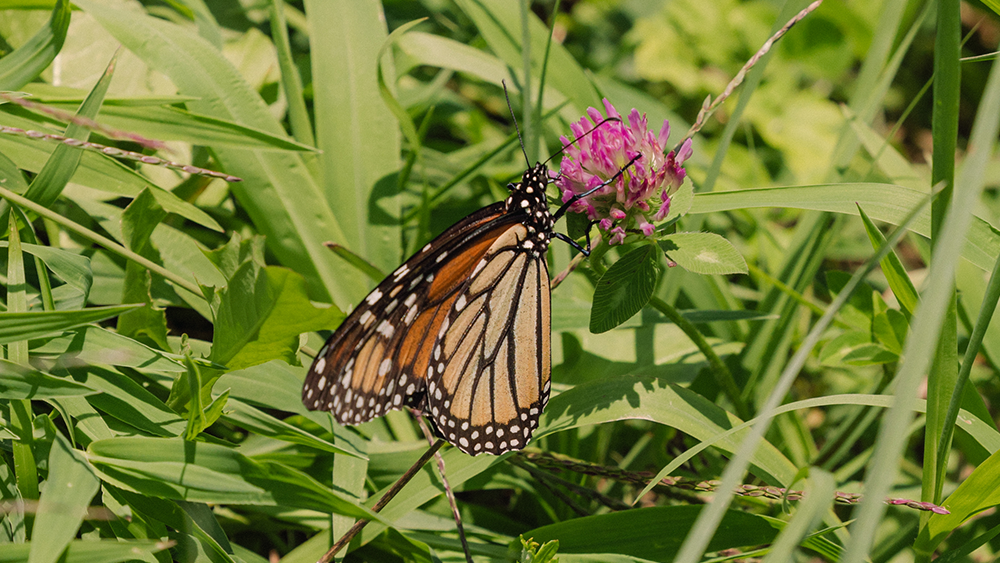
Green lacewings and ground beetles don’t normally come to mind when thinking about beneficial insects. We’re likely more dazzled by their more colorful and bold counterparts such as the butterfly, firefly, and the adorable ladybug.

The restoration of Grace Farms’ nearly 80 acres of natural landscape provides a thriving habitat for beneficial insects.

Wondrous as these scene-stealing beneficial insects are, there is an amazing cast of other useful insects. The list is long considering the estimated 10 quintillion insects (10 plus 17 zeroes) on the plant, according to Cornell’s College of Agriculture and Life Science. Insects mostly get “bad press” because mosquitoes can spread malaria, and invasive pests can devastate forests, gardens and crops. “But it’s not just the bees we couldn’t live without. In addition to pollinating flowers and farmlands, beneficial insects help control agricultural pests and are critical in maintaining balanced natural ecosystems.”

The 10 quintillion insects represent about 80% of the world’s species, “making them the most diverse group of animals in our world,” adds Cornell. While this may seem like an unlimited supply, insects are declining around the world at an alarming rate, according to the nonprofit Earth.org. “The main causes of insect population decline include pesticide use, habitat destruction, climate change, pollution, and invasive species.”

Some causes include:

  • Monocultures and manicured landscapes reduce nectar sources, shelter, and breeding sites, making it difficult for insects to survive.

  • Rising temperatures, shifts in rainfall patterns, and increased frequency of extreme weather events is disrupting insect life cycles and the availability of food sources.

  • Invasive species, defined by a population of non-native species that cause ecological and economic harm.

Why Protect and Create Habitats for Beneficial Insects?

One of their most important roles is pollination: About 75% of flowering plants rely on pollinators such as birds, butterflies, bettles, and even flies, while nearly 35% of global crop production rely on insect pollination, adds Earth.org. Losing the insects that pollinate our plants “would have catastrophic repercussions on both wild plant reproduction and food systems, impacting natural biodiversity, human nutrition, and agricultural economies.”

Besides reducing or eliminating our reliance on artificial pesticides and fertilizers, practicing ethical and sustainable land stewardship such as the restoration of natural habitats and the use of native plants can help mitigate invasive plant and insect species from taking over. In New England, alone, there are at least several invasive insects that can threaten New England’s ecosystems and landscapes. They include the Emerald Ash Borer, Asian Longhorned Beetle, Spotted Lanternfly, and the Spongy Moth, to name a few, which can cause severe damage to forests and agriculture, according to Connecticut’s Department of Energy & Environmental Protection.

In a recent New York Times article, Evelyn Beaury, assistant curator at the New York Botanical Garden’s Center for Conservation and Restoration Ecology, said we need to be proactive rather than wait for the onslaught of invasive species. “It’s so much easier to do something about an invasion when it’s in an early stage. Your chances of success are much higher.”

 Grace Farms’ Approach to Biodiversity & Sustainability

Since opening in October 2015, Grace Farms has become a model of ethical and sustainable land stewardship. Some of the milestones include converting 70% of mowed lawn, a monoculture species that lacks ecological diversity, into 10 biodiverse habitats including woodlands and meadows. The installation of thousands of native plants and grasses has significantly enhanced our biodiversity. In addition to caring for over 2,000 trees that represent 50 different tree species, in 2024, our Director of Horticulture, Kimberly Kelly, and her team sowed 18 pounds of native grasses and pollinator plants. These seeds have the potential to generate over 3 million various species of native grasses. The on-going effort to foster and preserve biodiverse habitats attracts beneficial insects, providing a variety of plants for food and shelter, which helps keep pest populations down without the need for pesticides and other harmful environmental chemicals.

The meadows at Grace Farms provide shelter and food for all wildlife, as well as inspiration for visiting environmentalists and artists.

To share our practices, Grace Farms’ Director of Horticulture and our Education Team, have developed a series of hands-on learning experiences for people of all ages and backgrounds. Below are highlights of the learning events through the summer season.

Grace Farms Events

Pop-up Talk | Caterpillar Compass

Wednesday, July 30, 11:00 am – 11:30 am (series)

This 15-minute pop-up talk introduces the Caterpillar Compass, an interactive field guide bringing families with young visitors on an outdoor adventure to discover the incredible lives of caterpillars and butterflies.

Caterpillar Compass, which comes with a compass and booklet, guides visitors around the natural landmarks that shelter butterflies and caterpillars. At special stopping points, the guide offers prompts where children can write, draw, or talk to a friend about what they see.

You can also pick up a self-guided booklet at the Noticing Nature pop-up talk in the Commons.

Magnifying Small Wonders

Thursday, August 21, 1:00 pm – 3:00 pm

This facilitated family-friendly program will explore the hidden, and surprisingly beautiful, life of insects and nature. Using magnifying tools, equipment, and high resolution micrography, nature enthusiasts of all ages will encounter caterpillars, butterflies, and other amazing insects and natural specimens. Participants will explore the world we cannot see on our own where the ordinary becomes the extraordinary and experience the awe of nature’s small wonders.

Recommended for ages 8 and up.

Kimberly Kelly, Director of Horticulture, as well as our Education Team, helps visitors discover the wonders of nature all around us.

Learning with Nature | Look at Butterfly Life

Saturday, August 23, 11:00 am – 12:00 pm

Butterflies have captured the human imagination with their vibrant colors and daytime activity, symbolizing transformation and beauty. The magnificent patterns found on butterfly wings make these insects a wonder to behold. In this indoor-and-outdoor workshop for all ages, we will learn about how butterflies indicate a healthy ecosystem, look at host plants for caterpillars, and enjoy summer moments watching butterflies in the landscape.

Small Wonders to Discover and Why We Need Them

Ladybugs

The unmistakable ladybug, often identified by their vibrant colors and spotted wings, also known as ladybird beetles or lady beetles, are among the beneficial insects due to their voracious appetite for harmful insects such as aphids: The gentle ladybug can consume up to 50 a day, according to Earth Day 2025. Aphids feed on a plant’s sap, causing damage to its leaves, stems, and flowers. The hard-to-see aphid leaves behind a sticky clear paste called honeydew, which can promote the growth of sooty mold, causing further harm to the plant and attracting other pests like ants that like to feed on its sweet sap.

“Beyond their pest control abilities, ladybugs also serve as essential biodiversity indicators. Their presence in an ecosystem is a sign of a healthy and diverse environment. Ladybugs not only provide benefits to humans but also serve as a vital food source for other insects, insects, birds, and small mammals.”

Ground beetles

Ground beetles are more elusive than ladybugs, preferring to emerge at night to feed on insects and slugs in the garden that can decimate plant foliage. In their search for food, they are also good soil aerators and help with drainage and nutrient cycling. The University of Maryland Extension offers suggestions to support this nocturnal insect.

  • Avoid practices that disturb soil fauna such as frequent tillage.

  • Bare earth does not provide the best protection against the cold, so cutting back your plants before or during the winter can be harmful to ground beetles.

  • Establishing stretches of perennial grasses called “beetle banks” is a common technique used to increase ground beetle numbers on farms in many places around the world.

  • Create sheltered spaces for ground beetles to hind underneath such as large stones, logs, or brush piles. In addition to helping ground beetles, creating sheltered habitats and leaving ground cover over the soil can also help other beneficial insects.

Green Lacewings 

The University also highlights why the most-common green lacewings are popular because they are also  “excellent predators of aphids.” “Even hatching larvae will eat anything they encounter including mites and ants foraging on plants – a “major predator of lacewing eggs and larvae.”

The benefits of these beneficial insects can’t be overstated. For many of us, regardless of location, you’ll likely seeing the dreaded spotted lanternfly, an invasive pest from Asia which was first detected in the U.S. in 2014 and has “spread across at least 18 states, causing significant damage to vineyards, orchards and nursery industries,” according to a recent Penn State article. Penn State, which is conducting more research on its natural predictors, said in the article: “By leveraging natural enemies already in the environment, we hope to develop a sustainable, low-impact approach to managing this invasive species that will complement other control methods.”

In our learning series, visitors will discover some of the hidden wonders of insects and how we can all support nature’s beneficial insects. “You don’t need to order beneficials from a garden catalog; most are already present in your garden. Your job is to give them the food, water, and shelter they need to thrive, and they will reward you by patrolling your garden,” says the University of California’s Agriculture and Natural Resources.

All of this, protecting our beneficial inspects and the environment comes down to the choices we make, Kelly reminds us. Our choices change as we grow, and yes, some are not always the best. “Who knew that many plants marketed as little as 15 years ago as great landscape choices would become invasive species?” she said in one of our recent Perspectives, The Choices We Make.

“But there are times when we need to take a good hard look at our own practices.”

______________________

About Grace Farms

Grace Farms is a cultural and humanitarian center located in New Canaan, CT.

We bring together people across sectors to explore nature, arts, justice, community, and faith at the SANAA-designed River building on 80 acres of publicly accessible, preserved natural landscape.

Grace Farms, with its open architecture, breaks down barriers between people and sectors and invites conversation, curiosity, and proximities. This collaborative approach to comprehensively address humanitarian issues and generate new outcomes is reflected across all of our initiatives and the place of Grace Farms.

Membership

Grace Farms members can visit without advance registration and enjoy a 20% discount on paid programs, retail, and dining, invitations to members-only gatherings, complimentary events, and a welcome gift from Grace Farms Tea & Coffee.

Becoming a member helps us advance our mission to pursue a more peaceful world and supports the preservation of the River building and its surrounding 80 acres.

For more information, visit gracefarms.org/membership.

Visit our calendar of events to learn more about upcoming programs.

Sign-up for our newsletter

Follow us

@gracefarmsct #gracefarms
What Makes Dragonflies So Extraordinary

“Nature holds the answers, if we learn to listen.”

— Joy Harjo, 23rd U.S. Poet Laureate, a featured guest at our 8th annual benefit

For centuries, dragonflies have mesmerized us with their distinct, unpredictable, and performative dance, so much so, it makes us pause to watch their darting movements or sudden decision to hover over another insect who is unexpectedly on the menu.

Dragonflies are known for their ferocious appetites and hunting skills, aided by the unique independent rotation of each of their four wings, which allows these ancient insects to fly backwards and hover in an instant, according to the Iowa Department of Natural Resources. In this episode of PBS Terra, What Makes Dragonflies So Extraordinary, entomologist Jessica Ware takes us on a journey to discover “why dragonflies are the strongest flyers in the insect world—reaching speeds of up to 30 mph and among the few animals that can hover.” This incredible dragonfly-like insect, she says, ruled the skies even before bats and birds.

Besides their performative characteristics, dragonflies are a sign of biodiversity, serving as an indicator of environmental change, both good and bad. They spend one to two years of their lives as aquatic nymphs –more depending on the species – that require good water quality to survive before they morph into the magnificent dragonfly, according to the National Biodiversity Data Centre.

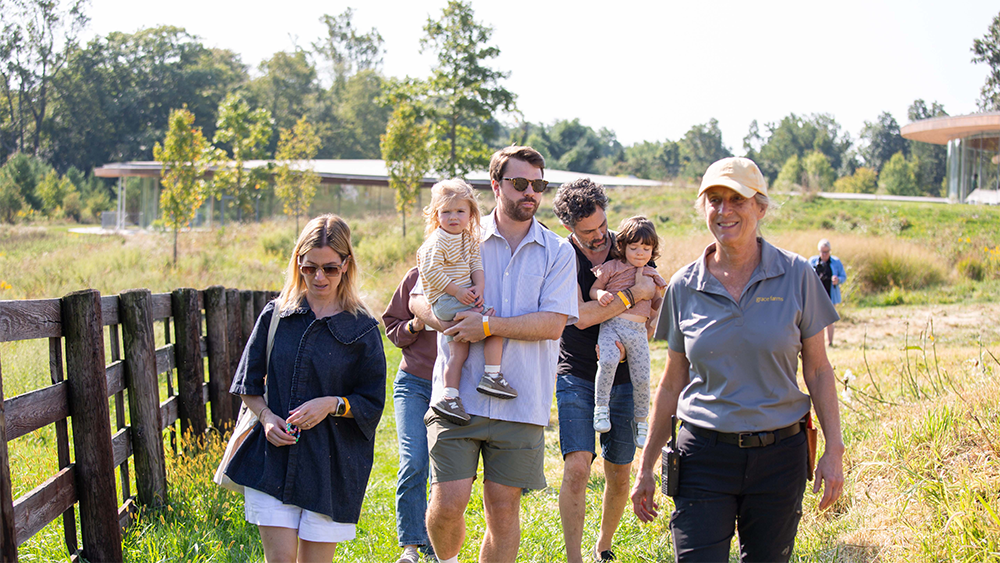
Our Director of Horticulture, Kimberly Kelly, leads a nature tour at Grace Farms.

Grace Farms visitors will have a front-row opportunity to learn more about nature’s masters of the skies with our Director of Horticulture Kimberly Kelly. During Learning with Nature | Walk with Dragonflies, on Saturday, Saturday, July 26, from 11:00 am to 12:00 pm, Kelly will take participants on a guided summer walk to experience the awe and wonder of this ancient creature that has been around for over 300 million years. “Their eyes are the largest and possibly the keenest in the insect world, a pair of giant spheres each built of some 30,000 pixel-like facets that together take up pretty much the entire head,” according to an article in The New York Times, citing scientists’ research on dragonfly’s brain, eyes and wings that allow it to hunt so efficiently.

During the month of July, in particular, dragonflies rule the skies. If it weren’t for their vibrant, jewel-toned bodies and wings – saturated colors of blue, green, red and purple – you might miss their dazzling performances that are only on display for a few months, at best. According to the Smithsonian Magazine, the majority of their lives are spent in the water and at the end of its larval stage, the  dragonfly crawls out of the water. Its exoskeleton cracks open releasing its abdomen and its four wings where its body “dries and hardens over the next several hours.”

But pay extra attention during this time because as an adult their life span is brief, “typically only one to three weeks, though some make it more than two months,” cites the Smithsonian. Their exquisite movements are a wonder to witness.

Benefits of Dragonflies

Dragonflies can consume hundreds of mosquitoes a day, helping to reduce mosquito populations, in addition to the bothersome horse flies. As an “indicator species,” scientists monitor certain insects, animals, and plants that serve as biodiversity gauges of the soil, water, and air. Besides the dragonfly, frogs and other amphibians are also sensitive to environmental changes due to their thin skin that can sense impurities in the water, according to Smithsonian Gardens. If these indicators species are abundant in the environment, it’s a good sign of biodiversity, while if these species are in decline it’s a sign to look for changes in the environment and what’s behind the decline.

Grace Farms has restored nearly 80 acres of land, turning Grace Farms into 10 bio-diverse habitats. The bio-diversity attracts pollinators including butterflies, bees, and more.

Fostering Biodiversity

At Grace Farms, we’ve restored nearly 80 acres of land, turning Grace Farms into 10 bio-diverse habitats including native meadows, woodlands, and ponds. Grace Farms is now a Certified Wildlife Habitat Garden, Certified Monarch Waystation, Member of the Xerces Society Pollinator Protection Plan, and a founding member of the New Canaan chapter of the Pollinator Pathway. Our stewardship efforts have turned Grace Farms into a model of biodiversity, where the public can learn hands-on through our year-long educational facilitated by our Director of Horticulture Kimberly Kelly, butterfly expert, and President of the International Association of Butterfly and Exhibitors & Suppliers (IABES) and our Education team.

Below are highlights from our on-going stewardship:

  • 3 million + various species of native grasses populated our meadow after sowing 18 pounds of native grasses and pollinator plants in 2024
  • 2,000 + trees representing 50 different species are a part of Grace Farms’ biodiversity
  • 70% of our landscape was converted from mowed lawn to natural meadows
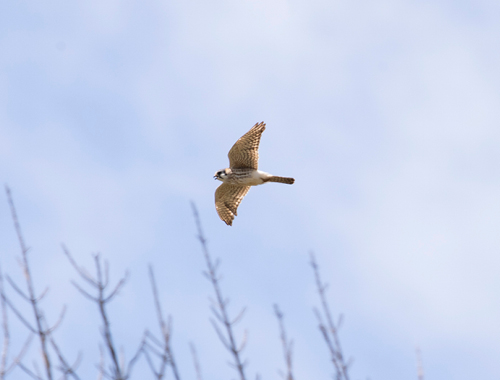
  • 140 + species of birds brought back to the area, including the American kestrel, North America’s smallest falcon.
American Kestrel

Besides fostering bio-diversity at Grace Farms, installing nesting boxes has help bring the American Kestrel back to the area.

Highlights of Nature-Based Summer Programs

Saturday, July 12, Learning with Nature: Make an Herb Garden 11 am – 12 pm

Come to the Garden at Grace Farms for a hands-on class that connects families with nature. Learn basic gardening skills and imagine starting your own container or backyard herb garden. This class will naturally spark interest and embolden beginner gardeners to grow, cut and cook with their own homegrown herbs!

Each participant will take home an herb to start a garden

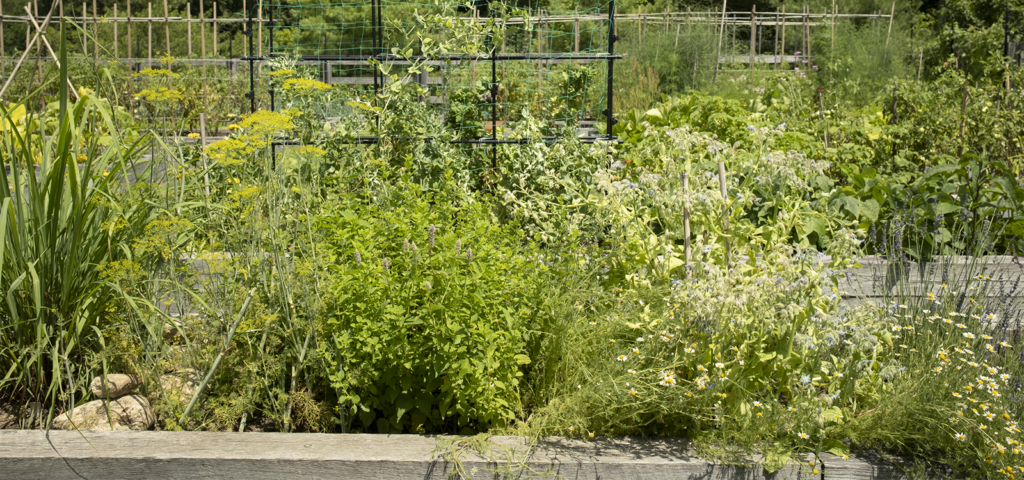
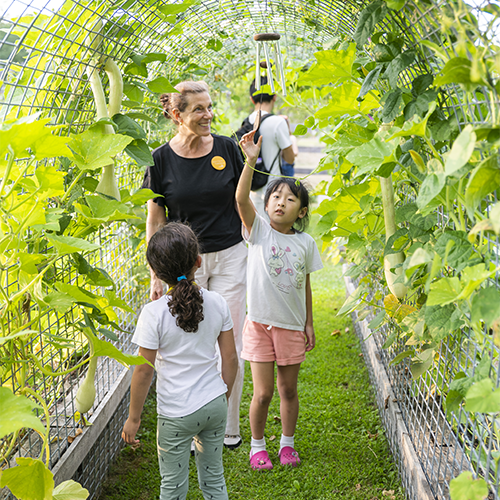
The 1,450-square-foot Community Garden grows an array of vegetables and herbs. This open classroom provides a hands-on learning experience.

Saturday, July 26, Learning with Nature: Walk with Dragonflies 11:00 am – 12:00 pm

Dragonflies have been around for over 300 million years and are still considered nature’s masters of the sky. With the ability to fly over 30 miles per hour, dragonflies are one of the fastest flying insects in the world. Follow Grace Farms Director of Horticulture Kimberly Kelly on a guided summer walk to experience the awe and wonder of the natural world, dragonflies and all.

Saturday, August 9, Learning with Nature: Extending the Harvest 11 am – 12 pm

Join us in the Garden to learn which crops to sow for fall harvest, as well as methods of extending the growing season with winter hoops, row covers, and fall plantings. Stroll through the vegetable beds to discover ways to overwinter plants and learn about the variety of cover crops that can aid in preparing the garden for next year.

Thursday, August 21, Magnifying Small Wonders 1 – 3 pm

This facilitated family-friendly program will explore the hidden, and surprisingly beautiful, life of insects and nature. Using magnifying tools, equipment, and high resolution micrography, nature enthusiasts of all ages will encounter caterpillars, butterflies, and other amazing insects and natural specimens. Participants will explore the world we cannot see on our own where the ordinary becomes the extraordinary, and experience the awe of nature’s small wonders.

Recommended for ages 8 and up.

Saturday, 23, Learning with Nature: Look at Butterfly

Butterflies have captured the human imagination with their vibrant colors and daytime activity, symbolizing transformation and beauty. The magnificent patterns found on butterfly wings make these insects a wonder to behold. In this indoor-and-outdoor workshop for all ages, we will learn about how butterflies indicate a healthy ecosystem, look at host plants for caterpillars, and enjoy summer moments watching butterflies in the landscape.

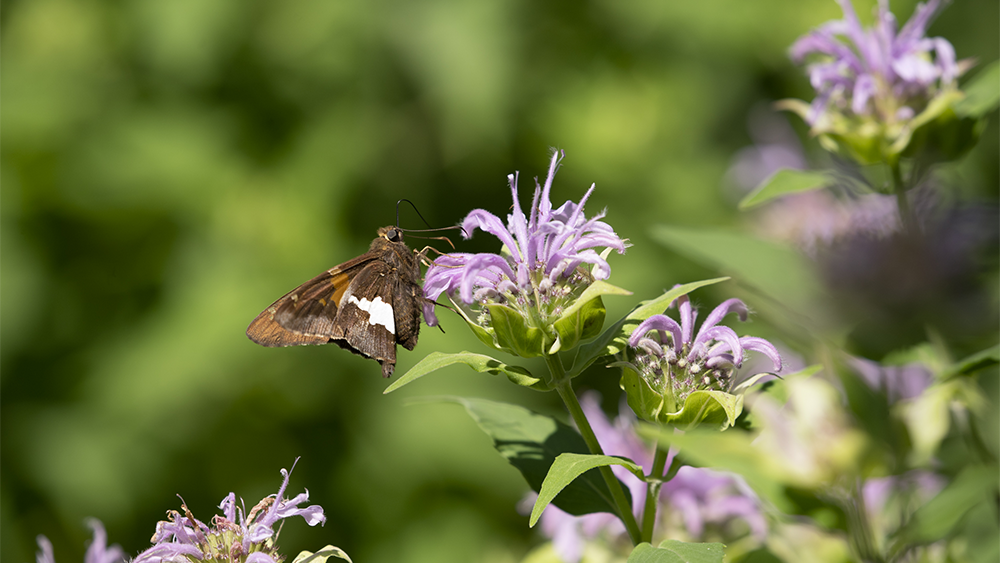
Our on-going restoration of Grace Farms’ meadows serves as a haven for our essential pollinators.

Amazing Butterflies Exhibit

Daily – end of August

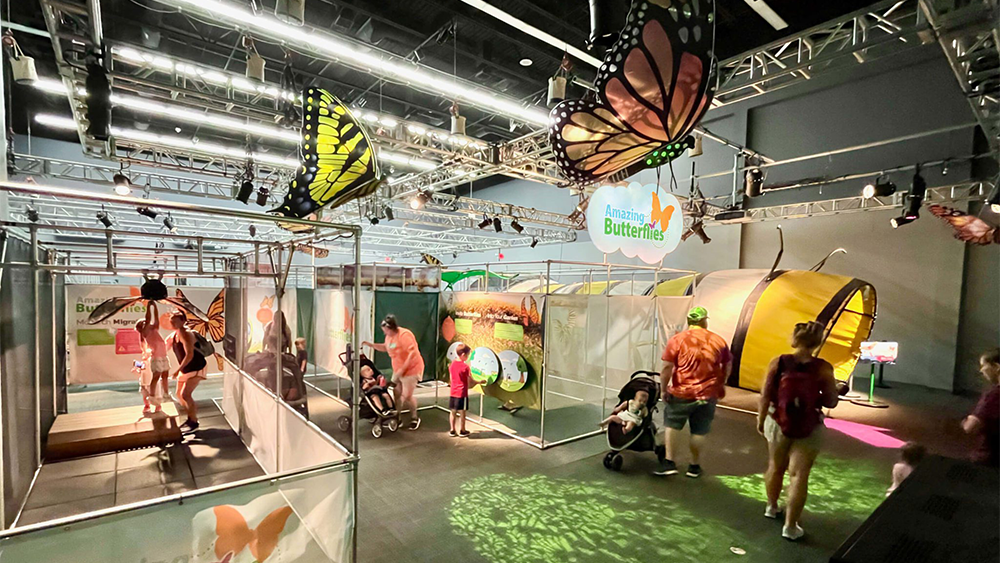
Navigate the extraordinary metamorphosis of butterflies through an interactive maze and traveling exhibit in the Grace Farms Court, created by The Natural History Museum in London in collaboration with Minotaur Mazes. Adventure through the leaves, learn how to move like a caterpillar, discover an ant that reaps the reward of an unusual friendship, then transform into a butterfly and take flight! This wonderful exhibit offers interactive experiences centered around the butterfly life cycle. Step outside and you might spot live butterflies fluttering through our blooming meadows! Daily

About Grace Farms

Grace Farms is a cultural and humanitarian center located in New Canaan, CT.

We bring together people across sectors to explore nature, arts, justice, community, and faith at the SANAA-designed River building on 80 acres of publicly accessible, preserved natural landscape.

Grace Farms, with its open architecture, breaks down barriers between people and sectors and invites conversation, curiosity, and proximities. This collaborative approach to comprehensively address humanitarian issues and generate new outcomes is reflected across all of our initiatives and the place of Grace Farms.

Membership

Grace Farms members can visit without advance registration and enjoy a 20% discount on paid programs, retail, and dining, invitations to members-only gatherings, complimentary events, and a welcome gift from Grace Farms Tea & Coffee.

Becoming a member helps us advance our mission to pursue a more peaceful world and supports the preservation of the River building and its surrounding 80 acres.

For more information, visit gracefarms.org/membership.

Visit our calendar of events to learn more about upcoming programs.

Sign-up for our newsletter

Follow us

@gracefarmsct #gracefarms
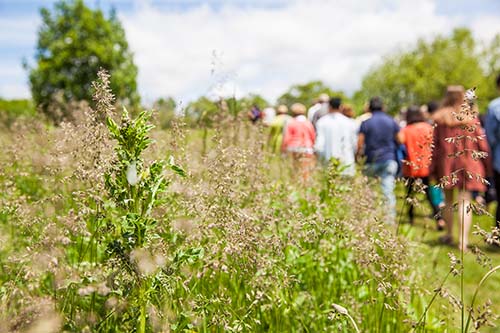
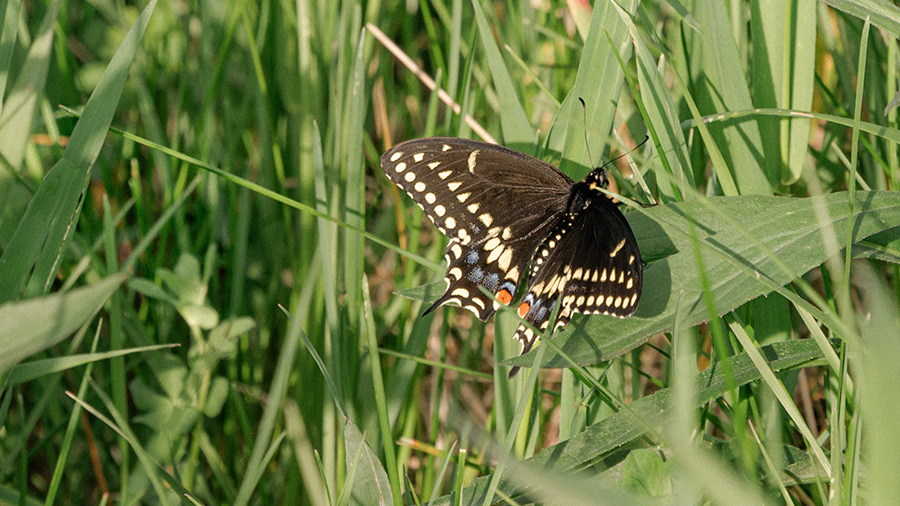
Butterflies in the grass at Grace Farms

Discover Butterflies in Connecticut at Grace Farms

This summer at Grace Farms, we’re celebrating the many incredible butterflies in Connecticut!

We invite you to learn about and celebrate butterflies with us through indoor and outdoor explorations. Experience the Amazing Butterflies Exhibit by Minotaur Mazes, attend monthly nature programs, learn about milkweed, and visit pop-up talks led by our education team.

Grace Farms supports butterflies in Connecticut at every stage of the butterfly life cycle

Grace Farms is situated on nearly 77 acres of biodiverse habitats, including native meadows, woodlands, and ponds. Through key plantings, these 77 acres that surround the River building support the lifecycle of butterflies in Connecticut at every stage.

Grace Farms is a Certified Wildlife Habitat Garden (National Wildlife Federation), a Certified Monarch Waystation (Monarch Watch), a member of the Xerces Society for Invertebrate Conservation, and a New Canaan Pollinator Pathway Community Partner.

Butterflies in the grass at Grace Farms

Cultivating a “Butterfly Basin”

Our newly-established “Butterfly Basin” features native trees and shrubs, with a proximity to restored wetlands vital to every stage of a butterfly’s life. The basin, located near Cattail Pond, is an ongoing cultivation. It weaves into the spectacular tapestry of restored wetlands and regenerative, resilient ecosystems thriving across this landscape.

The Grace Farms team, members, and volunteers have planted perennial trees and shrubs to maintain a healthy ecosystem that supports butterflies and moths all year the plants in this area provide a place for lepidopteran to lay eggs and food for larval and adult butterflies. It will also provide shelter in the fallen leaves over winter.

Grace Farms Director of Horticulture, Kimberly Kelly, leads several of our nature programming that educate visitors about supporting pollinators and butterflies in Connecticut. Kim currently serves as member of the Board of Directors of the Connecticut Master Gardener Association and is the President of the Board of Directors of the International Association of Butterfly Exhibitors and Suppliers.

Visit us this summer to learn more about the fascinating butterflies in Connecticut!

Experience the Amazing Butterflies Exhibit

Ready to learn even more about butterflies in Connecticut? Navigate the extraordinary metamorphosis of butterflies through an interactive maze in the Grace Farms Court! The Amazing Butterflies Exhibit is created by The Natural History Museum in London in collaboration with Minotaur Mazes. Amazing Butterflies is a temporary exhibit, open from June 6th through September 21st . It is recommended for children ages 12 and under, but offers fun for the whole family.

Adventure through the leaves, learn how to move like a caterpillar, discover an ant that reaps the reward of an unusual friendship, then transform into a butterfly and take flight! This wonderful exhibit offers interactive experiences centered around the butterfly life cycle. Please note, this exhibit does not contain live butterflies.

The Amazing Butterflies Exhibit is open daily Tuesday – Saturday 10 am – 4 pm and Sundays 12 – 4 pm.

View our calendar to get your tickets.

A bee on a milkweed plant. Milkweed is the primary food source for monarch butterflies.

Attend Butterfly-Inspired Workshops

We offer Learning with Nature workshops for all ages every month this summer. This series brings meaningful ways for adults and families to support pollinators and connect with the natural world.

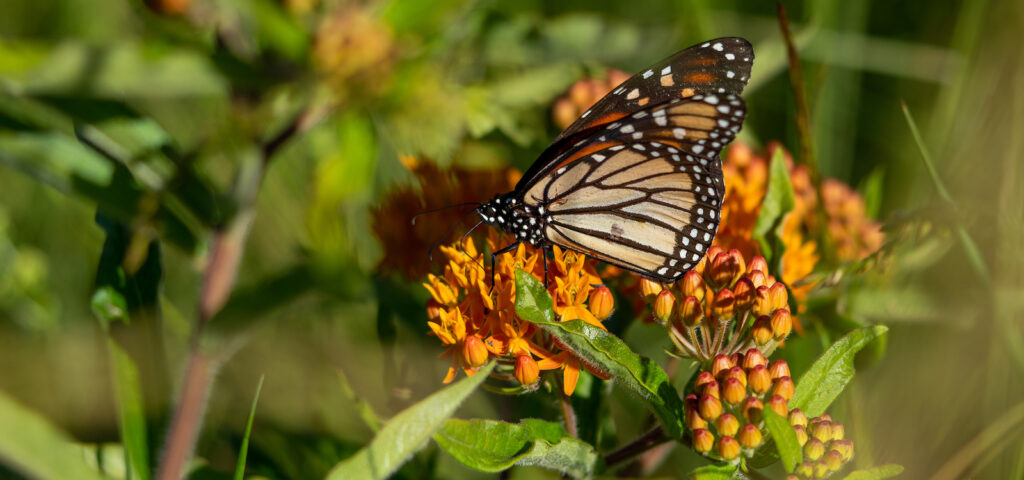
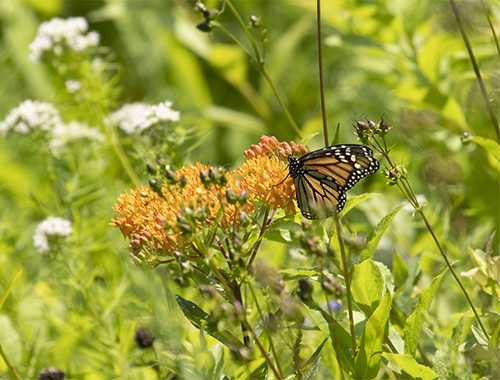
Milkweed, the primary food source of monarch butterflies in Connecticut

A milkweed pod. Milkweed is the primary food source of monarch butterflies in Connecticut. Photo by Melani Lust.

Use a Field Guide to Explore Butterfly Food

Pick up a Caterpillar Compass Field Guide at the Welcome Desk to learn more about milkweed!

Milkweed is a perennial flowering plant that supports the monarch butterfly lifecycle. Follow the Caterpillar Compass Field Guide to orienteer your way around the Grace Farms landscape, following the natural landmarks that shelter butterflies and caterpillars. Write, draw, or talk to a friend about what you see, and collect a butterfly stamp after completing your journey.

Schedule a visit and ask about Caterpillar Compass at the Welcome Desk.

Pop-up talks are 30-minute engagements led by our Education Team and offered daily. Photo by Melani Lust.

Attend Pop-up Talks

Every day, members from our Education Team are stationed throughout the River building to deliver engaging, 30-minute talks about topics including nature, architecture, and sustainability. Throughout the summer, these daily pop-up talks will focus on pollinating insects, birds, and plants.

View our calendar to learn more about daily pop-up talks.

Learning with Nature | Our Commitment to Ecological Practices

“Our first commitment was to conserve these 80 acres and 10 biodiverse habitats that were slated to be broken up into 10 large parcels.” – Sharon Prince

Designing with Purpose

Ecological landscaping is more than a trend—it’s a vital approach to mitigating climate change. By using native plants and practicing ethical land stewardship, we can restore balance to natural systems. Kimberly Kelly, our Director of Horticulture, reminds us that “it’s about the choices we make—down to the nourishment of our soil.” In The Choices We Make, she calls on us to reflect on our own practices and their ecological impact. Throughout the summer season, Grace Farms invites the public to learn more about ecological landscaping, including this Saturday, 11:00 am – 12:00 pm. Check our events calander for on-going nature-based events; here’s  highlights of our nature-based events throughout August.

Kimberly Kelly, our Director of Horticulture, often leads visitors on tours of the meadows and natural landscape to teach about biodiversity at Grace Farms.

Over time, land management has evolved from a “do-no-harm” stance to a more intentional collaboration with nature. Today, there’s a movement to work with nature’s rhythms, along with ethical and sustainable land management to restore biodiversity.

Understanding Biodiversity

“Biodiversity is all the different kinds of life you’ll find in one area—the variety of animals, plants, fungi, and even microorganisms… These organisms work together in ecosystems, like an intricate web, to maintain balance and support life.” – World Wildlife Fund

Taking these concepts into consideration, Kelly explains that advocating for less turf grass and more meadows, for instance, not only benefits the environment—it improves our health and the well-being of the planet. Over the years, the practice of turning lawn, a single species plant, into a meadow using a variety of native plants and grasses, has taken hold. A recent BBC article, explains why “turning lawns into meadows can have big benefits for people, wildlife and the climate” and why “‘meadowscaping’ has become the latest gardening craze.”

Larry Weaner Landscape Associates, the award-winning design quoted in this article, returned 70% of Grace Farms’ mowed areas back to natural meadows. Landscape architecture firm OLIN, also working with the architects at SANAA, helped transform the former horse farm into open spaces composed of woodlands and natural habitats.

Grace Farms: A Living Model

Our commitment to ecological and ethical land practices has led to measurable impacts. For instance, the number of bird species located on Grace Farms increased from 40 to over 120 bird species, including the return of the American Kestrel—North America’s smallest falcon—thanks in part to our installation of nesting boxes. Once considered “threatened,” this species has rebounded due to efforts like these, with statewide nesting box projects playing a crucial role in population recovery, according to Audubon Connecticut.

American Kestrel

We invite visitors of all ages on birdwatching tours throughout Grace Farms’ 80 acres of natural habitats and scenic nature trails. The American Kestrel is a small, slender falcon that is about the size of a robin. It is found in open habitats that have plenty of nesting cavities and hunting perches.

Our efforts to remove invasive species, along with the installation of thousands of native plants, have further supported pollinators and enhanced biodiversity at Grace Farms. In 2024 alone, we sowed 18 pounds of native grasses and pollinator plants—potentially yielding over 3 million individual plants that not only add to the biodiversity of Grace Farms, but its natural beauty that offers a peaceful place for reflection.

Global Impact of Biodiversity

According to the World Health Organization:

  • Over 75% of global food crops depend on pollinators, contributing up to $577 billion to global agriculture.
  • Forests, which store 80% of terrestrial biodiversity, absorb 2.6 billion tonnes of CO₂ annually.
  • Invasive species contribute to 60% of species extinctions, causing $423 billion in global damages.
  • Healthy ecosystems supply 75% of the world’s freshwater—yet since 1970, 35% of wetlands have been lost.

As biodiversity continues to decline at alarming rates—species extinction is now 10 to 100 times higher than natural rates—we recognize our responsibility to steward and share sustainable practices. “Without plants and animals, the world would not be habitable for humans.” – Reuters, COP16: From forests to oceans, nature in a dire state (2024)

We have installed thousands of native plants and grasses, creating habitats for wildlife and pollinator pathways for the butterflies.

Sustainable Design Beyond the Landscape

Building on our past LEED certifications for Building Design and Construction (BD+C) of the River building and Barns, and Operations and Maintenance (O+M), in 2024 we achieved LEED Gold for the O+M, reflecting our ongoing commitment to thoughtful stewardship and sustainable practices.

Our achievements since opening in 2015 include:

  • Restoring 11 acres of our landscape to native meadows to protect the fragile ecosystem of our site.
  • Reducing the heat island effect from the River building’s highly reflective roof.
  • Reducing water consumption site-wide.
  • Refining procurement and purchasing selections to ensure that post-consumer recycled and FSC-certified materials are selected whenever possible.
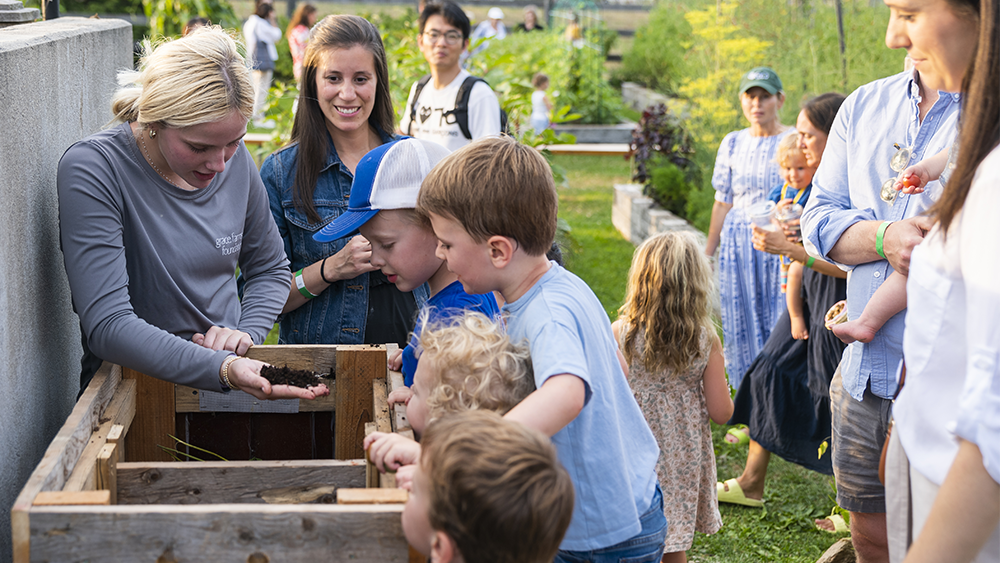
  • Instituting a “full-circle” food waste program on-site to repurpose food scraps into compost that is reused in our gardens and meadows.
  • Implementing erosion control measures which play an instrumental role in erosion control measures.
  • Green-E Certified Renewable Energy Certificates
  • Reduced waste through ongoing recycling and composting.
  • Construction and use of geothermal wells.
  • On-site milling and kiln-drying of trees that were cleared for construction, used to construct indoor and outdoor furniture.

Nature as a Classroom

Through our Nature’s Classroom series, we host tours, workshops, and seasonal programs led by Kimberly Kelly, who also serves as President of the International Association of Butterfly Exhibitors and Suppliers (IABES). Visitors of all ages learn about native meadows, soil ecology, and the vital role of pollinators.

Beginning this June, Grace Farms will host the Amazing Butterflies Exhibit, a family-friendly, interactive maze created by the Natural History Museum in London in collaboration with Minotaur Mazes.

Adventure through the leaves, learn how to move like caterpillar, discover an ant that reaps the reward of an unusual friendship, then transform into a butterfly and take flight!

Our Impact in Numbers

Below are the impactful highlights of on-going nature initiatives:

  • 3 million + various species of native grasses populated our meadow after sowing 18 pounds of native grasses and pollinator plants
  • 3,000 + visitors on average participate in nature-based programming
  • 32,000 + engaged in pop-up programs created by our Education Team
  • 600 + on average engage in our annual Earth Day event

A Certified Monarch Waystation

Grace Farms is recognized as a Monarch Waystation, providing vital habitats for monarch butterflies. We are also a founding partner of the New Canaan chapter of the Pollinator Pathway, a nationwide initiative creating pesticide-free public and private-property corridors for bees, butterflies, and birds.

On August 23, we invite visitors to experience the amazing life of butterflies.

“We are earth. Remember the plants, trees, animal life who all have their tribes, their families, their histories, too. Talk with them, listen to them. They are alive poems.” – Joy Harjo, 23rd U.S. Poet Laureate

Explore Our Additional Perspectives

____________________________

About Grace Farms Foundation

The River building at Grace Farms is embedded in nature. Nearly 80 acres of natural and diverse landscapes surround the award-winning River. (photo by Sahar Coston-Hardy)

We bring together people across sectors to explore nature, arts, justice, community, and faith at the SANAA-designed River building and Barns, on 80 acres of publicly accessible natural landscape.

Our humanitarian work to end modern slavery and foster more grace and peace in our local and global community includes leading the Design for Freedom movement to eliminate forced labor in the building materials supply chain.

This collaborative approach to comprehensively address humanitarian issues and generate new outcomes is reflected across all of our initiatives and the place of Grace Farms.

Membership

Grace Farms members can visit without advance registration and enjoy a 20% discount on paid programs, retail, and dining, invitations to members-only gatherings, complimentary events, and a welcome gift from Grace Farms Tea & Coffee.

Becoming a member helps us advance our mission to pursue a more peaceful world and supports the preservation of the River building and its surrounding 80 acres.

For more information, visit gracefarms.org/membership.

Visit our calendar of events to learn more about upcoming programs.

Sign-up for our newsletter

Follow us

@gracefarmsct #gracefarms

It Starts with a Seed | Grace Farms Earth Day Celebration 2025

It starts with a seed. This is the opening sentence of Laura Knowles’ poetic children’s book, It Starts with a Seed, about how one seed creates much of the space we inhabit. With illustrations by Jennie Webber, this award-winning book on display in our Library, takes us on a transformational journey, from a seed to a sapling to a mature tree that nourishes the planet with oxygen, cleans the air, and provides homes for our wildlife and food for some of our pollinators.

During our annual Earth Day Celebration on April 26, we’ll explore the natural world and these essential connections across Grace Farms’ nearly 80 acres of 10 biodiverse habitats of meadows, woodlands, and wetlands. Through the diverse lenses of art, birdwatching, architecture, and more, you’ll discover nature’s interdependencies, and perhaps, reflect on our own.

Knowles and Webber leave us with hope that from one seed comes many. A mature tree then sheds seeds to start the cycle of life again. Grace Farms, known for its reflective and hopeful space,  has started many initiatives from a seed of an idea, yielding outcomes to benefit generations to come.

Below are highlights of our Earth Day Celebration, as was well as nature-based programs from May to September. In our Library, there are curated book selections based on our work in nature, arts, justice, community and faith, as well as our Design for Freedom global movement to remove forced and child labor from the building materials supply chain.

______________________

Earth Day Celebration

Saturday, April 26, 10:00 am – 5:00 pm

Join us for our annual Earth Day Celebration, a day packed with nature-inspired learning and fun for all ages!

Connect to the natural world by exploring the native landscapes surrounding the double LEED Gold Certified River building, and attend pop-up talks, demonstrations, and experiences led by our knowledgeable educators throughout the day. Grace Farms is a Certified Wildlife Habitat Garden (National Wildlife Federation), a Certified Monarch Waystation (Monarch Watch), and a New Canaan Pollinator Pathway Community Parter.

The day’s schedule of programs is inspired by art, architecture, and nature:

10 am – 4 pm Open Arts Studio | Find the Lines
Black Locust Grove
Weave colorful yarn through trees to create a collaborative project with fellow visitors.

10 am – 12 pm Birdwatching with Frank Gallo
Court Mezzanine
Search for the wonderful bird species that call Grace Farms home.

11 am – 1 pm How to Build Bird Boxes with Kimberly Kelly and Michael Poulin
East Barn
Attend demonstrations on how to encourage birds to nest with man-made boxes.

12 – 1 pm and 3 – 4 pm Animal Embassy
West Barn Hall
Meet friendly animal ambassadors while celebrating the importance of all living things.

1 – 2 pm and 4 – 5 pm Animal Architecture
Library
Play with architectural materials that provide animals, insects, and birds building materials for their homes.

2 – 5 pm Coneflower Take-Away
East Barn
Visit an Educator to pick up a take-home plant.

3 – 5 pm Tea Mocktails
Pavilion
Sip a nature-inspired tea beverage with Tea Expert and Educator Frank Kwei.

Available All Day:
Nature Resources in the Library
Walking Trails
Art Exhibitions
Family-Friendly Court Games
Birdwatch Bingo
Letter Sticks

______________________

May

Spring Birdwatching Walks

Saturdays, May 3, May 10, May 17, May 24, 11:00 am – 12:00 pm

Walk through scenic nature trails in search of migratory birds returning north after the winter. This walk, for birdwatchers of all experience levels, is guided by Brian O’Toole, the Visitor Service Manager for the Stamford Museum and Nature Center.

Brian O’Toole serves on the Board of Directors for the Connecticut Ornithological Association. Previously, he served as a board member for the Greenwich Audubon Society, was the compiler for the Greenwich-Stamford Christmas Bird Count as well as the paid hawk counter for the Quaker Ridge Hawkwatch for many years. He worked as a naturalist, camp counselor and store manager at the Greenwich Audubon Center and was a Visitor Services Manager at Connecticut’s Beardsley Zoo. Currently he is the Visitor Services Manager at the Stamford Museum & Nature Center in Stamford, CT.

Learning with Nature | Design an Ecological Landscape

Saturday, May 10, 11:00 am – 12:00 pm

Ecological landscaping is a crucial tool in combating climate change, creating healthy built environments, and improving our quality of life.

Learn the basics of ecological landscape design and how you can apply these principles to your community or home landscape. We will explore how to work with your landscape, increase biodiversity all the while creating a more resilient low maintenance landscape. A short classroom portion will be followed by a walk of the ecological landscape of Grace Farms.

Learning with Nature

An evolution of our gardening workshops, this series invites all generations to see nature at work with Kimberly Kelly, Director of Horticulture. Through guided walks, Garden visits, and indoor instruction, connect with the purpose of the ecosystems we inhabit, the vibrant life that’s a part of it, and our role in maintaining and adding to it. This summer, Kimberly brings us meaningful ways to connect with the natural world by teaching participants to plant gardens, manage beehives, notice the life of butterflies and dragonflies, and increase biodiversity in the landscape.

Art in Nature | Bookmaking

Saturday, May 31, 2:00 pm – 4:00 pm

Join Grace Farms Assistant Director of Education and Artist Mary Janacek for a creative workshop where you’ll learn how to craft your own nature journal. Spend an afternoon making a unique hand-bound nature journal to record inspiration from the River building and surrounding 80 acres of meadows, woodlands, and other thriving habitats. This workshop will utilize basic bookbinding tools and techniques to create one-of-a-kind journals. Then, follow a guided tour of the landscape to pause to collect observations in your customized book.

Adults of all levels are welcome. Materials will be provided, but participants are encouraged to bring anything, such as papers or mark-making materials, they would like to incorporate into their project.

The Art in Nature workshop series is led by visiting artists and Grace Farms staff, inspired by the Grace Farms landscape and the Foundation’s five initiatives, with instruction, hands-on opportunities to practice new skills, and a takeaway made by each participant.

______________________

June

Amazing Butterflies Exhibit

June – September, 10:00 am – 5:00 pm (series)

Navigate the extraordinary metamorphosis of butterflies through an interactive maze and traveling exhibit in Grace Farms’ indoor Court, created by The Natural History Museum in London in collaboration with Minotaur Mazes. Adventure through the leaves, learn how to move like caterpillar, discover an ant that reaps the reward of an unusual friendship, then transform into a butterfly and take flight!

Art in Nature | Botanical Illustrations

Saturday, June 28, 2:00 pm – 4:00 pm

Join Grace Farms Educator Grayson Kennedy for a brief tutorial on botanical illustrations and learn about how this art form has historically been used to document and educate about the stunning natural world. Walk through the landscape to seek inspiration for the subject of your final drawing, then find the perfect vantage point where you can draw freely.

The Art in Nature workshop series is led by visiting artists and Grace Farms staff, inspired by the Grace Farms landscape and the Foundation’s five initiatives, with instruction, hands-on opportunities to practice new skills, and a takeaway made by each participant.

______________________

July

Learning with Nature | Start a Beehive

Saturday, June 14, 11:00 am – 12:00 pm

Don’t miss this summer experience!

Grace Farms is a celebrated Monarch Waystation, a place that provides monarch butterflies the resources they need to survive and reproduce. Enjoy additional programming all summer that will enhance your connection to butterflies and other winged wonders, including summer picnics, Caterpillar Compass, Magnifying Small Wonders, Open Arts Studio, Walk with Dragonflies, and Look at Butterfly Life.

Learning with Nature | Make an Herb Garden

Saturday, July 12, 11:00 am – 12:00 pm

Come to the Garden at Grace Farms for a hands-on class that connects families with nature. Learn basic gardening skills and imagine starting your own container or backyard herb garden. This class will naturally spark interest and embolden beginner gardeners to grow, cut and cook with their own homegrown herbs!

Each participant will take home an herb to start a garden.

Learning with Nature

An evolution of our gardening workshops, this series invites all generations to see nature at work with Kimberly Kelly, Director of Horticulture. Through guided walks, Garden visits, and indoor instruction, connect with the purpose of the ecosystems we inhabit, the vibrant life that’s a part of it, and our role in maintaining and adding to it. This summer, Kimberly brings us meaningful ways to connect with the natural world by teaching participants to plant gardens, manage beehives, notice the life of butterflies and dragonflies, and increase biodiversity in the landscape.

Learning with Nature | Walk with Dragonflies

Saturday, July 26, 11:00 am – 12:00 pm

Dragonflies have been around for over 300 million years and are still considered nature’s masters of the sky. Able to fly over 30 miles per hour, dragonflies are one of the fastest flying insects in the world. Follow Grace Farms Horticulture Director Kimberly Kelly on a guided summer walk to experience the awe and wonder of the natural world, dragonflies and all.

Learning with Nature

An evolution of our gardening workshops, this series invites all ages to see nature at work with Kimberly Kelly, Director of Horticulture. Through guided walks, Garden visits, and indoor instruction, connect with the purpose of the ecosystems we inhabit, the vibrant life that’s a part of it, and our role in maintaining and adding to it.

Art in Nature | Pigment Pastels

Saturday, July 26, 2:00 pm – 4:00 pm

Join artist, educator, and designer Natalie Stopka for a hands-on workshop where you’ll create your own pastels using brick, slate, and gypsum. Participants will mix their own pigments and craft unique pastels to take home.

In 2023, Stopka visited Grace Farms to host a textile workshop focused on extending the life of textiles with patches and repair techniques.

The Art in Nature workshop series is led by visiting artists and Grace Farms staff, inspired by the Grace Farms landscape and the Foundation’s five initiatives, with instruction, hands-on opportunities to practice new skills, and a takeaway made by each participant.

______________________

August

Learning with Nature | Extend the Harvest

Saturday, August 9, 11:00 am – 12:00 pm

Join us in the Garden to learn which crops to sow for fall harvest, as well as methods of extending the growing season with winter hoops, row covers, and fall plantings. Stroll through the vegetable beds to discover ways to overwinter plants and learn about the variety of cover crops that can aid in preparing the garden for next year.

Learning with Nature

See nature at work with Kimberly Kelly, Director of Horticulture. Through guided walks, Garden visits, and indoor instruction, connect with the purpose of the ecosystems we inhabit, the vibrant life that’s a part of it, and our role in maintaining and adding to it. This summer, Kimberly Kelly brings us meaningful ways to connect with the natural world by teaching participants to plant gardens, manage beehives, notice the life of butterflies and dragonflies, and increase biodiversity in the landscape.

Learning with Nature | Look at Butterfly Life

Saturday, August 23, 11:00 am – 12:00 pm

Butterflies have captured the human imagination with their vibrant colors and daytime activity, symbolizing transformation and beauty. The magnificent patterns found on butterfly wings make these insects a wonder to behold. In this indoor-and-outdoor workshop for all ages, we will learn about how butterflies indicate a healthy ecosystem, look at host plants for caterpillars, and enjoy summer moments watching butterflies in the landscape.

Learning with Nature

An evolution of our gardening workshops, this series invites all ages to see nature at work with Kimberly Kelly, Director of Horticulture. Through guided walks, Garden visits, and indoor instruction, connect with the purpose of the ecosystems we inhabit, the vibrant life that’s a part of it, and our role in maintaining and adding to it. This summer, Kimberly brings us meaningful ways to connect with the natural world by teaching participants to plant gardens, manage beehives, notice the life of butterflies and dragonflies, and increase biodiversity in the landscape.

Magnifying Small Wonders

Saturday, August 23, 1:00 pm – 3:00 pm

This facilitated family-friendly program will explore the hidden, and surprisingly beautiful, life of insects and nature. Using magnifying tools, equipment, and high resolution micrography, nature enthusiasts of all ages will encounter caterpillars, butterflies, and other amazing insects and natural specimens. Participants will explore the world we cannot see on our own where the ordinary becomes the extraordinary and experience the awe of nature’s small wonders.

Recommended for ages 8 and up.

______________________

About Grace Farms Foundation

The River building at Grace Farms is embedded in nature. Nearly 80 acres of natural and diverse landscapes surround the award-winning River. (photo by Sahar Coston-Hardy)

We bring together people across sectors to explore nature, arts, justice, community, and faith at the SANAA-designed River building and Barns, on 80 acres of publicly accessible natural landscape.

Our humanitarian work to end modern slavery and foster more grace and peace in our local and global community includes leading the Design for Freedom movement to eliminate forced labor in the building materials supply chain.

This collaborative approach to comprehensively address humanitarian issues and generate new outcomes is reflected across all of our initiatives and the place of Grace Farms.

Membership

Grace Farms members can visit without advance registration and enjoy a 20% discount on paid programs, retail, and dining, invitations to members-only gatherings, complimentary events, and a welcome gift from Grace Farms Tea & Coffee.

Becoming a member helps us advance our mission to pursue a more peaceful world and supports the preservation of the River building and its surrounding 80 acres.

For more information, visit gracefarms.org/membership.

Visit our calendar of events to learn more about upcoming programs.

Sign-up for our newsletter

Follow us

@gracefarmsct #gracefarms
Design for Freedom Summit 2025 | We “will lay out a clear pathway for human dignity.”

This year’s Design for Freedom Summit held on March 27 continued to build on the momentum of previous years, delivering inspiration, hope, and a commitment to act on designing and building a more humane future for all. Another sold-out Summit, Grace Farms welcomed more than 550 leaders from architecture, engineering, construction, tech, government, manufacturing, nonprofits, real estate, and academic sectors to advance the movement and create true market transformation.

Sharon Prince opens the sold-out Design for Freedom Summit at Grace Farms. Photo by Melani Lust.

In addition, we also welcomed next-generation leaders from 25 universities and our Summit sponsors offered student scholarships for 75 students.

Leaders and experts across these sectors provided insights into the latest research and technology, as well as in-field actions taken that are actualizing the Design for Freedom Principles: to find and address forced labor, pursue ethical decarbonization, and prioritize circularity.

Below is the Welcome Address from Sharon Prince, CEO and Founder of Grace Farms, as well as the Founder of Design for Freedom, the global movement committed to removing forced labor from the building materials supply chain. (featured photo by Melani Lust)

Every building tells a story of humanity – either of dignity or exploitation. – Sharon Prince

______________________

Good morning, welcome to Grace Farms for our 4th Annual Design for Freedom Summit!

We are here together in this hopeful space to accelerate the Design for Freedom movement – to apply our collective expertise and leadership from across disciplines and to ultimately use our voices and purchasing power. We have an audacious mission to remove forced and child labor from the colossal building materials supply chain, which is a basic human right and a matter of right and wrong.

Every building does tells a story of humanity — either of dignity or exploitation. Today, we will explore both but will lay out a clear pathway for human dignity. We want to inhabit a world that does not accept or normalize exploitation as a means to an end.

We are creating a radical paradigm shift towards a more equitable future with a tremendous amount of rigor, determination, and hope in a time of massive disruption.

The green transition is in peril. Backlashes against gender and racial equity are on the rise. Escalating and reciprocal tariffs and duties are impacting supply chains and have created unprecedented economic uncertainty for companies across all sectors.

What is certain is that increased supply chain disruption significantly increases the risk of exploiting vulnerable populations.

Design for Freedom is not opt-in but rather has legal underpinnings, meaning that modern slavery is illegal in nearly every country at varying degrees of oversight and compliance.

We cannot accept the slavery or exploitation discount. I argue that subsidizing products with forced and child labor stymies innovation, as R&D investment dries up due to the lack of commercial viability. Solar panels offer a clear example.

We cannot accept the slavery or exploitation discount.

Coming together at this Summit could not be more timely.  We must act. 28 million people are held in forced labor conditions globally.  Their suffering is embedded in construction projects worldwide. And the economic scale of the construction sector is at 13% of Global GDP.

G20 countries alone import nearly $500 Billion in products that are at high risk of forced labor. Four of these top six fraught products are ubiquitous in the built environment: electronics, solar panels, textiles, and timber. Forced labor in the building materials supply chain is not a peripheral issue — it is central to how our world has been built.

Sharon Prince moderates a panel on Generational Forest Stewardship in Haida Gwaii. Photo by Melani Lust.

And yet, the disaggregated global building materials supply chain is opaque with margins that are historically thin, fueling exploitation. Up to 50% of all raw materials are used in our buildings and landscapes; for example, 38% of timber and 50% of copper production. These materials are getting a labor transparency pass.

First, food was called to be accountable to a fair-trade supply chain, then clothing; now we are calling shelter into account.

This is a significant undertaking to take on the mammoth construction sector, but it is important to note that this undertaking is also our duty — our duty of care.

We are exploring uncharted territory to consider how to assess whether our vast supply chains are inadvertently subsidizing forced or child labor.

To achieve excellence, you always start at the bottom of the next level you are trying to master.

As legendary athlete, five-time Olympian, and volleyball player Kerri Walsh Jennings noted on International Women’s Day here at Grace Farms a few weeks ago – “to achieve excellence, you always start at the bottom of the next level you are trying to master.“

I ask you to master the next level with us — to be a human rights activist and a better business, NGO, government agency, lawyer, and scholar.

The fundamentals are ‘asking’, a little ‘material obsession’, and  ‘commitment to your ethical standards’.

Ask yourself first how you will use your agency. Then, boldly up the ante by asking your suppliers, owners, business partners, and universities – where are your building materials coming from, and are they made with fair labor? Expand your asks across the table.

It is paradoxical to believe that we can create beautiful, significant, essential buildings around that table for the next generation while child laborers might be the ones providing the materials — at the expense of education and generational opportunity.

The good news is that our three Design for Freedom principles — Find & Address Forced and Child Labor, Pursue Ethical Decarbonization and Prioritize Circularity — will be covered throughout the day, and you can do a deep dive into each of these and find updated tools in our newly published Design for Freedom International Guidance & Toolkit online and now in print as of today! We have a copy for you to pick up at the end of the day as a gift to place in your offices. See our smart Design for Freedom Interoperability Tech Platform Chart developed with a Design for Freedom Working Group subgroup – with all-star engineers from ARUP, Silman, Thornton Tomasetti, and others, which will speed up transparency when adding construction data. A simple assessment – use AI and tech.

The difference between last year and this year is that we have expanded public awareness and international engagement.

  • We are introducing Design for Freedom to the public here at Grace Farms six days a week with the first-of-its-kind permanent With Every Fiber Exhibit in the West Barn Hall, curated by our Founding Creative Director Chelsea Thatcher, designed by Nina Cooke John with graphics by Pentagram, and assessed by Buro Happold to be neuro-inclusive as well. The London Philharmonic Orchestra recorded pieces you heard in the exhibit and were played in London at our Pilot Project, Black Chapel, the Serpentine Pavilion in 2022. We applied our Design for Freedom principles with many firms and the Yale Center for Ecosystems + Architecture created the biomaterial wall that is featured. We have not only used circularity in the materials but also the entire With Every Fiber exhibit is circular. We will be introducing new materials and features in the next version, which will open in October on our 10th anniversary!
  • Our Grace Farms Teas & Coffees are accelerating public access at Whole Foods and corporate offices, which you will hear more about this morning from Adam.
  • Internationally, we have added substantial capacity and partnerships in short order. We are on a mission where time does matter to millions of people today.

Yumiko Yamada, partner at SANAA and President of AIA Japan, who is here today, invited me to share Design for Freedom with Kazuyo Sejima-san at the International House of Japan for the first time in two languages. I found the duty of care and reverence for nature and materials like timber to already be high.

Today, you will hear from The Right Honorable Baroness Lola Young, Parliamentarian and Chancellor of Nottingham University, who wrote an opening for our newly released Guidance & Toolkit. Yesterday, (March 26), we launched our new Design for Freedom Podcast!

You should also know that every speaker you will hear from today is adding their agency to Design for Freedom in some fashion. Most likely, you will learn that they have been at it with us for years.

Since today’s gathering is a Summit, not a Conference, it’s critical that you know who the leaders are in this room with you.

We have next-generation leaders from 25 universities.  You are the generation that flat-out does expect responsible sourcing! Prof. Patricia Saldana Natke has again brought 20 IIT and University of Illinois Urbana-Champagne students from a studio class that she has taught over the past five years! Back in 2019, she said, “We have to get this information in classes and to more students.” And she figured out how to do that nearly immediately.

The incoming AIA President, Ilya Azaroff, has brought over a dozen students from New York City Tech. Dr. Sarah Billington of Stanford University’s Civil & Environmental Engineering School is applying scientific methods to determine the labor fingerprint in concrete — something that has never been done before. University of Virginia faculty and leadership are also here to share their incredibly aligned Design for Freedom Pilot Project, The Karsh Institute of Democracy.

We are grateful to our seven Summit sponsors who offered student scholarships so 75 of you could attend today. Our three Lead Sponsors have each contributed to the Design for Freedom movement in a range of actionable ways:

  • Assa Abloy
    • The president and head of US Commercial Sales references Assa Abloy’s efforts with Design for Freedom as an imperative for all functions across the organization, which has 60,000 employees.
    • They have 19 people across disciplines in attendance today!
  • Acelab
    • Acelab is a new technology platform that is integrating the Design for Freedom ethical material evaluation guidelines into the Materials Hub, which empowers Architecture & Design firms to research, select, and document material decisions. Vardhan, you made a commitment to integrate Design for Freedom into your platform about four years ago when you were in start-up mode!
  • MillerKnoll
    • MillerKnoll was also an early adopter, helping to set up our first Design for Freedom Pilot Project, the New Canaan Library with Turner Construction. And they also provided all the traced textiles for our With Every Fiber Exhibit.

More pro-bono work is happening nonstop. Recently, a subgroup of top structural engineering firms formed to add Design for Freedom to their means and methods. About 40 Design for Freedom Working Group members are here today with even more from their firms, nine ASCA Distinguished Architects and Ph.D. students are Design for Freedom jurors, five industry association CEOs and Founders are here today with whom we collaborate. There’s a lot happening….!

Each year, we also invite Global Human Rights Defenders who are also committed to the arts being a powerful tool for Grace and Peace.

  • At our first Summit three years ago, with the pandemic still nipping at our heels, Prince Zeid Ra’ad Al Hussein, former High Commissioner on Human Rights and CEO of IPI, International Peace Institute.
  • Last night, we partnered with IPI for an Art for Peace event. Nasreen Sheik and Chelsea Thatcher spoke about Building a Culture of Peace and Reconciliation through Art with Zeid. Last year, I told Nasreen that we are indeed committed to expanding the Peace Table. Nasreen is here today to share her work as a global human rights leader and social entrepreneur.
  • Hugh Evans, whom I also greatly admire, will give us a tremendous boost at the close of the day, reminding us that when we use our voices together, we are powerful and can ensure lasting change. He is a leading international humanitarian who collaborates with artists like Chris Martin and Beyonce and regularly meets with world leaders. He is Founder of Global Citizen, a movement that inspires actions by the millions to End Extreme Poverty, Defend the Planet and Demand Equity. Just you wait…

Hugh Evans gives closing remarks. Photo by Melani Lust.

In the face of such an overwhelming and complex humanitarian crisis, it would be easy to feel powerless, to delay, to not do the right thing.

Our work is compounding at a rapid rate.

In the face of such an overwhelming and complex humanitarian crisis, it would be easy to feel powerless, to delay, to not do the right thing. But that is precisely why we are here—because we refuse to accept that these conditions are inevitable. Modern slavery will not reverse on its own. It requires intervention. Today.

As we begin this Summit, I invite you to bring all you can to this work and to become a little more obsessed with the human-made materials that sit on this earth. The challenges are great, but so too is our collective resolve. Listen actively, engage thoughtfully, and commit.

Thank you for being here. Thank you for your commitment. And now, let us continue this important work together.  It is now my honor to introduce, with great admiration, Grace Forrest and Amar Lal.

(l-r:) Grace Forrest and Amar Lal during the Summit’s Opening Conversation in the Sanctuary. Photo by Melani Lust.

Grace has dedicated her career to ending modern slavery and human trafficking worldwide. Through Walk Free’s groundbreaking research and advocacy, including the seminal Global Slavery Index, Grace has helped elevate the issue of modern slavery to the global stage and mobilized action across governments, businesses, and civil society. One of the most respected voices in the fight against forced and child labor, Grace gives us hope.

Amar gives us hope—as to what is possible. He is a powerful child rights activist whose lived debt bondage experience in stone quarries informs his extraordinary work. As a lawyer and advocate, he is a tireless champion for exploited children.

Welcome to you both!

______________________

About Grace Farms Foundation

The River building at Grace Farms is embedded in nature. Nearly 80 acres of natural and diverse landscapes surround the award-winning River. (photo by Sahar Coston-Hardy)

We bring together people across sectors to explore nature, arts, justice, community, and faith at the SANAA-designed River building and Barns, on 80 acres of publicly accessible natural landscape.

Our humanitarian work to end modern slavery and foster more grace and peace in our local and global community includes leading the Design for Freedom movement to eliminate forced labor in the building materials supply chain.

This collaborative approach to comprehensively address humanitarian issues and generate new outcomes is reflected across all of our initiatives and the place of Grace Farms.

Membership

Grace Farms members can visit without advance registration and enjoy a 20% discount on paid programs, retail, and dining, invitations to members-only gatherings, complimentary events, and a welcome gift from Grace Farms Tea & Coffee.

Becoming a member helps us advance our mission to pursue a more peaceful world and supports the preservation of the River building and its surrounding 80 acres.

For more information, visit gracefarms.org/membership.

Visit our calendar of events to learn more about upcoming programs.

Sign-up for our newsletter

Follow us

@gracefarmsct #gracefarms

Design for Freedom Summit | Every Building Tells a Story of Humanity

“Every building tells a story of humanity – either of dignity or exploitation.” – Sharon Prince

On March 27, hundreds of leading experts across sectors will attend the Design for Freedom Summit. Last year, over 550 industry leaders, universities and students, policy-makers, and others across the construction industry, attended the sold-out Summit.

Each annual Summit features keynote speakers, along with a full slate of industry experts and leaders, offering take-aways that address aspects of forced labor in the global building materials supply chain. This year’s Summit features speakers include Sharon Prince, CEO and Founder, Grace Farms, The Right Honourable The Baroness Young of Hornsey OBE, member of the House of Lords, UK Parliament, Grace Forrest Founding Director, Walk Free, Amar Lal, Advocate and Child Rights and Human Rights Activist, Hugh Evans Co-Founder and CEO Global Citizen, and John Morrison, CEO Institute for Human Rights and Business (IHRB). In addition to featured speakers, this year’s breakout sessions will bring together global exerts to discuss topics ranging from Ethical Decarbonization with Mass Timber to the Role of Investors, Insurance & Tech.

To register for the Design for Freedom Summit

Sharon Prince, CEO and Founder of Grace Farms and the Design for Freedom movement, opens last year’s sold-out Summit. Photo by Jacek-Dolata.

Design for Freedom Outcomes

Since its founding in 2015, Grace Farms has welcoming leaders and experts from across sectors including architecture, engineering, construction, government, and academic sectors to advance the movement towards creating true market transformation. Since the launch of the Design for Freedom movement in October 2020, with the groundbreaking Design for Freedom Report, as well as a dedicated website, over 35,000 people have engaged with Design for Freedom presentations and events, supporting efforts to design a more humane future. A few recent Design for Freedom outcomes follow.

Launch of Next Iteration of Design for Freedom Toolkit and International Expansion

Grace Farms has released the next iteration of the Design for Freedom Toolkit, the Design for Freedom International Guidance & Toolkit, a comprehensive resource for design and construction professionals to implement ethical and forced-labor-free material sourcing strategies into their practices. With an introductory letter by The Right Honourable The Baroness Young of Hornsey OBE, the International Guidance & Toolkit features contributions from more than two dozen leading experts, including Lindsay Baker, International Living Future Institute; Dr. Doreen S. Boyd, School of Geography, University of Nottingham, and James Cockayne, New South Wales Anti-Slavery Commissioner.

The contributors address topics including the legal landscape, the importance of compliance, the growing issue of prison labor, and the role insurers and investors can play to ensure that our building materials are not embedded with forced or child labor.

“There is real momentum and desire behind the drive for change in the ways in which supply chains operate across the globe … The creation of Design for Freedom’s International Guidance and Toolkit is part of that forward movement …” – The Right Honourable The Baroness Young of Hornsey OBE

The Right Honourable The Baroness Young of Hornsey OBE

Grace Farms also appointed Elaine Mitchel-Hill as our new International Lead, Design for Freedom. Mitchel-Hill is overseeing the expansion of Design for Freedom in the UK and India. Mitchel-Hill is at the forefront of the human rights movement in the United Kingdom and currently serves as Co-Chair of the ILO Child Labour Platform India Working Group.

In October 2024, Sharon Prince addressed the Commonwealth Parliamentary Association UK, in London where Prince discussed Design for Freedom and the need to eliminate forced labor from global supply chains. This strategic convening, attended by over 50 global parliamentarians from 17 legislatures, fostered critical dialogue and knowledge exchange aimed at strengthening legislative frameworks to combat forced labor.

In October, Sharon Prince addressed the Commonwealth Parliamentary Association UK, in London. In this historic meeting, Prince discussed Design for Freedom and the need to eliminate forced labor from global supply chains.

Announcement of New Pilot Projects

Design for Freedom Pilot Projects which demonstrate that designing without forced labor is possible, now span across three continents. At this year’s Summit, an exciting line up of new Pilot Projects will be announced. In 2024, we announced: :

  • The Karsh Institute of Democracy (Karsh IOD) at the University of Virginia (UVA), Charlottesville, VA. The project team includes Working Group Member Höweler+Yoon, Hanbury Architects, and Hourigan Construction.
  • A new facility for Hunger Busters, in Dallas, Texas, is designed by Design for Freedom Working Group Member HKS.
  • The Carnegie Global Ethics Hub in New York, NY, designed by MBB Architects.
  • Humanscale’s Showroom, in Chicago, Illinois, designed in collaboration with renowned architect Suchi.
  • The Bigfork Library, located in the rural community of Bigfork, Montana, designed by Cushing Terrell.

The Humanscale Showroom and the Bigfork Library are now open to the public.

Aside from bringing leaders and experts together to address forced labor, Design for Freedom Summits generate new outcomes and partnerships. Here is a snapshot of the outcomes since the launch of Summits in 2022, as well a preview of the upcoming Design for Freedom Summit on March 27.

2025 Design for Summit Agenda 

To register for the Design for Freedom Summit

Last year’s sold-out Summit at Grace Farms. Aside from thought-provoking sessions, the day-long event also features nature exploration and architectural tours of the award-winning River building.


9:00 am

Registration, Breakfast, & Exhibit

Jazz breakfast with Grace Farms Music Director Marcus G. Miller and The Hummingbirds

With Every Fiber Exhibit

Two women look at an installation inside of the With Every Fiber exhibit at Grace Farms

10:00 am

Welcome Address

Sharon Prince, CEO & Founder, Grace Farms

10:15 am

Opening Conversation

  • Grace Forrest, Founding Director, Walk Free
  • Amar Lal, Advocate and Child Rights Activist and Human Rights Activist

Grace Forrest, Founding Director, Walk Free

Amar Lal, Advocate and Child Rights Activist and Human Rights Activist

10:50 am

Generational Forest Stewardship in Haida Gwaii

  • Leticia Hill, CEO, HaiCo
  • Jeff Mosher, Chief Forester, Taan Forest
  • Sharon Prince, CEO & Founder, Grace Farms
  • Orrin Quinn, Manager, Western Canada, FSC
  • Moderator: Toshihiro Oki, Architecture Advisor, Grace Farms

11:30 am

Morning Break

11:50 am

Innovation in Supply Chain Accountability

  • Myrrh Caplan, SVP Sustainability, Skanska
  • Neil Jacobs, CEO, Six Senses
  • Dave Lemont, Executive Chairman, Acelab
  • Amy Musanti, Director of Sustainable Building, ASSA ABLOY
  • Suchi Reddy, Founding Principal, REDDYMADE
  • Moderator: Nora Rizzo, Ethical Materials Director, Grace Farms

12:35 pm

Grace Farms Tea & Coffee

Adam Thatcher, CEO & Co-Founder, Grace Farms Tea & Coffee

In the middle, Co-Founders of Grace Farms Tea & Coffee, Adam Thatcher and Sharon Prince. They travel to farms and tea plantations to source ethical and sustainable ingredients for teas and coffee. 100% of its profits support the Design for Freedom movement.

12:45 pm

Lunch & Tours

Last year’s Summit, hundreds of participants enjoyed lunch in and around the Commons.

Nature Tour
Kimberly Kelly, Director of Horticulture, Grace Farms

Pavilion Tea Sampling
Frank Kwei, Tea Expert and Educator, Grace Farms

With Every Fiber Exhibit Bio-Materials Tour
Anna Dyson
, Founding Director, Yale Center for Ecosystems + Architecture (Yale CEA) and Ina Dajci, Ph.D. Researcher, Yale CEA

The exhibit is curated by Chelsea Thatcher, Chief Strategy Officer and Founding Creative Director of Grace Farms, with exhibition design by Studio Cooke John Architecture + Design and Pentagram.

2:15 pm

Breakout Sessions

Ethical Decarbonization with Mass Timber

  • Justin Den Herder, Principal, TYLin | Silman Structural Solutions
  • Adrienne Nelson, Principal, Pickard Chilton
  • Ryan Temple, Founder, Sustainable Northwest Wood
  • Orrin Quinn Manager, Western Canada, FSC

Scaling Up Circularity

  • Sarah Billington, UPS Foundation Professor and CEE Department Chair, Stanford University
  • Heather Henriksen, CSO, Harvard University
  • John Morrison, CEO, Institute for Human Rights and Business (IHRB)
  • Adair Smith, Lead of Urban Transformation, World Economic Forum
  • Kim Yao, Principal, Architecture Research Office

The Role of Investors, Insurance & Tech

  • Benafsha (Bee) Delgado, Head of Social Sustainability, UN Global Compact Network UK
  • Wade Myers, Co-Founder and General Partner, Eagle Venture Fund
  • Abi Potter Clough, CEO, AbiLeads LLC
  • Peter Goodings Swartz, Co-Founder & Chief Science Officer, Altana

UVA Karsh Institute of Democracy: Pilot Project Case Study

  • Mike Castle, VP of Operations, Western Virginia, Hourigan
  • Sydney Covey, Senior Manager, Energy & Sustainability, STRUCTR
  • Sarita Herman, Supervisory Team Leader, Capital Construction & Renovations, University of Virginia
  • David Keith, CEO and Design Principal, Hanbury
  • Bernard Peng, Senior Associate, Höweler + Yoon
  • Alice Raucher, Associate VP & Architect, University of Virginia

With Every Fiber: The Designer’s Perspective

  • Nina Cooke John, Principal, Studio Cooke John
  • Ed Thompson, Director, Brick & Wonder

Nina Cooke John’s work has been featured in The New York Times, Dwell, NBC’s Open House, the Center for Architecture’s 2018 exhibition, Close to the Edge: The Birth of Hip-Hop Architecture and PBS NewsHour Weekend.


Industry Alignment: Social Health & Equity

  • Illya Azaroff, Principal of +lab architect and AIA President 2026
  • Lindsay Baker, CEO, Living Future
  • Annie Bevan, CEO, mindful MATERIALS
  • Vardhan Mehta, Co-Founder & CEO, Acelab
  • Kelly Worden,VP, ESG and Social Sustainability, IWBI

Design for Freedom International Guidance & Toolkit in Practice

  • Brigid Abraham, Design for Freedom Senior Project Manager, Grace Farms

Social Entrepreneurs Solving Global Challenges

  • Nasreen Sheikh, Modern Slavery Survivor, Visionary Leader, Author, Founder of the Empowerment Collective

At last year’s Summit, from left to right: Sharon Prince,  modern slavery survivor, activist,  author, and founder of the Empowerment Collective, Nasreen Sheikh, and humanitarian photographer Lisa Kristine. Her photography is also featured in the With Every Fiber exhibit.  Photo by Melani Lust

“We all participate in the issue of slavery, knowingly or unknowingly, by what we choose to purchase and consume every day.” Lisa Kristine, 2024 Summit

3:45 pm

Pilot Projects & Announcements

3:55 pm

Accelerating Design for Freedom Internationally

  • Baroness Young of Hornsey OBE, Member of the House of Lords, UK Parliament
  • John Morrison, CEO, Institute for Human Rights and Business (IHRB)
  • Alan Ricks, Founding Principal & Co-Executive Director, MASS Design Group
  • Anastasia Vynnychenko, Senior Program Manager and Head of Ho Chi Minh Sub-Office IOM, UN Migration
  • Moderator: Elaine Mitchel-Hill, Design for Freedom International Lead, Grace Farms

4:40 pm

Hugh EvansCo-Founder & CEO, Global Citizen

4:55 pm

Closing Remarks & Cocktail Reception

__________________________

With Every Fiber Exhibit 

“To value each element of the exhibit design started a chain of care that goes beyond the building material chain of custody. It models to the next person, to all of us, that the choices we make matter. And that is empowering.” – Chelsea Thatcher

This year, attendees will have an opportunity to visit the With Every Fiber exhibit that opened last year on May 4th. With Every Fiber, a first-of-its-kind exhibit offers the public insights into the issue of forced labor in the building materials supply chain. Through a series of material studies, including timber, steel, concrete, and textiles, the exhibit proposes strategies and practices to address the issue. Curated by Chelsea Thatcher, Chief Strategy Officer and Founding Creative Director of Grace Farms, with exhibition design by Studio Cooke John Architecture + Design and Pentagram, With Every Fiber features information about new, innovative building materials, including a tapestry of bio-based materials designed by the Yale Center for Ecosystems + Architecture and a section on “ethical decarbonization.”

We collaborated with 20 pre-eminent designers, material suppliers, artists, cultural institutions, and construction industry leaders featured in the exhibition—all who remind us to consider the questions central to Design for Freedom: where do our building materials come from and are they made with fair labor? In addition, large suppliers including MillerKnoll, North American Stainless, Nucor, Sherwin Williams, and Delta Light provided many of the exhibit’s major materials.

__________________________

About Grace Farms Foundation

The River building at Grace Farms is embedded in nature. Nearly 80 acres of natural and diverse landscapes surround the award-winning River. (photo by Sahar Coston-Hardy)

We bring together people across sectors to explore nature, arts, justice, community, and faith at the SANAA-designed River building and Barns, on 80 acres of publicly accessible natural landscape.

Our humanitarian work to end modern slavery and foster more grace and peace in our local and global community includes leading the Design for Freedom movement to eliminate forced labor in the building materials supply chain.

This collaborative approach to comprehensively address humanitarian issues and generate new outcomes is reflected across all of our initiatives and the place of Grace Farms.

Membership

Grace Farms members can visit without advance registration and enjoy a 20% discount on paid programs, retail, and dining, invitations to members-only gatherings, complimentary events, and a welcome gift from Grace Farms Tea & Coffee.

Becoming a member helps us advance our mission to pursue a more peaceful world and supports the preservation of the River building and its surrounding 80 acres.

For more information, visit gracefarms.org/membership.

Visit our calendar of events to learn more about upcoming programs.

Sign-up for our newsletter

Follow us

@gracefarmsct #gracefarms


Butterflies in Winter

These days, with one foot in winter and one foot in spring, it feels unusual to see a butterfly flitting about. How in the world is that possible?

Moths and butterflies are tougher than you think. Having been around for over 200 million years, they have adapted to survive in most climates and are on every continent except Antarctica. And surprisingly, in New England, more species of butterflies over winter than migrate.

Moths and butterflies are tougher than you think. Having been around for over 200 million years, they have adapted to survive in most climates and are on every continent except Antarctica.

Butterflies have such an amazing life cycle. But if they’re not all migrating, where do they go? How do butterflies survive winter in New England?

Moths and butterflies are classified in the order Lepidoptera, part of the class Insecta. All insects are cold-blooded, or ectothermic. Ectotherms are organisms that rely on external heat sources to regulate their body temperatures.

Take a walk on a sunny, late winter day in Connecticut and you might catch a glimpse of the beautiful Nymphalis antiopa, or Mourning Cloak, flying about or perched in a tree soaking up the warmth of the sun.

Mourning Cloak, photo by Pavel Kirillov

Native Butterfly that Overwinters

This native butterfly is one of the few butterfly species that overwinter as an adult in New England. Most will overwinter in the larval form as a chrysalis or cocoon, wrapped up in a leaf or other shelter referred to as a hibernacula. Some species may overwinter in egg stage, such as the Banded Hairstreak. This is a more recent discovery, as their range has extended into southern Connecticut and Rhode Island.

Mourning Cloaks produce a type of ‘antifreeze’ that gels and keeps them from freezing up until a certain temperature, called a supercooling point. The supercooling point varies amongst Lepidoptera species, and insects in general. To further increase their odds of winter survival, they’ll seek protection from insulating snow, leaf debris, or a structure.

Mourning Cloaks produce a type of ‘antifreeze’ that gels and keeps them from freezing up until a certain temperature, called a supercooling point.

The Mourning Cloak is a widespread butterfly, known in the UK as the Camberwell Beauty. With its lovely wing spread of about three inches, the upper, or dorsal, surfaces are a deep maroon with a sub marginal black band. In this band, you’ll see a series of light blue spots and a yellow marginal band. When the wings are closed, the underside or ventral surface resembles the colorations of wood or bark. It’s very good camouflage!

The adults live for nearly a year, which is quite long for a butterfly (Allen 1997, Wagner 2005). These graceful flyers are also known to fake death when attacked by predators (Cech and Tudor 2005). In the spring, the adult lays a large cluster of eggs—around 30-50—in a single layer around the stem of a host plant. Their favorite is Willow (Salix), but they will also feed on Birch (Betula), Elm (Ulmus), or Cottonwood( Populus). The eggs hatch and the caterpillars will feed in groups, maturing into adults in early summer.

In the New England Area, They Can Have One or Two Generations

The adults love mud, sap, and rotten fruit, with an occasional stop on a flower for nectar. As the summer heats up the adults will undergo a summer dormancy referred to as aestivation. As the weather cools, they will feed, building up reserves to survive the winter. In the New England area, they can have one or two generations, dependent on resources and weather.

While winter seems like it’s a time for all of nature to rest, there is still much going on. Our year-round nature programing adopts to each season, providing visitors a unique perspective into the wonders of nature. Above is our Library, where visitors can learn more about our work.

Here at Grace Farms, we are very excited to share the stories of these wonderful awe inspiring butterflies, as we celebrate the natural world!

By Kimberly Kelly, Director of Horticulture

For more information about the wonders of butterflies, read Kim’s blog on “Why are Butterflies Important?” 

________________________

Kimberly Kelly brings over 25 years of experience to Grace Farms. During her career, she has fostered inclusive and meaningful ways to connect the public to the natural world, through horticulture, ecology, and regenerative land-use practices using both formal and informal educational programs.

Kimberly currently serves as member of the Board of Directors of the Connecticut Master Gardener Association and is the President of the Board of Director of the International Association of Butterfly Exhibitors and Suppliers. Learn more.

________________________

About Grace Farms Foundation

The River building at Grace Farms is embedded in nature. Nearly 80 acres of natural and diverse landscapes surround the award-winning River. (photo by Sahar Coston-Hardy)

We bring together people across sectors to explore nature, arts, justice, community, and faith at the SANAA-designed River building and Barns, on 80 acres of publicly accessible natural landscape.

Our humanitarian work to end modern slavery and foster more grace and peace in our local and global community includes leading the Design for Freedom movement to eliminate forced labor in the building materials supply chain.

This collaborative approach to comprehensively address humanitarian issues and generate new outcomes is reflected across all of our initiatives and the place of Grace Farms.

Membership

Grace Farms members can visit without advance registration and enjoy a 20% discount on paid programs, retail, and dining, invitations to members-only gatherings, complimentary events, and a welcome gift from Grace Farms Tea & Coffee.

Becoming a member helps us advance our mission to pursue a more peaceful world and supports the preservation of the River building and its surrounding 80 acres.

For more information, visit gracefarms.org/membership.

Visit our calendar of events to learn more about upcoming programs.

Sign-up for our newsletter

Follow us

@gracefarmsct #gracefarms

Winter & Spring at Grace Farms | The Possibilities Remain as Vast as Our Landscape

“The possibilities remain as vast as our landscape. We invite you all along for the journey.” – Sharon Prince

This journey continues to bring together extraordinary leaders and organizations to create unique programs that align with our work in nature,  arts, justice, community, and faith. This includes Design for Freedom, our global movement to remove forced labor from the built environment. We invite people to experience not only the beauty and peace along our nearly 80 acres of natural landscapes this season, but how we can advance good in the world together.

We hope you join us!

Download our full calendar and to register in advance for events see our full event calendar.

_________________________

January | Highlights

Humanity in Architecture Film Festival

Hosted by Grace Farms and Architecture & Design Film Festival (ADFF)

Join us for a weekend of films exploring the built environment’s power to enrich our human experience and remind us of our capacity to create positive change. Each film amplifies our belief that architecture can move us to address humanitarian issues.
Friday, January 24

Strange and Familiar: Architecture on Fogo Island (2015)

Following the screening, Zita Cobb, CEO & Founder of Shorefast and Innkeeper at Fogo Island Inn, joins Grace Farms CEO & Founder Sharon Prince for a conversation about the impact of architecture moderated by ADFF Director and Founder, Kyle Bergman.

Saturday, January 25

Tokyo Ride (2020)

Beyond Zero (2022)

Biocentrics (2024)

Charlotte Perriand: Pioneer in the Art of Living (2019)

Five Seasons: The Gardens of Piet Oudolf (2017)

Frank Gehry: Building Justice (2018)

Moriyama-San (2017)

Perception (2019)

Sitting Still, a Documentary on Laurie Olin and his Vision (2024)

Unfinished Spaces (2011)

To purchase tickets and register.

_________________________

Photographer James Florio Presentation and Conversation

Architectural photographer James Florio is our Artist–in–Residence, visiting Grace Farms throughout the seasons to build a body of work composed on large format film.

Large format film removes all barriers between viewer and image to capture the world as it truly is: simple yet complex, imperfect but beautiful. During his residency, Florio explores how the River building — a building with glass walls that remove barriers between people and nature — transforms with the landscape across the seasons.

James Florio’s Studio at Grace Farms

Thursday, January 30 and Friday, January 31

Visit the Library to view a selection of Florio’s photographs of the River building, akin to visiting his studio in Montana. Enjoy a complimentary tea upon arrival.

free

Seasonal Stories with James Florio

Thursday, January 30 | 7 – 8 pm

Immerse yourself into the studio life of James Florio, with a mid-residency presentation of photographs. Hear from Florio in conversation with Grace Farms Founding Creative Director, Chelsea Thatcher, sharing stories of the seasons at Grace Farms, and immersing into the rhythms of nature to document it with large format film.

$12 | member: $10

_________________________

February | Highlight

Platon and The Defenders: Heroes of the Global Fight for Human Rights 

Friday, February 28 | 7 – 8 pm 

Join world-renowned portrait photographer Platon for an exploration of his newest book, The Defenders: Heroes of the Global Fight for Human Rights (2024). Celebrating human rights activists on their pursuit of justice, The Defenders is a powerful collection of photo essays spanning 15 years of work in Burma, Egypt, Russia, the United States, and the Democratic Republic of the Congo.

Platon is a Peabody-award winning photographer known for his instantly recognizable portraits of world leaders and celebrities. His work has been exhibited in galleries and museums around the world. In 2013, he founded The People’s Portfolio, an organization telling the story of emerging human rights defenders and the people they serve. His short film, My Body Is Not A Weapon, features survivors of wartime sexual violence and Nobel Peace Prize Laureate Dr. Denis Mukwege, who spoke at Grace Farms in 2019. In 2023, Platon was the keynote speaker for the Design for Freedom Summit at Grace Farms.

$12 | member: $10

“[The Defenders] encourages the viewer to embrace the definition of power in all its forms, with a focus on amplifying the voices of those fighting for a more just world.”  — Time

_________________________

March | Highlights

2025 Design for Freedom Summit

Thursday, March 27

Every building tells a story of humanity — either of dignity or exploitation. Join us for the 4th annual Design for Freedom Summit, bringing hundreds of leading experts across sectors, as well as highly-engaged university students, together to advance this collaborative, global movement to raise awareness of forced labor in the building materials supply chain.

Featuring:

Grace Forrest, founding director of Walk Free, the international human rights organization working to eradicate modern slavery

Amar Lal, advocate and child rights and human rights activist

early bird price: $250 (ends January 31, 2025) $350 | Grace Farms Member: $280 | student: $100

“Today, hundreds of leaders of the built environment are standing together to issue a clarion call to action. We are not just in agreement that forced labor in the building materials supply chain is unethical and immoral. We are also in agreement that now is the time for action and true market transformation to design and build more humanely. — Sharon Prince

To register.

_________________________

International Women’s Day

The Future of Women in Sports

Saturday, March 8, 12:00 pm – 3:15 pm

The future of women’s sports is bright because of iconic athletes who became household names, and the countless generations of elite young athletes they inspire. Join us on International Women’s Day to hear from trailblazing leaders shaping the future of women’s sports, including three-time Olympic Gold Medalist Kerri Walsh Jennings.

Clinics with Olympian Kerri Walsh Jennings

Middle School Clinic | 12 – 1:15 pm

High School Clinic | 1:45 – 3:15 pm

Walsh Jennings leads volleyball drills and skill practice for middle and high school girls, offering a chance to train with a champion and view an authentic Olympic medal.

$150

Beyond the Game with Kerri Walsh Jennings and Danette Leighton

4 – 5 pm

Celebrate the immense progress of women’s sports and join Walsh Jennings, Women’s Sports Foundation CEO Danette Leighton, and Grace Farms Managing Director of Strategic Initiatives and Investor Engagement Karen Kariuki for an inspiring discussion about achievements, challenges, and future opportunities in women’s athletics and leadership.

$12 | member: $10 | student: $6

_________________________

April | Highlight

Earth Day Celebration

Saturday, April 26 | 10 am – 5 pm

Join us for Earth Day!

Explore the native landscapes surrounding the LEED Gold Certified River building! Grace Farms is a Certified Wildlife Habitat Garden (National Wildlife Federation), a Certified Monarch Waystation (Monarch Watch), and a New Canaan Pollinator Pathway Community Partner. Our Earth Day activities, inspired by art, architecture, and nature, include:

Open Arts Studio | Weaving in the Black Locust Tree Grove

Search for Spring Birds with an Expert

Build a Perfect Birdhouse and learn why birds build homes with Director of Horticulture Kimberly Kelly

Sip a Delicious Tea Mocktail inspired by bees and honeycomb with Tea Expert Frank Kwei and Pastry Chef Leah Jones

Meet Incredible Wildlife visiting from Animal Embassy

Explore Animal Homes with Grace Farms Educators

$12 per car | member: free

_________________________

Additional Monthly Highlights

January

Gardening Workshop

Introduction to Seed Starting, Saturday, January 11 | 11 am – 12 pm

Gardeners, join our Director of Horticulture, Kimberly Kelly, to explore sustainable methods of starting plants from seeds. Learn the importance of saving, using, and exchanging your own seeds, as well as tips for optimal seed selection, equipment, timing, soil blocks, and more.

$20 | member: $16

Winter Mocktails

Thursday, January 16 | 6:30 – 7:30 pm

Guided by Pastry Chef and Educator Leah Jones, create and sip your own delicious tea-based mocktail with good-for-you ingredients inspired by Grace Farms Tea & Coffee.

$22 | member: $18

_________________________

February 

Chef’s Palate

The Science of Flavor, Sunday, February 2 | 3 – 4 pm

Families, learn how to taste and cook with flavor like a professional chef! Join Grace Farms Pastry Chef and Educator Leah Jones for an interactive culinary class exploring how we experience the food we love through each of our five senses, and the science behind taste.

$12 | member: $10

Gardening Workshop

Pruning 101

Saturday, February 8 | 11 am – 12 pm

Understanding when and how to prune is critical to the health of small trees and shrubs. Learn the basics of pruning, including proper tool use and care, from Director of Horticulture Kimberly Kelly, who will emphasize practices that champion sustainable, native-friendly, and eco-conscious values in gardening.

$20 | member: $16

Winter Passport

Tuesday, February 18 – Friday, February 21 | 10 am – 2 pm

Pick up a passport at the Welcome Desk — or bring your passport from previous “vacations” at Grace Farms — and venture through the River building for wintertime activities. Collect stamps at each activity for a small treat afterwards!

free

Winter Week Afternoon Activities

Tuesday, February 18 – Friday, February 21

Join us for creative and educational activities during Winter Week! Meet animals visiting from Animal Embassy, create architecture-inspired collages with Design for Freedom Senior Project Manager Brigid Abraham, craft fairy houses with Director of Horticulture Kimberly Kelly, and decorate cookies with Pastry Chef Leah Jones.

$8 per activity | member: free

Polar Bear Family Picnic

Friday, February 21 | 5:30 – 7:30 pm

Let’s have breakfast for dinner! Families are invited to gather for a cozy meal in the Commons prepared by our culinary team. After enjoying your meal, take part in winter-inspired crafts and games.

$22 | member: $18 | children: $16

Music at Grace Farms

Andromeda Turre, Saturday, February 22 | 4:30 – 6 pm

Andromeda Turre is an award-winning jazz performer, composer, and educator committed to using her art for positive change. Turre returns to Grace Farms to headline her own concert after delivering memorable performances at our 2022 and 2023 Songs of the Season music series.

$20 | member: $16 | children: $12

_________________________

March

Gardening Workshop

Soil & Compost

Saturday, March 15 | 11 am – 12 pm

Deepen your knowledge of soils and composts with Director of Horticulture Kimberly Kelly. Discover how to create and feed soil, a crucial element of a resilient ecosystem, and learn how to make and properly use compost.

$20 | member: $16

Spring Mocktails

Thursday, March 20 | 6:30 – 7:30 pm

Mix your own tea-based mocktails with Pastry Chef and Educator Leah Jones. During this hands-on evening, broaden your culinary skillset by exploring restorative beverage blends rooted in herbals and teas.

$22 | member: $18

Conversations in Architecture

Close-to-Nature Forestry with Jens Jacob and Hans Peter Dinesen

Saturday, April 5 | 3 – 4:30 pm

When wood is harvested using the close-to-nature forestry approach, an old-growth tree falls exactly where nature would intend it to fall, opening new space for sunlight and rainwater to enrich the next generation of tall trees.

Learn about close-to-nature forestry, a sustainable practice that champions intentionality and maintains a forest’s complex and biodiverse ecosystem, with Grace Farms Architecture Advisor Toshihiro Oki, along with Jens Jacob and Hans Peter Dinesen of Dinesen. Dinesen, a wood flooring company based in Denmark, has sourced timber attained through close-to-nature forestry from family-owned woods for 300 years, spanning five generations.

$12 | member: $10

Chef’s Palate

Global Groceries

Sunday, April 6 | 3 – 4 pm

Families, follow your food! Join Pastry Chef and Educator Leah Jones to look at everyday ingredients through a global perspective and learn why shopping for groceries locally and cooking seasonal meals can bolster your community while having a greater global impact.

$12 | member: $10

Gardening Workshop

How to Create a Rain Garden

Saturday, April 12 | 11 am – 12 pm

Rain gardens and bioswales are a wonderfully useful nature-based way to clean and filter water, prevent unwanted erosion, and provide an important habitat within your local ecosystem. Tour the bioswales at Grace Farms while learning how to create a rain garden or bioswale to make a positive impact on your environment.

$20 | member: $16

_________________________

Design for Freedom Competition

Led by Grace Farms, Design for Freedom is the collaborative, global movement to create a radical paradigm shift and remove forced labor in the building materials supply chain.

The movement brings together an expanding group of innovative leaders who have committed their expertise and means to build a more equitable future by reimagining architecture as a powerful driver of humanitarian outcomes.

Ethical and Equitable Materiality to End Forced Labor in partnership with the ACSA

Registration Deadline: Wednesday, April 9

Submission Deadline: Wednesday, June 4

Winners Announced: Summer 2025

Grace Farms is partnering with the Association of Collegiate Schools of Architecture (ACSA) to host a student design competition for the 2024-2025 academic year. Architecture students can compete in two separate categories: a design project and a materials research project.

The competition aims to challenge individual or teams of students to explore how architectural materials research and design can eliminate forced labor in the building materials supply chain.

Learn more.

_________________________

Yoga and Movement with Pilin Anice

Experience movement and music in the light-filled Court with renowned mindfulness and wellness expert, Pilin Anice. This invigorating class takes participants through a breath-centered yoga practice while incorporating live acoustics.

All classes, 10:30 am – 12:00 pm

Revive

Saturday, January 4

Rise

Saturday, February 1

Breathe

Saturday, March 1

Rest

Saturday, April 5

Move with Grace Farms x lululemon

Restore and ignite the energy needed to live a more balanced life during monthly movement classes developed in collaboration with local lululemon ambassadors.

Yoga with Jane Krantz

Saturday, February 15, 10:30 am – 12:00 pm

Strength for Runners with Brittany Battis

Saturday, March 15, 10:30 am – 12:00 pm

Strength with Otto Lewis

Saturday, April 19, 10:30 pm – 12:00 pm

Journey Into the World of Tea

Monthly on Wednesdays | 3:00 – 4:30 pm

Led by Tea Expert Frank Kwei, this tranquil and in-depth exploration of tea offers guests a taste of notable varietals from cultures around the world, with demonstrations and more. Now offered monthly.

$30 per program | member: $24

_________________________

Introduction to Tea

Wednesday, January 29

White and Green Teas of China and Japan

Wednesday, February 26

Oolong and Pu-erhs of China and Taiwan

Wednesday, March 19

Black Teas of China, India, and Sri Lanka

Wednesday, April 30

Tea, Coffee & Conversation

Gather with friends in the glass-enclosed Pavilion for an afternoon of warm beverages and delightful bites. From our monthly Afternoon Tea sessions, inspired by the elegance of English tea service and featuring a fusion of English and Japanese flavors, to our new Coffee Break, where you can enjoy expertly brewed coffee alongside a variety of sweet treats, each event offers a charming escape into culinary indulgence. Hosted by Pastry Chef and Educator Leah Jones, these afternoons promise good conversation and great flavors.

$38 per program | member: $31

Afternoon Tea

Monthly on Fridays | 3 – 4:30 pm

January 10, February 14, March 14, April 11

Coffee Break

Thursday, April 17 | 3 – 4:30 pm

_________________________

Membership

Grace Farms members can visit without advance registration and enjoy 20% off dining, retail, and thought-provoking programs, invitations to members-only gatherings, complimentary events, and a welcome gift from Grace Farms Tea & Coffee.

Becoming a member helps us advance our mission to pursue a more peaceful world and supports the preservation of the River building and its surrounding 80 acres.

Upcoming Member Events

Humanity in Architecture Film Festival Reception

Friday, January 24 | 5 – 6:15 pm

Members are invited to gather for a casual reception in the Library before the screening of Strange and Familiar: Architecture on Fogo Island (2015).

Kindness Weekend | Visit to Westchester Children’s Museum

Saturday & Sunday, February 8 – 9 | 9:30 am – 5:30 pm

Experience the Westchester Children’s Museum during its Kindness Weekend, two days dedicated to spreading joy, positivity, and love. The museum, offering an interactive STEAM-based learning space, is located nearby in Rye, NY. For ages 13 and under.

Member Planting Day

Saturday, April 12 | 1 – 2:30 pm

Connect with the landscape and fellow members as you prep the Grace Farms Garden for a bountiful season ahead.

________________

Open Arts Studio

Thursdays, 3 – 5 pm & Saturdays, 10 – 12 pm

Drop into the Arts Studio for a facilitated series designed by artists, curators, and educators that invites families to play, create, and experiment with sensory-rich materials and different modes of artmaking.

For ages 4–11 with adult caregivers.

________________

About Grace Farms Foundation

The River building at Grace Farms is embedded in nature. Nearly 80 acres of natural and diverse landscapes surround the award-winning River. (photo by Sahar Coston-Hardy)

We bring together people across sectors to explore nature, arts, justice, community, and faith at the SANAA-designed River building and Barns, on 80 acres of publicly accessible natural landscape.

Our humanitarian work to end modern slavery and foster more grace and peace in our local and global community includes leading the Design for Freedom movement to eliminate forced labor in the building materials supply chain.

This collaborative approach to comprehensively address humanitarian issues and generate new outcomes is reflected across all of our initiatives and the place of Grace Farms.

Membership

Grace Farms members can visit without advance registration and enjoy a 20% discount on paid programs, retail, and dining, invitations to members-only gatherings, complimentary events, and a welcome gift from Grace Farms Tea & Coffee.

Becoming a member helps us advance our mission to pursue a more peaceful world and supports the preservation of the River building and its surrounding 80 acres.

For more information, visit gracefarms.org/membership.

Visit our calendar of events to learn more about upcoming programs.

Sign-up for our newsletter

Follow us

@gracefarmsct #gracefarms