On March 26, Design for Freedom reached a milestone. Five years ago, Sharon Prince, CEO and Founder of Grace Farms, ignited the Design for Freedom movement, It started with a simple but urgent question : what if the buildings we design and inhabit were built with the dignity of every person who harvests, mines, and processes the materials that make them possible?
That one question launched a global movement to eliminate forced and child labor in the building materials supply chain. As Prince welcomed more than 550 global leaders across the architecture, engineering, and construction (AEC) industry, as well as students from 21 colleges and universities, she said, “In the life of a movement, five years is a foundation … But for the 28 million people trapped in forced labor conditions around the world, working in inhumane conditions to produce the very materials of our built environment, five years is a lifetime.”
In these foundational years, much has been accomplished at an unprecedented pace, from publishing the ground-breaking Design for Freedom Report in 2020, launching the Design for Freedom Summit in 2022, activating more than 12 Pilot Projects across four continents, publishing Design for Freedom toolkits, including the Design for Freedom International Guidance & Toolkit in 2025, and elevating the movement around the world through presentations and engagements that have reached over 50,000 people to date. This acceleration has been driven by Prince’s relentless pursuit to put the issue on the industry’s agenda, taking a top-down and bottom-up approach to the issue. She has invited leaders across sectors who have the agency to make changes, company- and industry-wide to do so. At Grace Farms, she is also initializing public demand for ethically sourced materials and products.
A year after Design for Freedom was launched in 2020, Grace Farms introduced Grace Farms Tea & Coffee, a Certified B Corp giving back 100% of its profits to support Design for Freedom. Tea and coffee have become another way to educate the public about forced and child labor, demonstrating that it’s possible to make ethical and sustainable choices. Grace Farms Tea & Coffee has also been able to expand its reach with the introduction of its Wellness Teas into 26 Whole Foods Markets, as well as expanding its corporate sponsorships to more than 20 organizations, including JPMorgan Chase, UBS, Sciame Construction, and Bloomberg. In 2026, Grace Farms Tea & Coffee café will open at the base of JPMorganChase’s new headquarters in Manhattan.
The With Every Fiber exhibit also serves as a way for the public to learn about Design for Freedom. The current iteration focuses on three at-risk materials: stone, pigment, and glass. The stories of these materials are told through a number of commissioned artworks including a portrait of Nasreen Sheikh, painted by artist Dr. Hannah Rose Thomas, a painting by artist and professor, John Sabraw, using pigments made in his studio from recycled mine drain off in the Ohio mountains, a new glass installation by Nina Cooke John, Principal of Studio Cooke and designer of With Every Fiber, along with a sustainable prototype for stone truss work demonstrating engineering solutions, designed by Steve Webb, of Webb/Yates, and fabricated by the Stone Masonry Company.
The London Philharmonic Orchestra, which has a long partnership with Grace Farms, recorded Woven in Tears, a new composition by Evan Williams created for this exhibit.
The next Design for Freedom Summit will be held on March 31, 2027
Highlights from the 2026 Design for Freedom Summit
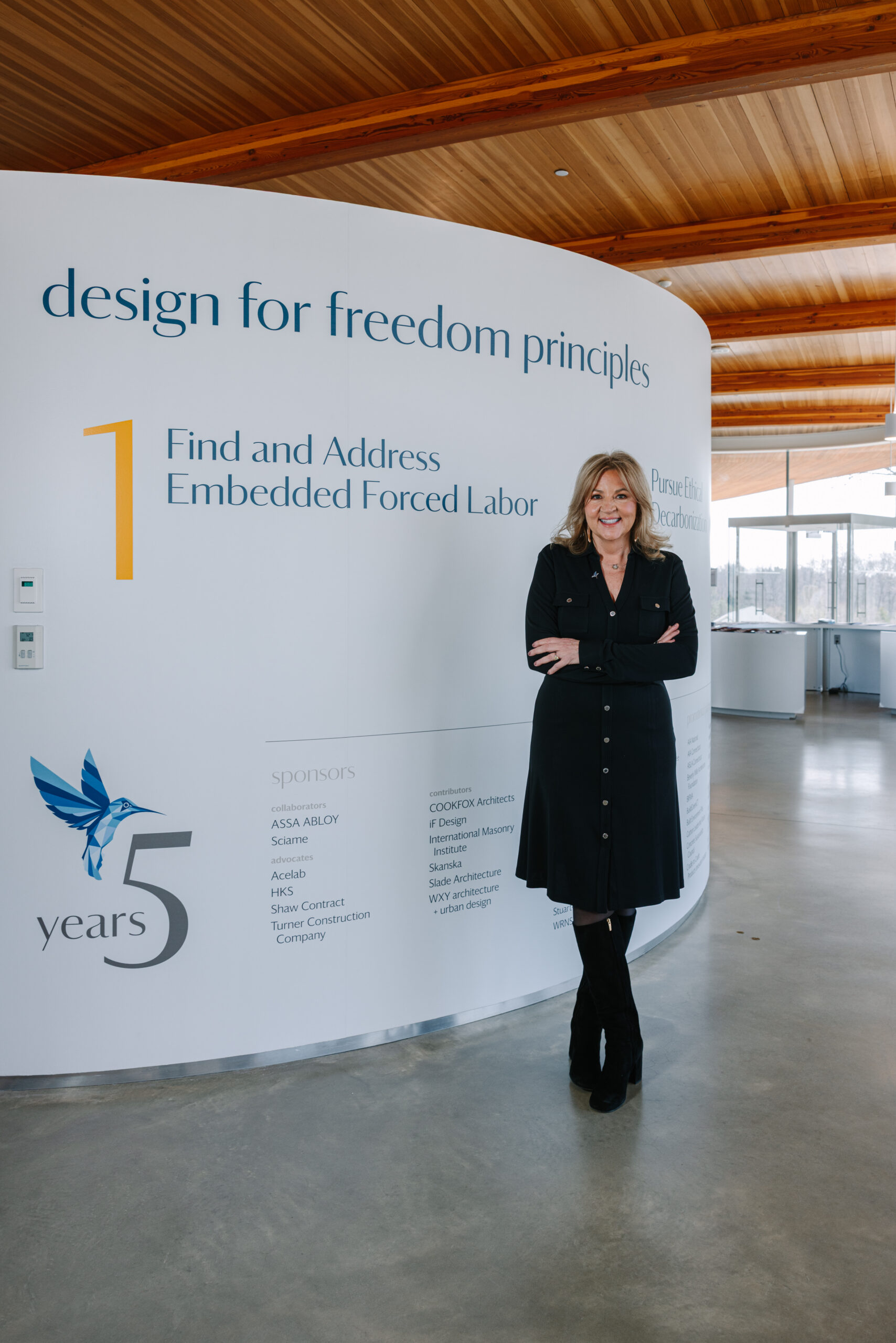
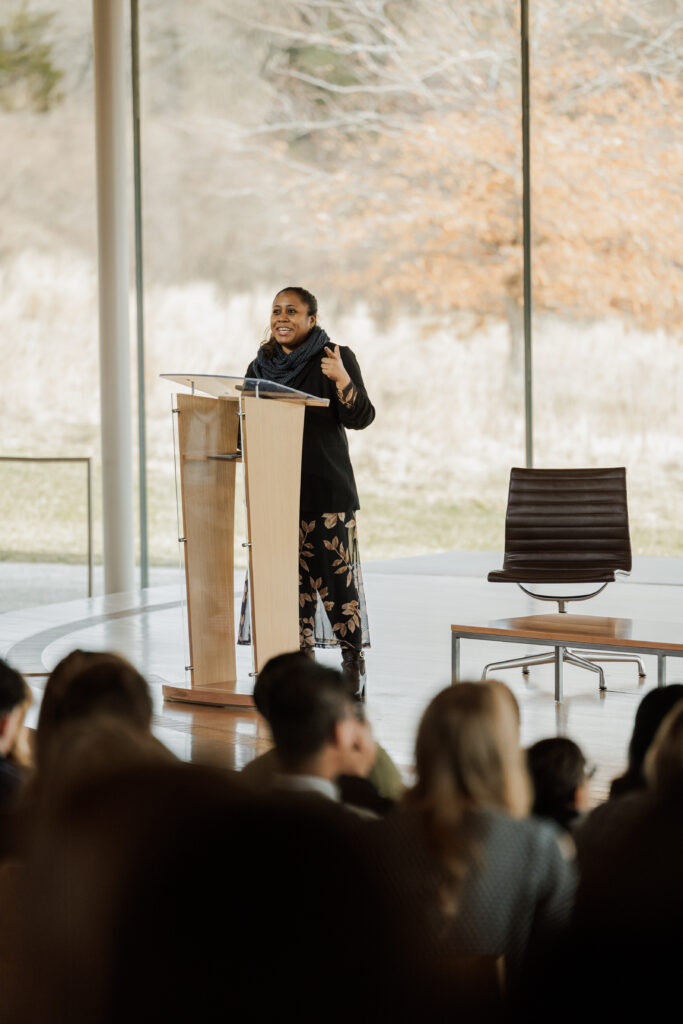
Sharon Prince, CEO and Founder of Grace Farms in the Sanctuary of the award-winning building, where events such as the Summit and performances are held. (Photo by Melani Lust)
Welcome Address, Sharon Prince, CEO & Founder, Grace Farms
Here are excerpts from the address. Read Prince’s full address.
“In the life of a movement, five years is a foundation … But for the 28 million people trapped in forced labor conditions around the world, working in inhumane conditions to produce the very materials of our built environment, five years is a lifetime.”
“This is our moment. The construction industry is now positioned to become a global leader in supply chain transparency and human rights.”
“We refuse to stay at a standstill. We’re creating a radical paradigm shift to move forced and child labor from the building materials supply chain and ignite institutional responses.”
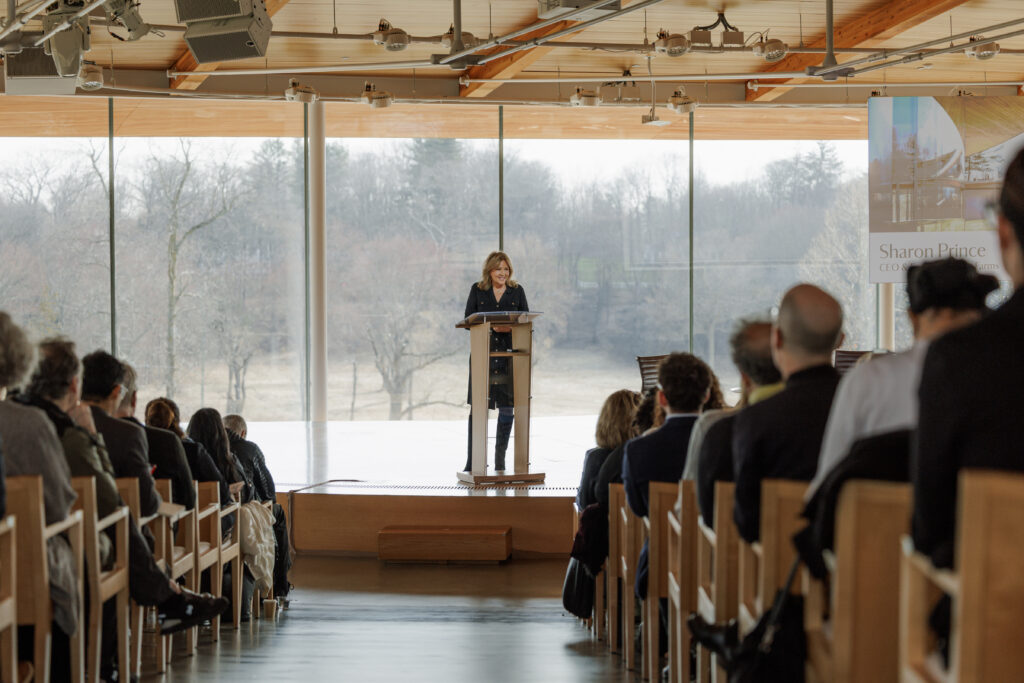
Sharon Prince opens the Summit, welcoming a sold-out audience of global leaders across sectors, including students from leading universities. (Photo by Melani Lust)
“‘Plausible deniability’ cannot be used as a backstop anymore.”
U.S. Foreign Policy: In Conversation with Former Ambassador Cindy Dyer
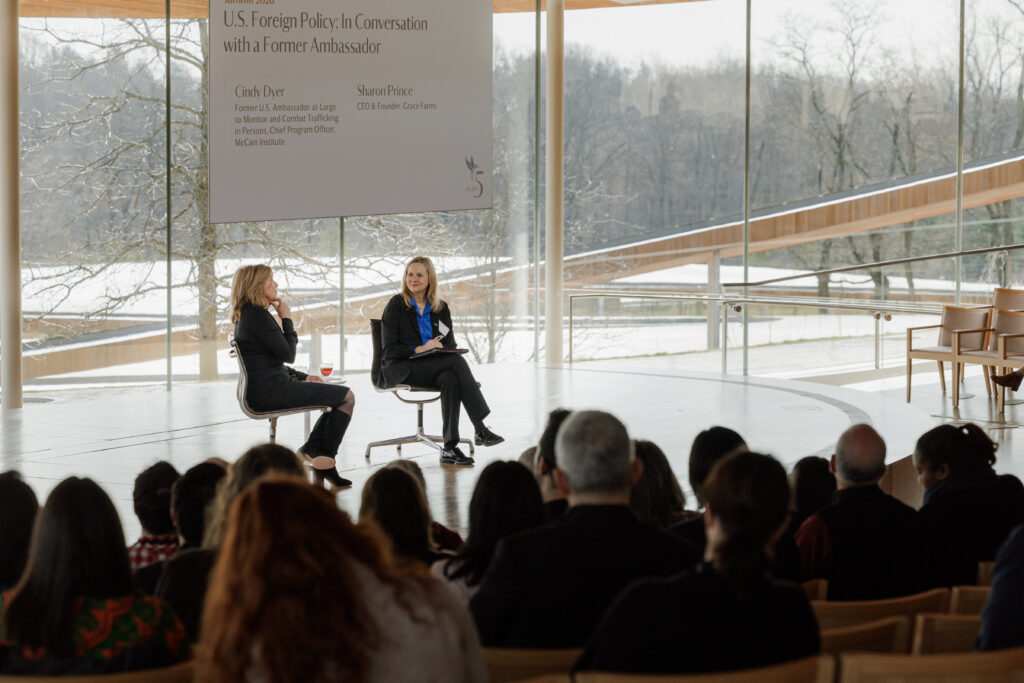
Sharon Prince and Ambassador Cindy Dyer discuss the state of global human trafficking efforts. (Photo by Melani Lust)
Sharon Prince, CEO & Founder, Grace Farms, and Cindy Dyer, Former U.S. Ambassador-at-Large to Monitor and Combat Trafficking in Persons, Chief Program Officer, McCain Institute
The two discussed the state of global human trafficking efforts. Dyer explained how the Trafficking in Persons (TIP) Report works as a powerful tool that assesses anti-trafficking in 188 countries and territories, assigns tier rankings, and carries real financial consequences for the worst offenders. Dyer shared firsthand accounts that illustrated how diplomatic engagement backed by legislation can drive real policy change. Both noted that while the Trafficking Victims Protection Act (TVPA) and the Palermo Protocol have maintained rare bipartisan support, recent staff cuts from 85 to 34 people in the TIP office and from five to roughly two staff on the Uyghur Forced Labor Prevention Act team are undermining enforcement capacity.
The conversation also touched on economic dimensions of forced labor, particularly in supply chains for goods like solar panels, where exploited labor creates an unfair “slavery discount” that undercuts ethical competitors. Dyer emphasized that traffickers are constantly innovating and that governments and businesses must do the same, using every available tool including legislative, diplomatic, and technological. She highlighted the gap in current U.S. policy where trade-driven enforcement is expanding, while the domestic institutions responsible for oversight are being hollowed out. The conversation closed with a call to action for leaders, urging them to leverage their influence and supply chain power to help close the gap between laws and enforcement.
“… the issue of human trafficking does still have bipartisan support and bipartisan relevance. I will note that just last year, we celebrated the 25th anniversary of both the Trafficking Victims Protection Act and the Palermo Protocol. And as Sharon said, the Palermo Protocol has been adopted by the vast majority of countries and the TVPA (Trafficking Victims Protection Act) … not only had bipartisan support in 2000, but it has been reauthorized every few years, always with bipartisan support.” – Cindy Dyer
Ethical Sourcing and Circular Construction in Data Centers
Miranda Gardiner, Executive Director, iMasons Climate Accord
Noah Goldstein, Sustainable Construction Lead – Data Centers, Google
Dave Wildman, Global Head of Data Centers, Infrastructure & Workplace Sustainability, Bloomberg
Nora Rizzo, Ethical Materials Director, Grace Farms (Moderator)
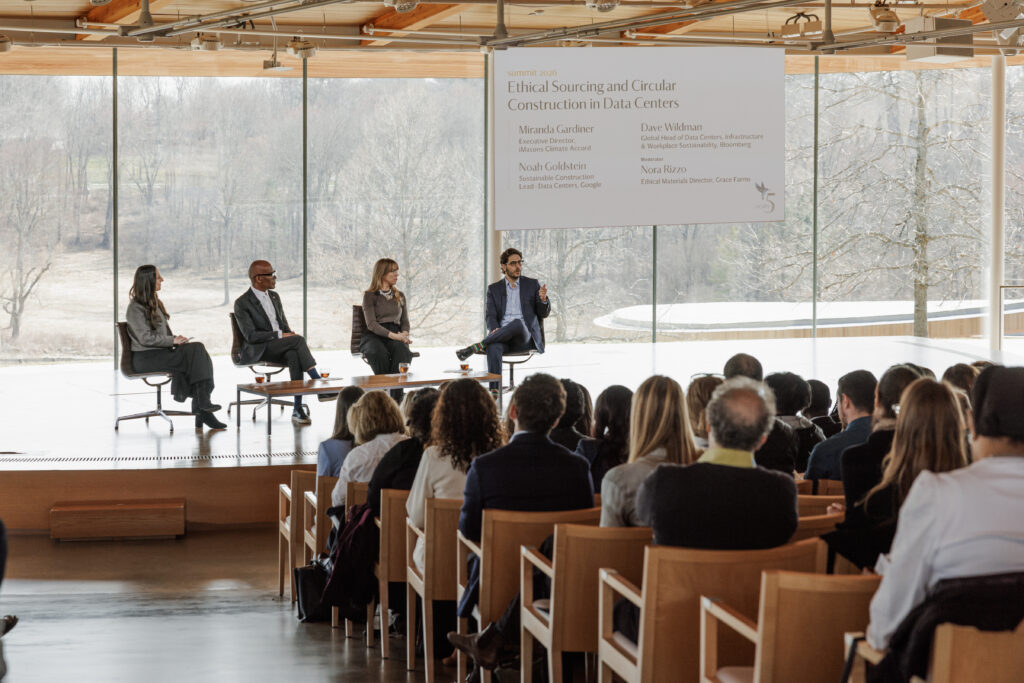
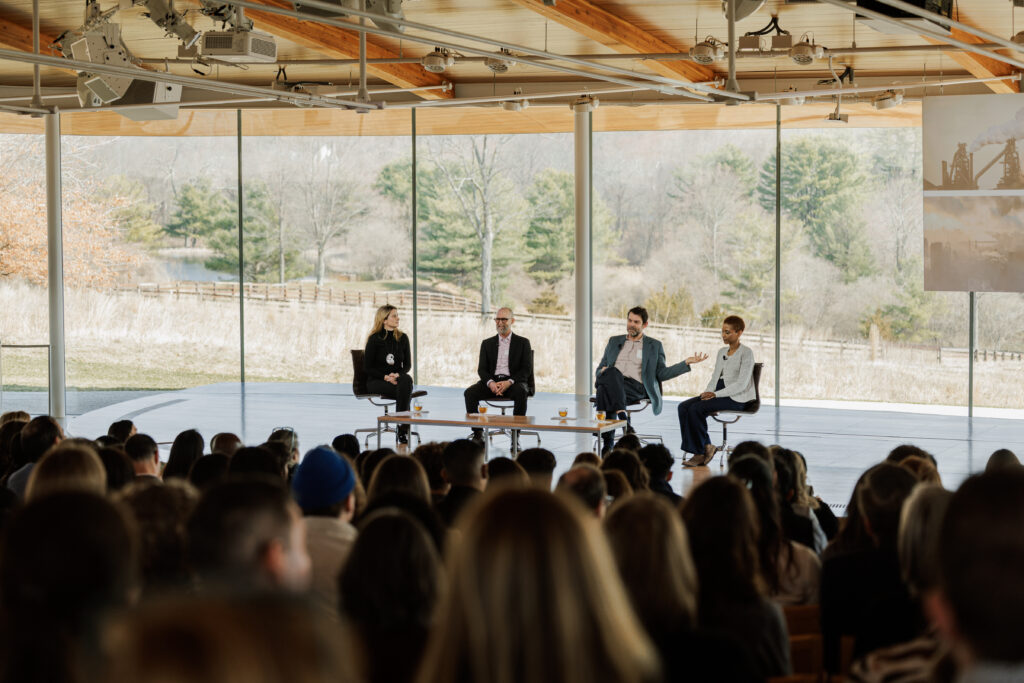
Nora Rizzo, left, moderates the panel that explores the challenges and opportunities in construction with the emergence of AI and data centers. (Photo by Melani Lust)
This panel discussed the sustainability and ethical sourcing challenges facing the rapidly expanding data center industry. Global data center capacity is projected to grow 14% annually, and the U.S. market is expected to reach $112 billion by 2030. Major players in the industry are using their collective purchasing power and contracting language to drive better environmental and human rights outcomes across their supply chains. They emphasized transparency as a core tool, with Google’s Supplier Code of Conduct serving as a concrete example of how existing corporate commitments can be actively deployed in vendor meetings and RFPs rather than sitting unused on a website.
The panel also explored the challenge of translating carbon disclosure and environmental sustainability frameworks that are more mature into social equity and human rights conversations, noting that the data center industry is still in early stages on these discussions. But they were optimistic about the long-term, comparing today’s human rights’ conversations in data center construction to where sustainability discussions were 20 to 30 years ago, arguing that consistent education along the supply chain, combined with the competitive nature of industry leaders can drive positive change.
“There is great opportunity, but also great risk associated with AI and digital infrastructure. Collectively, we are managing one of the most complex supply chains on the planet. How do we get this right?” — Nora Rizzo
” . . . if we invest in the supply chain beforehand, if we invest in the communities beforehand, it actually sets us up for success.” — Noah Goldstein
“Every time somebody says something like, ‘We need it, because it’s cheaper.’ … Cheaper for who? Where along that supply chain is the cheaper piece of it? Who are we impacting?” — Miranda Gardiner
“When you speak to people, and this is a new topic for them, you can see their eyes light up, not because they’re happy, but you’re enlightening them . . . it shows you that there’s hope that people do actually care.” — Dave Wildman
Material Innovation with Dr. Mae-ling Lokko
Dr. Mae-ling Lokko, Founder, Willow Technologies; Assistant Professor, Yale School of Architecture; Assistant Director, Yale Center for Ecosystems + Architecture (CEA)
Dr. Mae-ling Lokko, Founder, Willow Technologies; Assistant Professor, Yale School of Architecture; Assistant Director, Yale Center for Ecosystems in Architecture (CEA). (Photo by Melani Lust)
Dr. Mae-ling Lokko presented her research on bio-based and regenerative materials, framing agricultural byproducts — husks, stalks, peels, and stems — as an underutilized and powerful resource for addressing climate change, labor equity, and healthy building materials. She discussed the study from Ghana, where her company Willow worked with a network of women textile makers called Global Mamas to develop an affordable, non-toxic wastewater treatment using Moringa seed press meal. This work prompted a deeper question: rather than treating the symptoms of a toxic system, could materials be redesigned from the ground up with soil health as the goal? This shift led her to develop a new research framework she called “soil systems,” which looked not just at where materials come from, but where they ultimately go, positioning architecture and its supply chains as a form of public health infrastructure.
Dr. Lokko presented four emerging material classes being explored at Yale: carbon sink materials derived from agricultural residues like coconut husk; mycelium-based materials that drew on fungi’s natural ability to cycle nutrients responsibly; earth masonry innovations that moved away from carbon-intensive cement binders; and material banks that repurposed textile and synthetic waste by temporarily storing it in buildings. She emphasized the importance of biodiversity in each category, diversifying fungal strains, celebrating multi-crop farming, and expanding plant-based color systems. She also introduced the Carver Color Lab, a mobile lab that was on display at the Summit. The mobile lab is the outcome of Civilizations of Color, an interdisciplinary research collaboration between the Yale CEA and Tuskegee University that explores the development of healthy colorants for the built environment. Inspired by the African American scientist and inventor George Washington Carver, the Carver Color Lab is a revival of his “jessup wagon,” a mobile classroom and laboratory designed to bring scientific agricultural education directly to farmers in Alabama.
“Biomass from agriculture is a huge opportunity, primarily because all of these materials sequester carbon as they’re growing as plants, and we can actually defer those carbon emissions by burning or downcycling them by storing them in buildings.” — Dr. Mae-ling Lokko
With Every Fiber Exhibit: Pigment, Stone, Glass
Nina Cooke John, Principal, Studio Cooke John
John Sabraw, Artist, Activist, Professor, Ohio University
Steve Webb, Director, Webb Yates Engineers
Chelsea Thatcher, Chief Strategic Officer & Founding Creative Director, Grace Farms (Moderator)
Chelsea Thatcher, left, moderates the With Every Fiber panel. (Photo by Melani Lust)
This panel highlighted three commissioned artists and innovators whose work appears in Grace Farms’ With Every Fiber exhibit, curated by Chelsea Thatcher. They addressed material circularity, environmental repair, and ethical sourcing through pigment, stone, and glass. John Sabraw presented his groundbreaking project in Appalachian Ohio, where he and collaborators developed a process to extract iron oxide pigment from acid mine drainage, a pollution source that has destroyed over 1,300 miles of streams, turning the extract into a commercially viable, non-toxic paint pigment. Steve Webb discussed the compelling case for stone as an underutilized, low-carbon structural material, demonstrating through engineering innovation how pre-stressed stone beams and slabs could rival concrete and steel in performance while carrying a fraction of the embodied carbon. He also acknowledged the quarrying industry’s deep ties to forced labor as a critical challenge to address.
Nina Cooke John talked about her commissioned artwork for the exhibit, which explored glass circularity by salvaging vintage glass from residential and civic buildings and layering it into a composition that reflected both the fragility and transparency of the material and the need for supply chain accountability. A portion of the With Every Fiber exhibit, which Cooke John designed, was chosen for the 2025 Venice Biennale. The curator, Carlo Ratti, included it in the Intelligens CANON, which highlighted the important ideas in the last 50 years.
Across the discussions, a common thread emerged: that material innovation, when paired with community engagement, circular design thinking, and a commitment to the dignity of workers throughout the supply chain, could transform industries rather than simply reform them.
“It is a space curated for presence and attention, where materials rotate to reflect both urgent challenges in the building materials supply chain and innovations advancing more ethical, sustainable practices.” – Chelsea Thatcher, Chief Strategic Officer and Founding Creative Director and curator of the With Every Fiber exhibit
“It’s really important for us that we’re doing this, that we actually activate the creative problem-solving potential of the next generation, even as we encourage them to be stewards of their own backyard.” — John Sabraw
“It’s been really interesting to partner with Grace Farms to explore this and find ways of using stone but also trying to find out how the supply chain can be improved in terms of the dignity and the rights of the people that are working in it.” — Steve Webb
“This layering allows us to lean into the transparency of glass, but also thinking about transparency of exploring global supply chains and how to incorporate that . . . ” — Nina Cooke John
On the Horizon
ACSA Winners Announced with Julia Gamolina, Founder and Editor-in-Chief, Madame Architect, and Karen Kariuki, Managing Director, Strategic Initiatives, Grace Farms

Karen Kariuki, Managing Director, Strategic Initiatives, Grace Farms, left, and Julia Gamolina, Founder and Editor-in-Chief, Madame Architect. (Photo by Melani Lust)
The winners of the Grace Farms and the Association of Collegiate Schools of Architecture (ACSA) student competition were announced. The competition reached over 300 students and faculty worldwide. Participants proposed ways architects can eradicate forced labor from the built environment. The winners were recognized at the Summit by one of the nine jurors, Madame Architect’s Founder, Julia Gamolina.
“…their work is already shaping this movement, and they are very powerfully demonstrating that architecture and justice are inseparable.” — Julia Gamolina
Winners in the Design Project Category:
- First Place: Peace Museum – Beyond the Scars
Nidhi Naik & Shamita Shyam Honawar, University of Illinois, Urbana-Champaign
- Second Place: Patches in Waiting A Shelter for Equity and Material Justice
Leonor Aguero Vivas, University of Calgary
- Third Place: Modular Housing for Material Justice
Sofia Ramirez, University of New Mexico
Winners in the Materials Research Category:
- First Place: Unmasking Greenwashing: Creating an Ethical Timber Supply Chain
Natalie Darakjian, Noelle Osborne & Reed Wilson, University of Southern California
- Second Place: Behind the Rubber
Xingyu Liu, University of Illinois, Urbana-Champaign
- Third Place: Unbuild to Rebuild:
Teodor Mlynczyk & Kritika Sarawagi, Carnegie Mellon University
Grace Farms Tea & Coffee
Adam Thatcher, CEO & Co-Founder, Grace Farms Tea & Coffee
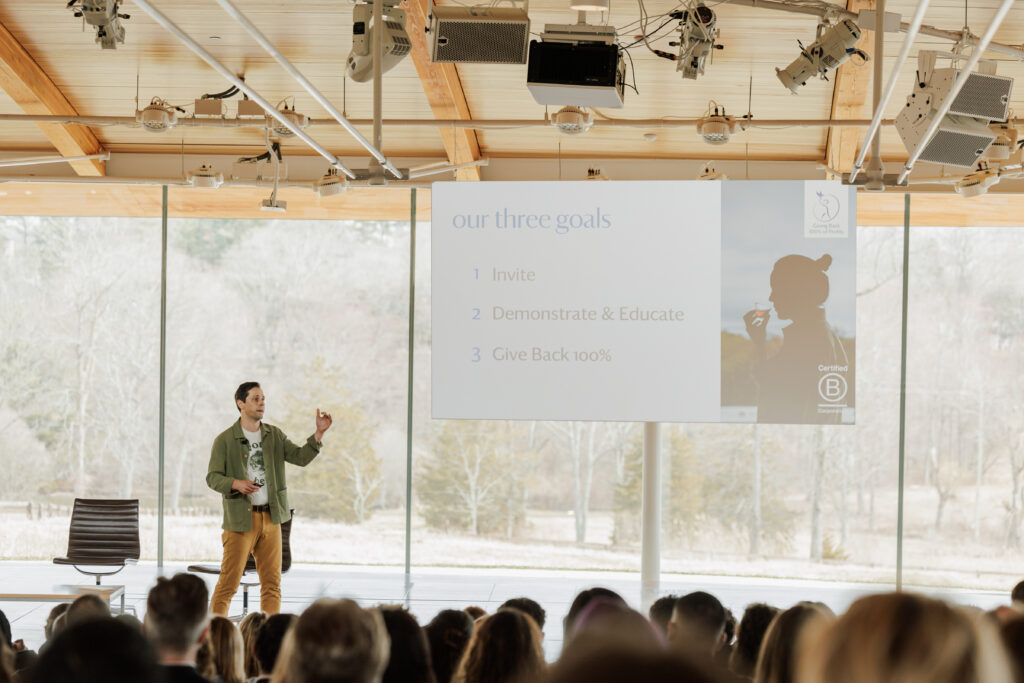
Adam Thatcher, CEO & Co-Founder, Grace Farms Tea & Coffee, talks about the company’s goals and success. (Photo by Melani Lust)
Grace Farms Tea & Coffee, a Certified B Corp launched during the pandemic with three goals: 1) Invite everyone to experience Grace Farms; 2) Demonstrate ethical and sustainable supply chains; and 3) Give back 100% of profits to support Design For Freedom. welcoming visitors through ethically sourced teas and coffees, demonstrating sustainable supply chains, and supporting women-led farming cooperatives. The company has a partnership with the Ketiara Cooperative in Sumatra, Indonesia, a community of 1,100 women coffee farmers led by Ibu Rahmah. Working with Slade Architecture, Grace Farms is developing a “Rest House” concept for the community. When a devastating cyclone struck Sumatra last November, which was the worst disaster to hit the area since the 2004 tsunami, Grace Farms quickly provided humanitarian aid. Grace Farms Tea & Coffee continues to expand its corporate partnerships with the companies like Google and Bloomberg. This year, it will open its first retail location at the base of JPMorgan Chase’s new headquarters at 270 Park Avenue in New York City.
“We’re the first and only US-based tea company to partner with Fairtrade International, the original and most rigorous of fair-trade certifications, and we also source our coffees exclusively from women-led co-ops in Ethiopia, Colombia, and Indonesia.” — Adam Thatcher
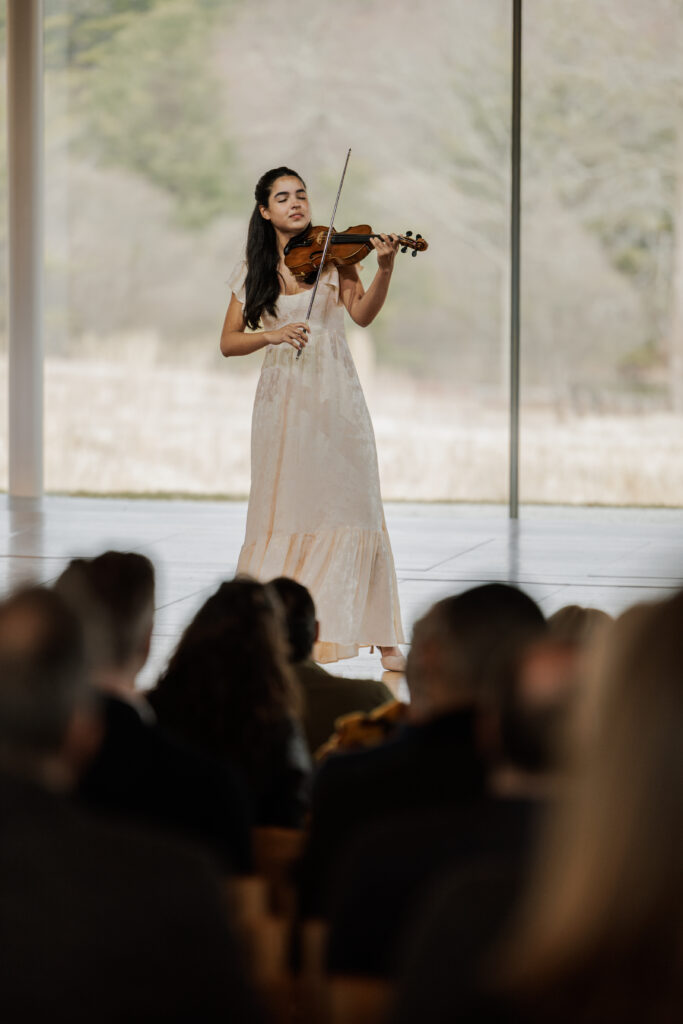
Solo Violin Performance – Ana Isabella España
(Photo by Melani Lust)
The 19-year-old violinist’s growing list of honors includes the 2024 Sphinx Competition Junior Division, the 2025 Aspen Music Festival and School Violin Concerto Composition, and a 2023 Young Arts award. She is currently enrolled in the Columbia Juilliard Exchange Program and serves as Concert Master of the Columbia University Orchestra, following her tenure as Concert Master of the GRAMMY© Award-winning New York Youth Symphony.
“This performance invites us to reflect on what’s possible within each of us, the virtuosity, creativity, and energy waiting to be realized and applied to the Design for Freedom movement. It also reminds us of the value of study and exploration, of taking something apart, understanding it deeply, and practicing it with intention, integrity, and a commitment to human flourishing.” — Chelsea Thatcher
Pilot Projects Announcements
Nora Rizzo, Ethical Materials Director, Grace Farms and Brigid Abraham, Design for Freedom Senior Project Manager, Grace Farms
“These projects model more transparent and ethical supply chains in the built environment. Each project generates its own set of outcomes and research, creating ripple effects throughout the market. These projects tell stories of how our industry is challenging the status quo and bringing a more humane future into view.” — Nora Rizzo
- The National Juneteenth Museum (Fort Worth, Texas)
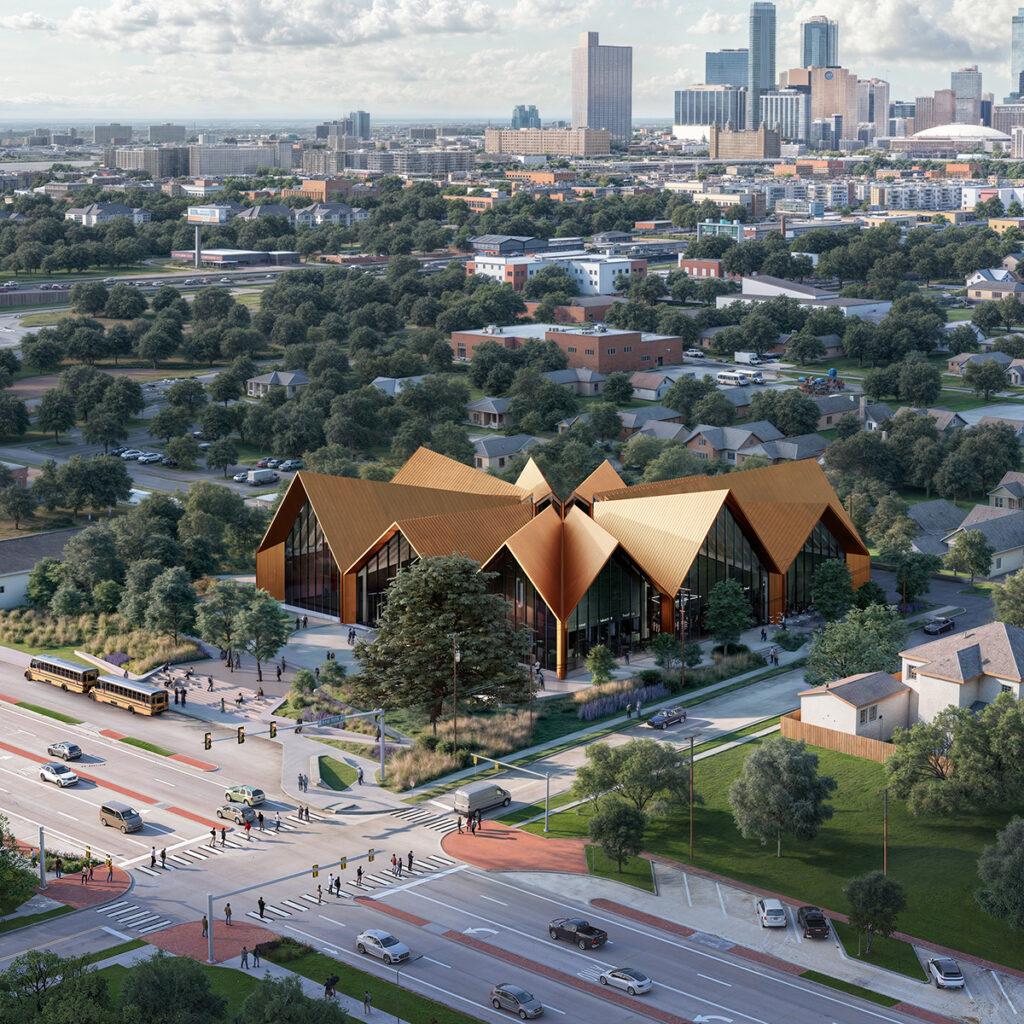
The National Juneteenth Museum will be the epicenter for the education, preservation and celebration of Juneteenth nationally and globally, hosting exhibitions, discussions, and events about the significance of African American freedom. The new building is designed by Bjarke Ingels Group (BIG), Alligood Song Architecture, and architect-of-record KAI Enterprises.
- Bloomberg Park Avenue Office Expansion (New York, New York)
Designed by Fogarty Finger and with Socotec as sustainability and advisory partner, the expansion of the company’s Park Avenue Office will create a healthful and inspiring space for Bloomberg employees to gather and collaborate. It demonstrates how Pilot Projects translate principles of integrity into practice, delivering real value in the workplace while illuminating the potential to scale this work across Bloomberg’s broader real estate and property management portfolio.
- National accessArts Centre (Calgary, Canada)
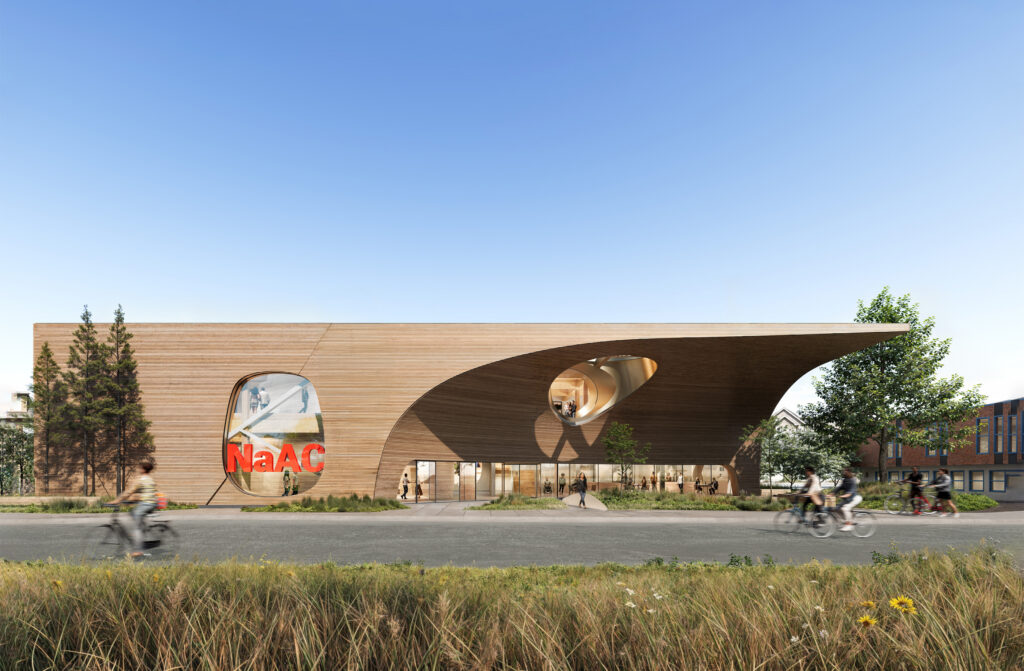
The National accessArts Centre is Canada’s oldest and largest disability-arts organization, supporting a growing community of more than 400 artists through training, creation, and exhibition opportunities across multiple disciplines. Their new pavilion, the Multidisciplinary Disability Community Arts Hub, will be a home for the performing arts that approaches disability arts as a central force in cultural life. This zero-carbon building is designed for rehearsal and incubation, with public-facing spaces that bring the neighborhood into the campus, and the campus into civic life. The project is designed by DIALOG.
- Médano by Viñoly (Montevideo, Uruguay)
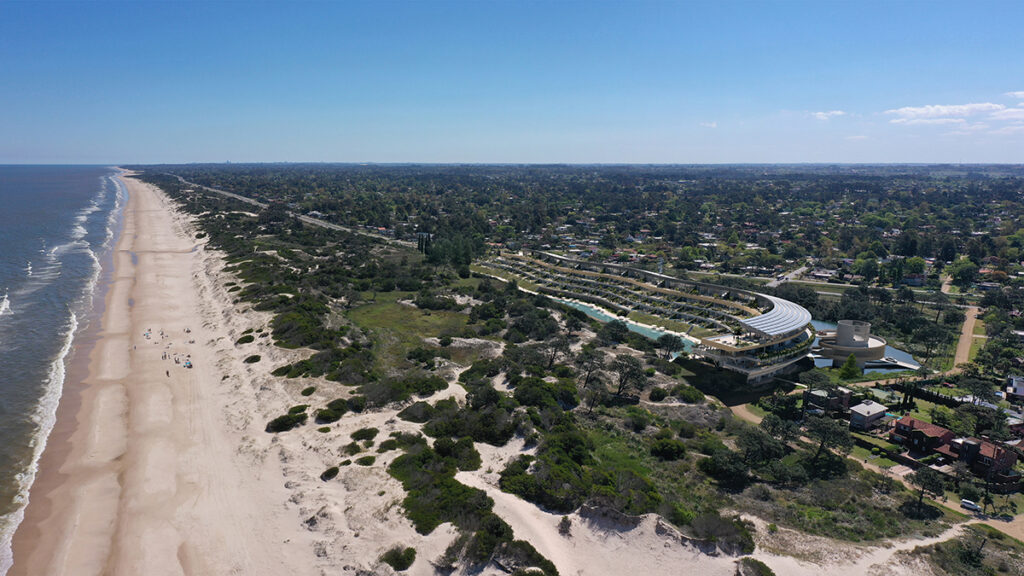
Médano by Viñoly is a sustainable beachfront residential development designed by Rafael Viñoly Architects. Positioned behind coastal dunes, its elongated, sinuous form follows the natural topography, preserving the character of the coastline while minimizing its visual presence and framing views of the Atlantic Ocean and a northern lagoon. Stretching 425 meters along the shoreline, the low-lying “landscraper” comprises approximately 120 terraced residences. Conceived as a Nearly Zero-Energy development, the project integrates passive design strategies, renewable energy systems, and generous indoor-outdoor living. This is the first Pilot Project in the residential market and in South America.
Inspiration & Action with Jha D Amazi
Principal, Public Memory & Memorials Lab, MASS Design Group
Jha D Amazi discussed representation and giving a voice to communities long excluded from U.S. memorial landscapes. As a nonprofit design collective, Amazi said, they leverage philanthropic support to undertake research, catalyst projects, and system change initiatives that are focused in areas where design is urgently needed but grossly underfunded.
“Climate change, biodiversity loss, and pollution driven by unsustainable development and resource extraction are accelerating at an unprecedented rate. Simultaneously, conventional construction practices continue to exploit materials and labor, leaving behind environmental destruction and systems that fail both people and the planet. By restoring landscapes, challenging supply chains, and embedding care into the built environment, we create systems that sequester carbon, regenerate biodiversity, and improve human well-being.” — Jha D Amazi
Cultural Context and Risk in the Global Timber Supply Chain
Kai-Uwe Bergmann, Partner, BIG
Gustavo Ferroni, Program Manager, Freedom Fund (Brasil)
Toshiko Mori, Principal, Toshiko Mori Architect PLLC, Robert P. Hubbard Professor in the Practice of Architecture, Harvard University Graduate School of Design
Sharon Prince, CEO & Founder, Grace Farms (Moderator)
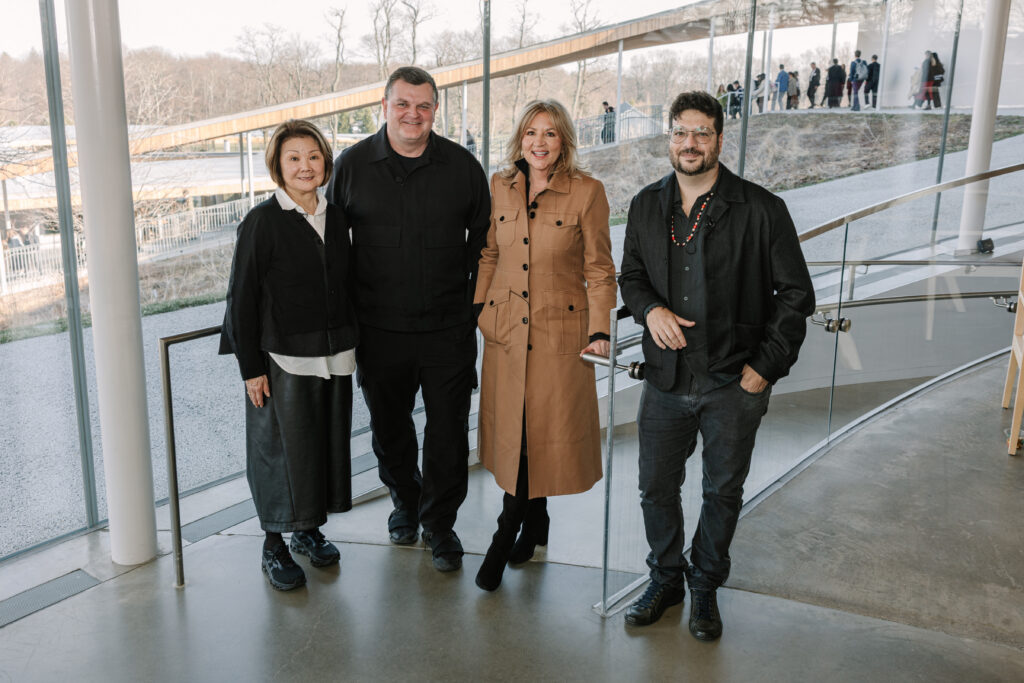
Left to right: Toshiko Mori, Kai-Uwe Bergmann, Sharon Prince, and Gustavo Ferroni. (Photo by Melani Lust)
“Timber, like glass…demonstrates the capacity for the built environment to communicate beauty and dignity, as well as exploitation.”— Sharon Prince
This panel explored the connections between forests, indigenous wisdom, forced labor, and ethical material sourcing in the built environment. Mori took the audience on a global tour of forest stewardship models, highlighting Finland’s century-long tradition of sustainable forestry management, Japan’s Hokkaido region where the Ainu philosophy of taking only what is needed has shaped both forest health and community resilience, and the Amazon where archaeological evidence now confirms that indigenous communities cultivated the forest for thousands of years. Ferroni discussed the realities of the Brazilian Amazon, where illegal deforestation driven by cattle ranching contaminates timber supply chains with forced labor, organized crime, and exploitation. He urged companies to build direct relationships with local communities rather than relying solely on certifications and auditors, and to assess risk by territory rather than supplier alone.
Prince shared her firsthand visit to Stora Enso’s forestry operations in Finland, illustrating how private forest ownership and multi-generational community investment create the conditions for traceable and ethical supply chains. Bergmann discussed his firm’s project in Bhutan, where the King commissioned a new city of 80,000 people to reverse a generational drain, designed around Bhutanese Buddhist principles, vernacular architecture, and local craftsmanship. BIG discussed its use of machine learning robots trained by Bhutanese carpenters to help scale traditional wood carving techniques for the new airport, a project the carpenters themselves embraced rather than seeing it as a threat to their craft. Through the discussion, one theme emerged: the ethical sourcing in the timber and construction industries ultimately depends not on certifications alone, but on direct relationships, indigenous knowledge, and a willingness to see forests, and the people who steward them, as living systems deserving of dignity and protection.
“[The forest] has been witness to historical events and tragedies alike, it’s ingrained in the memory of civilization and continues to exist as a cultural monument itself.” — Toshiko Mori
“The Amazon is a living system…it’s a forest and a people together, and we should not ever separate that.” — Gustavo Ferroni
““[The King] invited Bjarke to Bhutan to start thinking about how to envision a future…a new city of 80,000 people…and create a new economic zone on the border with India.
[The airport] is the project we’ve taken on first…Now there’s one issue, which is how many carpenters are there in Bhutan and have they ever built anything or delivered anything at this scale?…So we went to the Biennale in Venice . . . We wanted to address the issue of the carpenters, and the idea of how this incredible craft can actually be learned. We introduced a robot that’s machine learning from the actual carpenters.
We asked the carpenters, ‘Are you afraid? Do you feel threatened by this?’ And they said, ‘No, we actually see this as a chance to really celebrate the craft.’..It’s an evolving conversation that’s very important about cultural appropriation. We’re very clear we’re not wishing to impose a Western approach of Bhutanese architecture, but the King has challenged us to create a conversation that then the Bhutanese can fill out themselves.” — Kai-Uwe Bergmann
Join us for Design for Freedom Summit on March 31, 2027
With the exponential growth of AI and data centers, next year’s Summit will specifically address both mining and data centers “because we must get this right as we build our future,” Prince said. This is “our moment,” she added. “The construction industry traditionally considered a laggard, can become a global leader in supply chain transparency and human rights. While our sector is often considered the least modernized, it also stands to benefit the most from the AI revolution. But to truly benefit and really yield potential, we must first pour a foundation of dignity.”
Design for Freedom Movement is Accelerating
Summit Momentum 2022 – 2026
- 2550+ industry leaders
- 350 students
- 50 Universities represented
- 85+ panels, interactive breakout sessions, and featured conversations
- 250 speakers
- 20 sponsors in 2026, up from 6 in 2022
Global Impact
- 12+ Pilot Projects across four continents
- 50,000+ professionals educated through lectures, workshops, and programs
- 300+ students and faculty participants in ACSA Competition
- 1st dedicated exhibit With Every Fiber featured in the La Biennale di Venezia, Intelligens CANON
- 100 Design for Freedom Working Group Members that champion the movement across sectors
- 1st ethically sourced face mask through partnership with MillerKnoll long-listed by the Dezeen Awards
- 13,500+ Toolkit downloads since March 2022
Student Impact
- 84,000+ young people and students under the age of 26 engaged in With Every Fiber exhibit at the 19th International Architecture Exhibition of La Biennale di Venezia, curated by Carlo Ratti
- 30,000+ visitors experienced the new iteration of the With Every Fiber in 2025, a public exhibit at Grace Farms that demonstrates innovative approaches to ethical sourcing and proves that fair labor practices in the construction industry are within our reach.
Press
AI data centers have a human rights problem – Fast Company
Turning Ethical Supply Chains into Action – Green Building & Design Magazine
Spatial (In)Justice: How Does It Manifest in the Built Environment? – Wiley
Over thirty academics, design practitioners, and environmental thinkers contributed to this book edited by Adnan Zillur Morshed, Professor School of Architecture and Planning The Catholic University of America, including Sharon Prince. Prince’s chapter focuses on Western red cedar that was ethically sourced from Haida Gwaii in British Columbia and used in the River building’s fascia.
The book examined how the contentious ideas of justice and space intersect producing different meanings for different constituencies and how they are experienced as unique social conditions, particularly in the context of an era marked by diverse social justice movements and wide-ranging political reactions to them.
Design for Freedom Working Group member, Katie Swenson of MASS Design Group also contributed to the book.
Support
The 2026 Design for Freedom Summit is supported by Collaborators ASSA ABLOY and Sciame; Advocates Acelab, HKS, ShawContract, and Turner; Contributors COOKFOX, iF DESIGN, International Masonry Institute (IMI), Skanska, Slade Architecture, WXY architecture + design; Supporters Altana, Amanda Martocchio Architecture, Louis Fusco Landscape Architects, Maine Passive House, Material Bank, Perkins Eastman, Stuart-Lynn Company, WRNS Studio; and in-kind sponsors Grace Farms Tea & Coffee and Tony’s Chocolonely.
About Grace Farms
Grace Farms is a cultural and humanitarian center in New Canaan, Connecticut that brings people together across sectors to explore nature, arts, justice, community, and faith at the SANAA-designed River building and Barns on 80 acres of publicly accessible natural landscape. Since opening in 2015, Grace Farms has welcomed 1 million visitors from around the world to experience its unique integration of arts, architecture, nature, and purpose.
As a destination for arts and culture, Grace Farms presents innovative programming in music, visual and performing arts while fostering contemplation and connection through architecture and nature. Its humanitarian work includes leading the Design for Freedom movement to eliminate forced labor in the building materials supply chain and advancing initiatives to foster more grace and peace locally and globally.
The integration of cultural programming and humanitarian action reflects Grace Farms’ collaborative approach to generating new outcomes and meaningful change.
Membership
Grace Farms members can visit without advance registration and enjoy a 20% discount on paid programs, retail, and dining, invitations to members-only gatherings, complimentary events, and a welcome gift from Grace Farms Tea & Coffee.
Becoming a member helps us advance our mission to pursue a more peaceful world and supports the preservation of the River building and its surrounding 80 acres.
For more information, visit gracefarms.org/membership.
Visit our calendar of events to learn more about upcoming programs.
Sign-up for our newsletter
Follow us
@gracefarmsct #gracefarms