‘What more can we take?’ ‘What more could we gouge out of the earth? And that’s where my question arises. Shouldn’t we instead be saying, ‘what does the earth ask of us?’ – Robin Wall Kimmerer
In her lecture at Grace Farms in March, Robin Wall Kimmerer called upon us to think about what we could do for the Earth and how we could use our “gifts” to care for the planet and its inhabitants. “This is the myth of human exceptionalism. And this has consequences, doesn’t it? Because if there is a hierarchy, someone is higher and someone is lower, and all the beings in nature are lower than us. And that has consequences.” Kimmerer said.
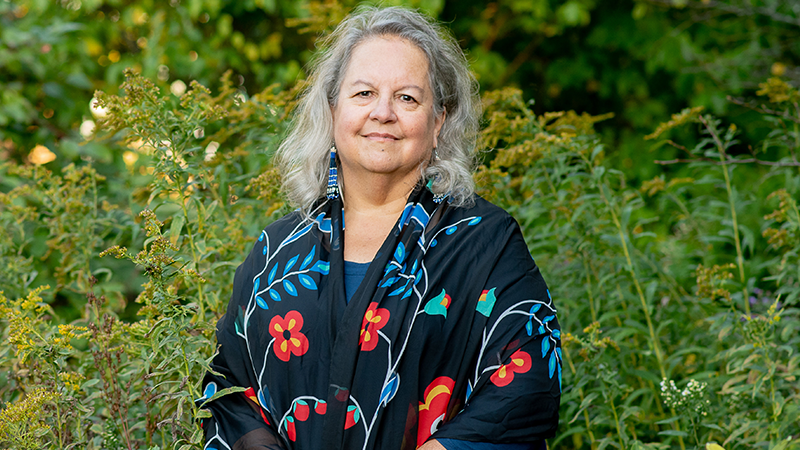
As Elizabeth Gilbert writes, Robin Wall Kimmerer is “a great teacher, and her words are a hymn of love to the world.” (Simon & Schuster)
These consequences have manifested in unbridled consumerism, from the extraction of lithium to power our electronics to illegal logging using forced labor that is destroying our ecosystems to meet the ever-growing demands of global construction. Unfortunately, the relationship we have with the Earth is one that exists primarily to service our needs, regardless of the consequences. In discussing how to repair this broken relationship, the serviceberry, also known as the juneberry, may hold some of the answers. The serviceberry, as Kimmerer explains, is a reminder of our interdependence and that all flourishing is mutual.
In The New York Times’ discussion of Kimmerer’s work and her 2024 book, The Serviceberry, she remarked that there is a “tendency that we have to think of the world as our property, as if the world was a big old Amazon warehouse and everything is there for us to take, that is not grounded in gratitude for gifts of the land.”
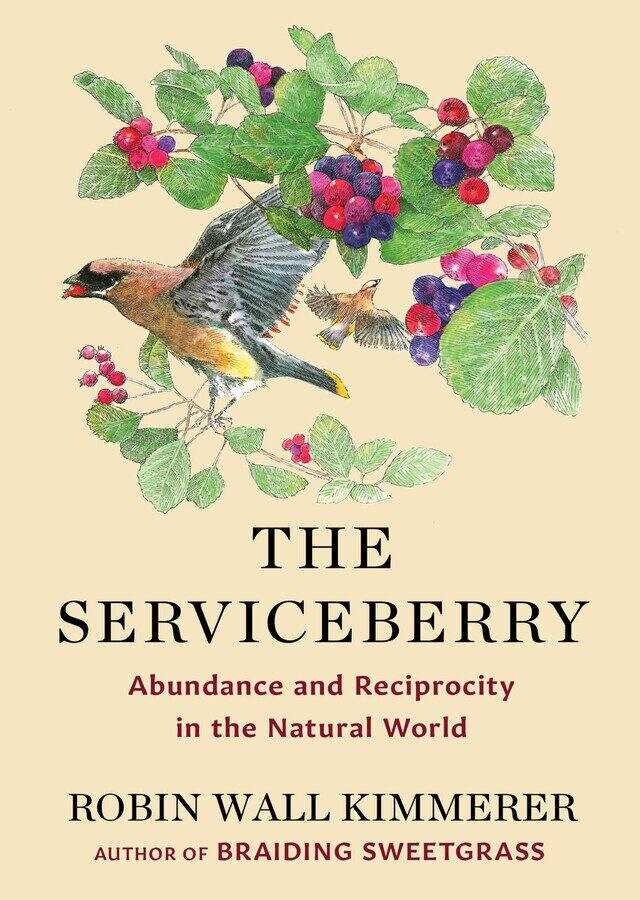
From The New York Times bestselling author of Braiding Sweetgrass, The Serviceberry published by Simon & Schuster. This book is available in our Library.
The serviceberry is indeed a gift to both wildlife and people. Among the first native plants to bloom in the spring, it later produces red, deep purple berries in June and is abundant across North America, often found along the edges of woodlands, riverbeds, and meadows. For Indigenous peoples and early European settlers in North America, the berries were an important food source.
In an essay Kimmerer wrote for Emergence Magazine, where she is harvesting serviceberries along with the birds, she wonders about the “ethic of reciprocity” that she believes is central to the gift economy. “This abundance of berries feels like a pure gift from the land. I have not earned, paid for, nor labored for them. There is no mathematics of worthiness that reckons I deserve them in any way. And yet here they are—along with the sun and the air and the birds and the rain, gathering in the towers of cumulonimbi (clouds).”
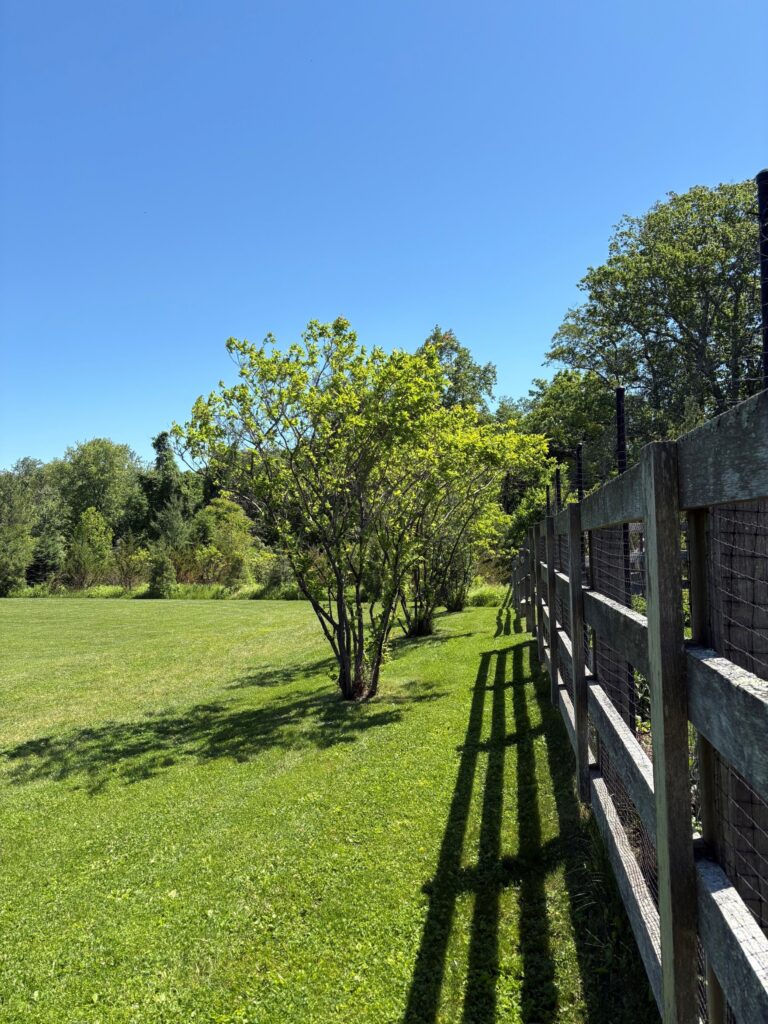
Serviceberries along the Grace Farms Garden. The early-blooming white flowers turn into ripe berries in June and July, serving as food sources for wildlife including orioles, cardinals, thrushes, catbirds, titmice, woodpeckers, waxwings, and robins, according to the CT Audubon Society. Caterpillars and moths also feed on the leaves. Photo by Kim Kelly
There are many ways of supporting each other and the Earth, ways that are inherent in our unique skills. “Doing regenerative agriculture, public horticulture, all the beautiful things that are taking place here at Grace Farms, that’s how we reciprocate the gift of land with our own care, with our own learning,” Kimmerer said.
Since opening in October 2015, Grace Farms has taken a restorative and regenerative approach to land care. “It’s moving beyond sustainability to where we care for the Earth and in return the Earth cares for its inhabitants,” said Kim Kelly, Grace Farms Director of Horticulture, in a recent Grace Farms Perspective. “It’s based a design system of reciprocity, where restoration, regeneration and resilience are prioritized,” Kelly added. Below are examples of actions taken to turn Grace Farms into a model of resilience and biodiversity, where the public has an opportunity to learn in hands-on workshops how to adopt these practices in their own homes and communities:
- 3 million + various species of native grasses populated our meadow after sowing 18 pounds of native grasses and pollinator plants in 2024
- 2,000 + trees representing 50 different species support biodiversity
- 140 + species of birds identified, including the American kestrel, North America’s smallest falcon
- 70% of mowed lawn converted to meadows
In a world where consumerism is fostered and promoted — after all, the global GDP depends on it — how can this message of caring for Earth break through our entrenched behavior to acquire and discard, repeatedly? And if we knew of the “consequences” of our human behavior, would we stop? The Guardian cited the Lancet Planetary Health Journal where an international team of 65 natural and social scientists believe that it’s still possible to carve out a ‘safe and just space’ that would enable everyone to thrive. But achieving that possibility would require a radical shift from unconscious to conscious consumerism, as well as a “radical transformation of global politics, economics and society to ensure a fairer distribution of resources, a rapid phase-out of fossil fuels and the widespread adoption of low-carbon, sustainable technologies and lifestyles.”
Taking steps of any proportion is a step toward creating a ‘safe and just space.’ Last October, SANAA, the award-winning design firm that designed the River building, redesigned the half mile of curved horizontal wooden fascia to be replaced with vertical Western red cedar planks, a durable wood chosen to withstand East Coast weather. But extra steps were taken to trace the source of the red cedar to ensure it was ethically and sustainably managed.
Sharon Prince, CEO and Founder of Grace Farms, along with Toshihiro Oki, Grace Farms Architecture Advisor, and photographer and Grace Farms’ Artist-in-Residence James Florio traveled to the Taan Forest in 2024 to trace the source of red cedar and its ethical provenance. The forest is a 100% Haida-owned forestry company based in Haida Gwaii, an archipelago off the coast of British Columbia. Established in 2010 as a subsidiary of the Haida Enterprise Corporation (HaiCo), the company was created so the Haida Nation could regain greater stewardship and decision-making authority over its forests after decades of industrial logging. Taan Forest operates according to the Haida principle of yahguudang:“respect for all living things and the interdependence that binds us.”
In March of this year, the forest became Canada’s first Forest Stewardship Council (FSC) Verified Impact forest. “This milestone marks the first Verified Impact project in Canada and one of the first globally to be verified for enhancing Indigenous cultural values, showcasing how FSC certification can credibly demonstrate positive outcomes for biodiversity, cultural heritage, and community-led stewardship,” according to the FSC.
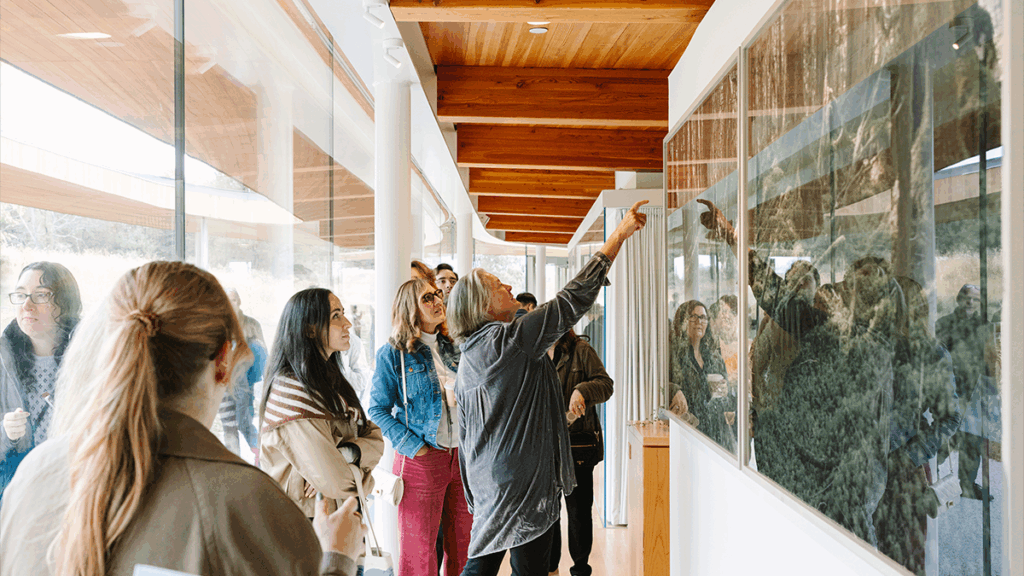
During Grace Farms’ 10-year anniversary last October, visitors explored the Taan Forest through James Florio’s photography in the Library.
Like Thomas Demand’s photographic work in our Library that captures the iterative process of designing the River building, Florio captured the journey to the Taan Forest in his photographic work Haida Gwaii, 2025. “Florio’s work serves as permanent reminder that what we build here – physically, programmatically, spiritually – is always in conversation with the natural world around us. And with whom,” said Prince in her Lecture with Concert in January.
In a review of The Serviceberry, The Guardian says Kimmerer’s book is a “call to action for ‘ordinary people’ everywhere, rather than an arcane technical treatise for experts.” Kimmerer reminded us in her lecture that we can all contribute to the care of the land. “Because in Potawatomi ways, we acknowledge that every one of us, when we were given the gift of life here on Earth, we were given a gift to carry with us and a responsibility to use it for life,” she said.
Summer Events
Throughout the year, people are invited to explore nature and how to care for the Earth through hands-on workshops led by our Horticulture and Education Teams.
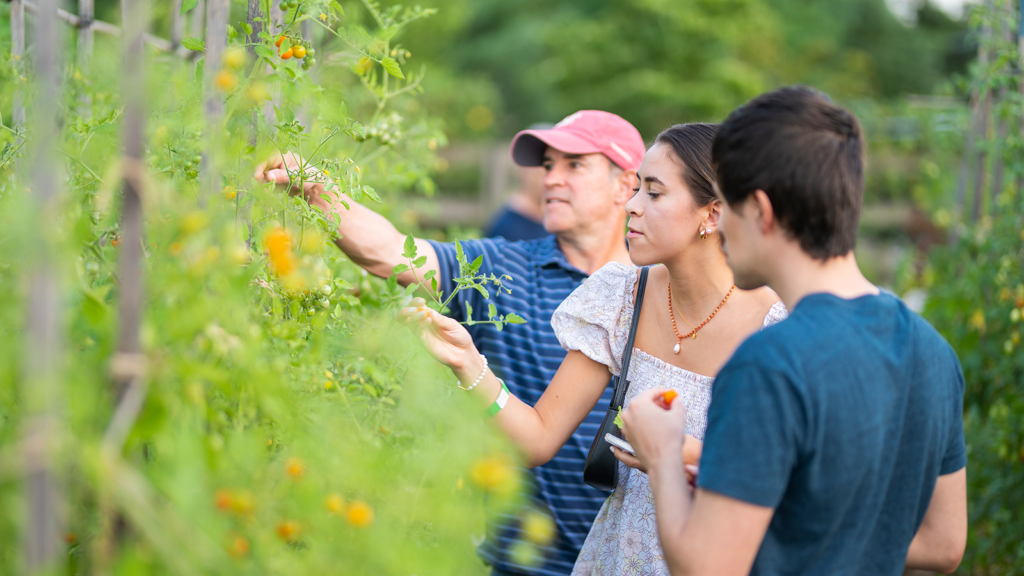
Visitors in our 1,450-square-foot garden explore the benefits of creating a biodiverse garden.
To view the events, time and dates.
Pop-up Talk | Noticing Nature: Nests
Thursday, June 4, 1:00 pm – 1:30 pm (series)
Learning with Nature | Tomato Loves Basil
Saturday, June 20, 10:30 am – 12:00 pm
Tuesday, July 7, 14, 21, 28, 10:00 am – 12:00 pm (series)
Learning with Nature | Edimental Fruit Trees
Saturday, July 18, 10:30 am – 12:00 pm
Learning with Nature | Monarch Migration
Saturday, August 22, 10:30 am – 12:30 pm
About Grace Farms
Grace Farms is a cultural and humanitarian center in New Canaan, Connecticut that brings people together across sectors to explore nature, arts, justice, community, and faith at the SANAA-designed River building and Barns on 80 acres of publicly accessible natural landscape. Since opening in 2015, Grace Farms has welcomed 1 million visitors from around the world to experience its unique integration of arts, architecture, nature, and purpose.
As a destination for arts and culture, Grace Farms presents innovative programming in music, visual and performing arts while fostering contemplation and connection through architecture and nature. Its humanitarian work includes leading the Design for Freedom movement to eliminate forced labor in the building materials supply chain and advancing initiatives to foster more grace and peace locally and globally.
The integration of cultural programming and humanitarian action reflects Grace Farms’ collaborative approach to generating new outcomes and meaningful change.
Membership
Grace Farms members enjoy early access to program registration, a 20% discount on paid programs, retail, and dining, and so much more.
Becoming a member helps us advance our mission to pursue a more peaceful world and supports the preservation of the River building and its surrounding 80 acres.
For more information, visit gracefarms.org/membership.
Visit our calendar of events to learn more about upcoming programs.
Sign-up for our newsletter
Follow us
@gracefarmsct #gracefarms