“Our natural, living landscapes inherently hold awe and wonder, so by preserving and honoring these 80 acres and long vistas, we started off on the right foot.” — Sharon Prince
In Grace Farms’ inaugural Grace Farms Lectures with Concert, Sharon Prince, CEO and Founder of Grace Farms, noted that “awe” can arise from the vastness of nature, encounters with art and architecture, collective gatherings, profound kindness, or even big ideas and epiphanies. “Because we have a basic need for awe wired into our brains and bodies, finding awe is easy if we just take a moment and wonder.”
In pausing, as Prince said, we can encounter the spectrum of awe and wonder. The space of Grace Farms, 80 acres of natural, preserved landscape, along with the programs developed around our nature initiative, invites reflection and discovery. And so, it was during a recent birdwatching walk at Grace Farms where our birding expert Brian O’Toole, a Board of Directors member for the Connecticut Ornithological Association, discovered a pair of Bobolinks in the meadows. This is a big deal for several reasons.

Male adult and female Bobolink. Photo by Ruhikanta Meetei, a nature photographer widely recognized for his award-winning wildlife photography. This won the Audubon Photography Awards.
Like many bird species, Bobolink populations have been declining due to habitat loss. As a result, they are listed as an “Orange Alert Tipping Point” species, according to CornellLab. Tipping Point species, which range from Red, Orange and Yellow alerts, have lost more than 50% of their populations over the past 50 years. Science’s 2019 study raised the alarm that North America lost nearly three billion birds since 1970. “In less than half a century, the avian population of the continent has declined by some 29 percent, or more than one in four birds.”
The Bobolink has distinct markings. “No other North American bird has a white back and black underparts (some have described this look as wearing a tuxedo backwards),” explains Cornell. It’s also one of the world’s most “impressive songbird migrants,” traveling 12,500 miles to and from southern South America every year. “Throughout its lifetime, it may travel the equivalent of 4 or 5 times around the circumference of the earth.”
Bobolink nest in hayfields and meadows. But overdevelopment, including clearing land for agriculture and housing, is removing their ground habitats. So, the recent discovery, given Bobolinks’ declining numbers, was likely a “euphoric, heart-racing feeling,” as the National Audubon Society describes adding a coveted species to a birder’s “life list.” While new birdwatchers may not have the years of experience in spotting and identifying birds, the Cornell Lab of Ornithology launched Merlin, a free bird ID app. Since launching in 2014, 10 million active users around the world allow “neophytes” to run the app in the background to help them identify birds.
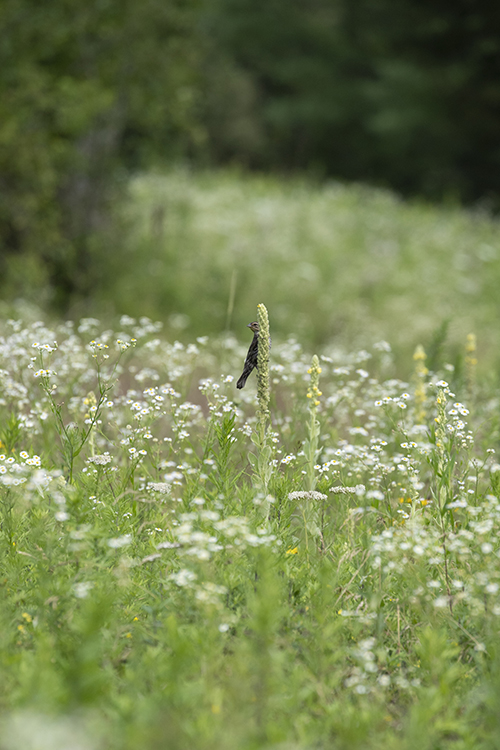
The restored meadows, woodlands, and wetlands at Grace Farms is a haven for all wildlife including birds, butterflies, and more. Photo by Julien Jarry
Discoveries like these, often referred to as the “unicorn effect,” trigger a surge of adrenaline and awe. It’s a term coined by birder and best-selling author Christian Cooper featured in HBO’s 2012 documentary, Birders: The Central Park Effect. “You know there’s a bird out there because you’ve seen pictures of it, read about it in books, seen it in the field guide, and one day you’re out there and there it is in real life as if a mythological creature has come to life,” Cooper said in an interview in CornellLab’s All About Birds.
Habitat Restoration
Birds speak to us through their behavior, providing vital information on habitats and biodiversity. Since its founding in 2015, Grace Farms has invested in restoring the natural habitats of the former equestrian facility. Over the years, thousands of native plants have been planted to rebuild the meadows, providing a food source for pollinators, and as it turns out a habitat for Bobolinks. In 2024, for instance, 18 pounds of seeds were sown, potentially growing over three million native grasses and pollinator plants.
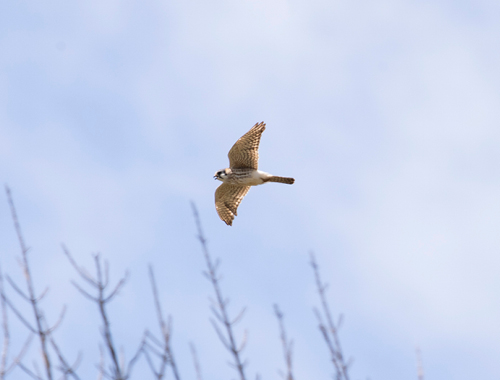
American Kestrel, North America’s smallest falcon, flying over the trees at Grace Farms. Photo by Julien Jarry
When Grace Farms opened, there were 40 species of birds on site. Today, through these restorative efforts more than 140 species of birds now reside at Grace Farms including the American Kestrel, which was listed as a threatened species on Connecticut’s Endangered, Threatened, and Special Concern Species list in 2004. Besides restoring biodiverse habitats, Grace Farms installed kestrel boxes for North America’s smallest falcon, so when they return from overwintering in warmer locations, as far away as Central America, they would have a place to nest and raise their chicks.
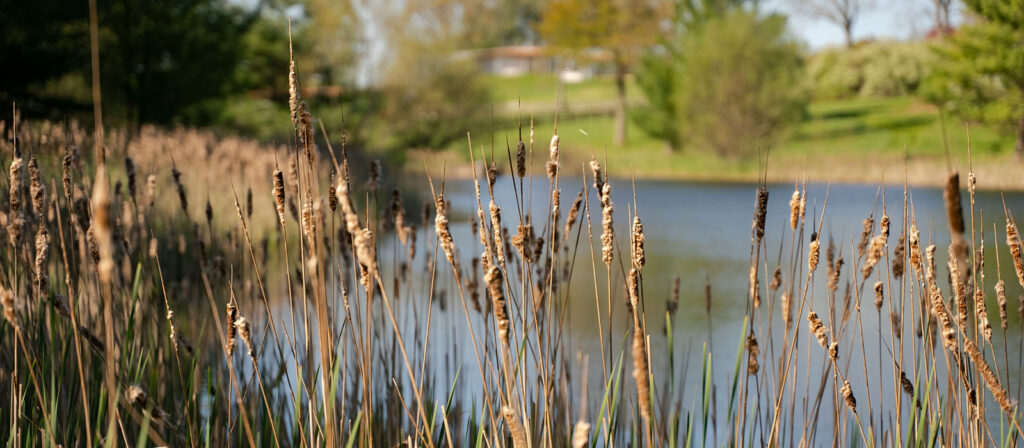
Nearly 80 acres of 10 biodiverse habitats including native meadows, ponds, woodlands, and wetlands, provide shelter and food for all wildlife at Grace Farms.
Turning the former equestrian facility into 10 biodiverse habitats including native meadows, woodlands, and ponds, has been a success story. It’s about building an entire ecosystem of ecological webs, or symbiotic communities that support each other, said Kim Kelly, Director of Horticulture at Grace Farms. “We may focus on supporting the pollinators with the installation of native plants. In turn, while these plants support our essential pollinators such as bees and butterflies, the caterpillars or larvae serve as an important food source for birds especially when they are young. We don’t just focus on supporting one aspect of nature, but we take a holistic approach that supports all nature and bio-diversity.”
“Birds are telling us—in their behavior, in their dwindling numbers, in their silence—that we must take action now …” — National Audubon Society.
Kelly cites the work of Doug Tallamy, an entomologist at the University of Delaware, who has studied the relationship between caterpillars and bird diversity. His research highlighted how native plants support caterpillars and the role they play in sustaining bird populations, including feeding young birds. Ninety-six percent of terrestrial birds rear their young on insects,Tallamy said. (National Wildlife Federation)
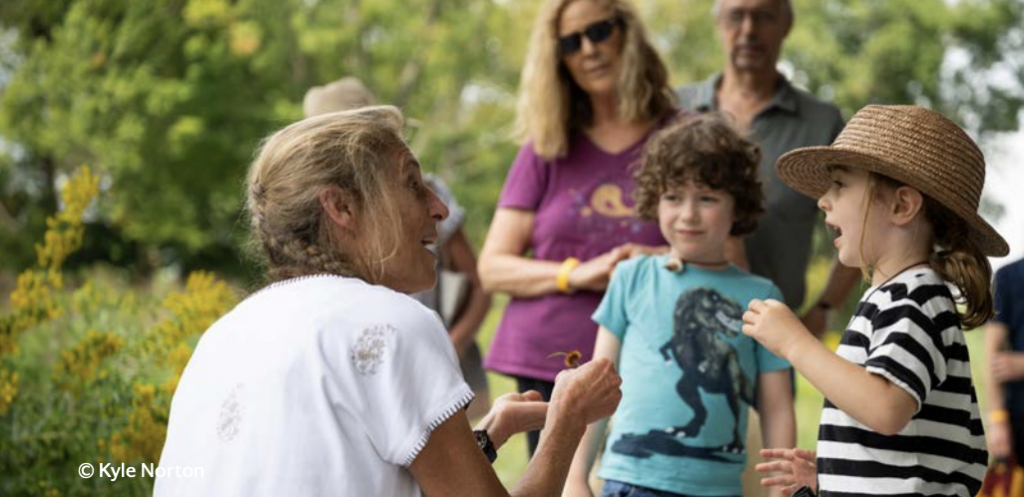
Kim Kelly leading a nature class. Photo by Kyle Norton
In a three-year study undertaken by the University of Delaware and the Smithsonian Migratory Brid Center, which focused on the Carolina chickadee and how nonnative trees in cities and suburbs affect the availability of food for birds during the breeding season, the research found that native insects require native plant species to feed on.
“Because native insects did not evolve with nonnative plants, most of them lack the ability to overcome the plants’ chemical defenses so cannot eat them. Caterpillars, a particularly important food source for birds, are especially picky about what they feed on. Like the famous monarch butterfly larva, which must have milkweed to survive, more than 90 percent of moth and butterfly caterpillars eat only particular native plants or groups of plants,” according to an article in National Wildlife Federation.
“If the biggest drivers of bird decline are habitat destruction from over development, deforestation, and large-scale agriculture, then protecting our forests, wetlands, grasslands, and ecosystems, seems to offer a solution.” — Peter Marra, Professor, Georgetown University
Supporting the Birds
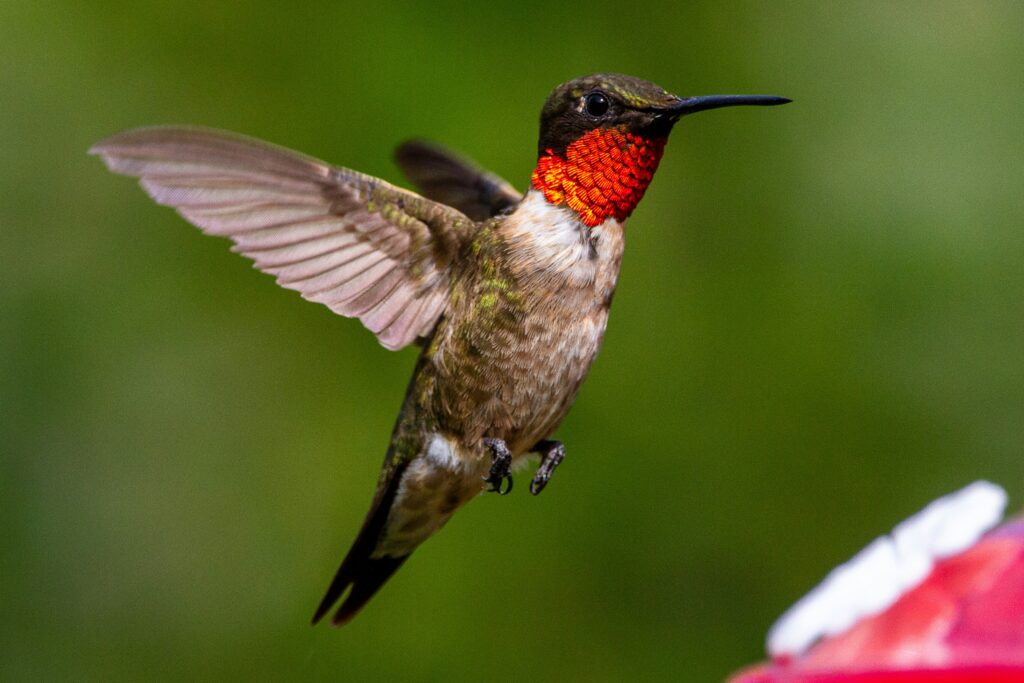
An adult male ruby-throated hummingbird. Photo by Joshua Cotten
Grace Farms has been removing invasive plants over the years that push out native plants. With the fast-growing invasives removed, native trees and plants can replace them to begin to restore ecological and biodiversity balance. In addition, Kelly and her team have been installing specific plants to support specific bird species such as the hummingbird. “As these tiny, colorful birds zip through the air, they flap their wings amazingly fast, from 20 to almost 100 times per second. Those rapidly moving wings make the humming noise that gives hummingbirds their name,” according to the National Audubon Society.
While the Bobolinks make their nests on the ground, the hummingbirds build their thimble-sized nests in sheltered trees, shrubs, and thickets, usually 10 to 90 feet above the ground, according to Birds & Blooms. Like Bobolinks, hummingbirds are also in decline due to habitat loss, climate change, and declines in insects which are 20% of their diet, according to the U.S. Fish & Wildlife Service. Six hummingbird species including Rufous hummingbird, Allen’s hummingbird, and the broad-tailed hummingbird, are on the Birds of Conservation Concern list.
A Source of Hope and Happiness
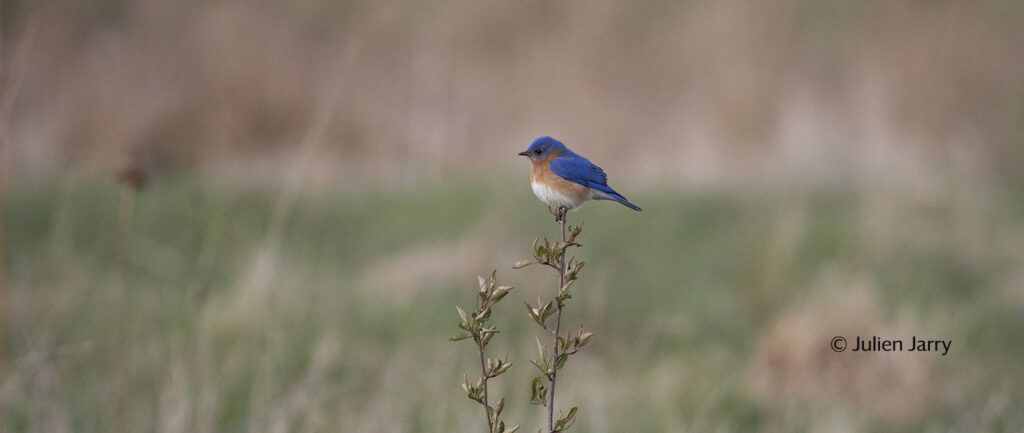
Eastern Bluebird in the meadows of Grace Farms. Photo by Julien Jarry
The Eastern Bluebird populations plunged in the early 20th century, when the non-native House Sparrows and European Starlings were introduced into the United States, which are also “cavity-nesters and much more aggressive than bluebirds,” according to the American Bird Conservancy. The decline was reversed thanks to organizations such as the North American Bluebird Society and Sialis, which encouraged the building of nesting boxes and bluebird nest box trails, and more. The small, year-round Eastern Bluebird, and bluebirds in general, are also a welcome sign that spring has arrived, as well as a symbol of hope and happiness.
To support the Eastern Bluebird population, Grace Farms has built and installed bluebird houses on site. The houses are made from the Western red cedar wood, ethically and sustainably grown in the Haida Nation’s Taan Forest, located in the British Columbia archipelago of Haida Gwaii. In 2025, SANAA redesigned the River building’s half mile of curved horizontal wooden fascia and replaced it with vertical red cedar planks. The unused scraps of wood were used to build the bird houses, along with recycled black locust wood harvested on site that the houses sit on.
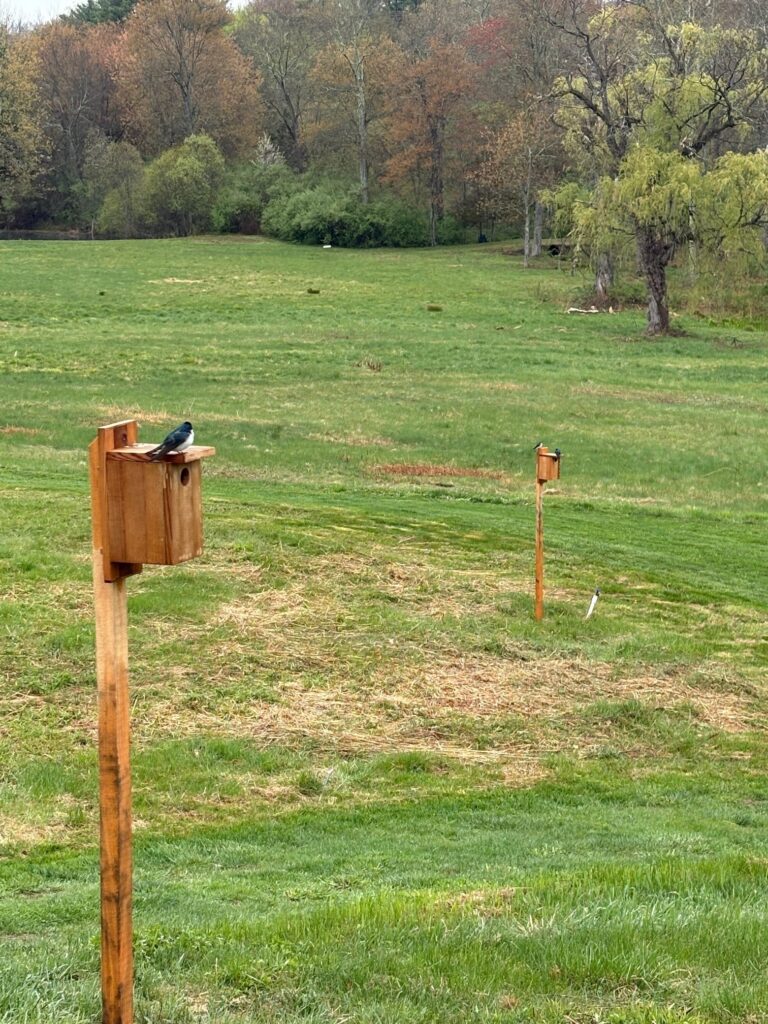
The bluebird boxes installed at Grace Farms. Although installed for bluebirds, Tree Swallows were also checking out the new neighborhood and housing. As of late June, each made claim to their new homes. Photo by Kim Kelly
Benefits of Birdwatching
It’s not only bluebirds that are a source of hope and happiness. Sharing our existence with birds in general provides us joy. During the pandemic, in particular, there was a surge in birdwatching. Engaging with nature was a salve or comfort during this uncertain time. In 2022, there were about 96 million American birders or 37% of the adult population age 16 and older (3 out of 10 Americans), according to the U.S. Fish and Wildlife Service. It’s not only adults that are grabbing a pair of binoculars, but more children are also taking up birdwatching, as NPR reports. On our birdwatching walks, we’ve also noted the increase in young birdwatchers joining what for many will become a lifelong adventure and pursuit.
“Birding isn’t just an activity; it’s a way of life that profoundly influences how people connect with the world around them.” — U.S. Fish and Wildlife Service
It also profoundly impacts our mental wellbeing. Numerous studies have shown that even getting out in nature can be a natural stress buster. “Birdwatching—or even simply listening—can lead to an array of mental-health benefits in humans, including long-lasting stress relief,” according to Time Magazine. Neuroscientists are also discovering that birding is good for brain health as well, improving human memory and learning functions that are used in the identification of birds, according to Audubon Magazine. Developing an eye for detail needed in birding improves the brain’s neuroplasticity. “Gaining deep expertise in a subject area can change your mental scaffolding.”
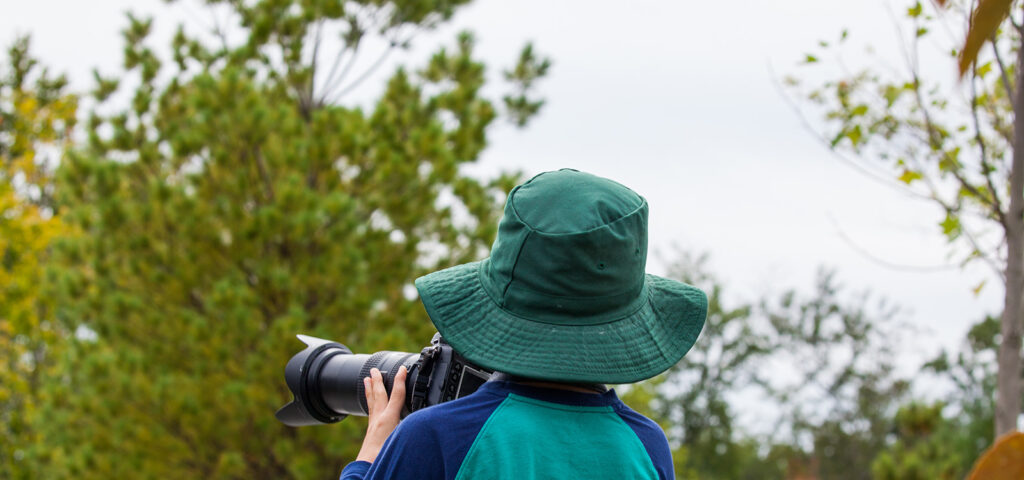
Grace Farms welcomes people from all ages, backgrounds, and experience levels, to participate in birdwatching events. More and more young people are engaging in birdwatching.
Birdwatching—or even simply listening—can lead to an array of mental-health benefits in humans, including long-lasting stress relief. — Time Magazine
While the on-going research on the mental-health benefits of birdwatching accumulates, discovering a new bird for the first time also comes with benefits: tapping into the feelings of awe and wonder. As Prince emphasized in her lecture, “Awe provides significant social benefits – it fosters generosity, connects individuals to something larger than themselves, and offers a vital counterbalance to modern life’s individualism, stress, and division. We become more receptive to new information, new experiences, and life’s deeper meaning.”
Less tethered to technology while pausing and reflecting at Grace Farms, perhaps we can cast our views upward to catch a glimpse of these magnificent creatures, or in the case of the Bobolinks, downwards toward the meadows and beyond.
_____________________
Nature Events
To view the events, time and dates.
Tuesday, July 7, 14, 21, 28, 10:00 am – 12:00 pm (series)
Learning with Nature | Edimental Fruit Trees
Saturday, July 18, 10:30 am – 12:00 pm
Learning with Nature | Monarch Migration
Saturday, August 22, 10:30 am – 12:30 pm
____________________
About Grace Farms
Grace Farms is a cultural and humanitarian center in New Canaan, Connecticut that brings people together across sectors to explore nature, arts, justice, community, and faith at the SANAA-designed River building and Barns on 80 acres of publicly accessible natural landscape. Since opening in 2015, Grace Farms has welcomed 1 million visitors from around the world to experience its unique integration of arts, architecture, nature, and purpose.
As a destination for arts and culture, Grace Farms presents innovative programming in music, visual and performing arts while fostering contemplation and connection through architecture and nature. Its humanitarian work includes leading the Design for Freedom movement to eliminate forced labor in the building materials supply chain and advancing initiatives to foster more grace and peace locally and globally.
The integration of cultural programming and humanitarian action reflects Grace Farms’ collaborative approach to generating new outcomes and meaningful change.
Membership
Grace Farms members enjoy early access to program registration, a 20% discount on paid programs, retail, and dining, and so much more.
Becoming a member helps us advance our mission to pursue a more peaceful world and supports the preservation of the River building and its surrounding 80 acres.
For more information, visit gracefarms.org/membership.
Visit our calendar of events to learn more about upcoming programs.
Sign-up for our newsletter
Follow us
@gracefarmsct #gracefarms