
Nestled in the forested mountains of Sumatra’s Gayo Highlands, farmers of the women-led Ketiara Coffee Cooperative grow and harvest Arabica green beans with the utmost skill and care.
When brewed, these beans produce a decadent aroma and transportive taste, carrying notes of cedar, cocoa, and spices. They grow in the shade, high above sea level, rooted in light and fluffy volcanic soil, among the unmistakable joy, conversation, song, and laughter of a tight-knit community.
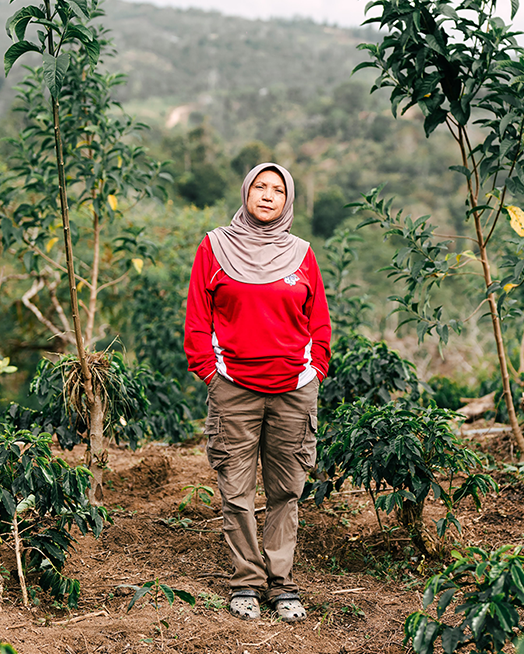
Ibu Rahmah, Founder and Chairwoman of Ketiara, is among the forces that pull this community together with her tenacity, ingenuity, and leadership.
An entrepreneur and leader, she’s known internationally for the expertise she’s cultivated for over 25 years in the coffee business. Both of her parents were coffee farmers. She left high school to help her father with finances and never returned to class. Instead, she followed her father into the business and took her involvement one step further: she made the leap to learn about exporting.
Today, she is the only woman working as a coffee trader in the Gayo Highlands in Central Aceh.
Rahmah is also celebrated both near and far for her trailblazing efforts to uplift and empower women farmers, who, as members of the co-op, develop a strong connection to the land, to each other, and most importantly to Rahmah, achieve financial independence. Ketiara regularly offers training and education for its farmers.
The cooperative is made up of 1,600 farmers. 1,100 are women.
Due to the Gayo Highlands’ remote location, Ketiara relies on buyers and roasters to promote its coffee. But to bring coffee to market, Ketiara farmers often travel great distances from remote villages.
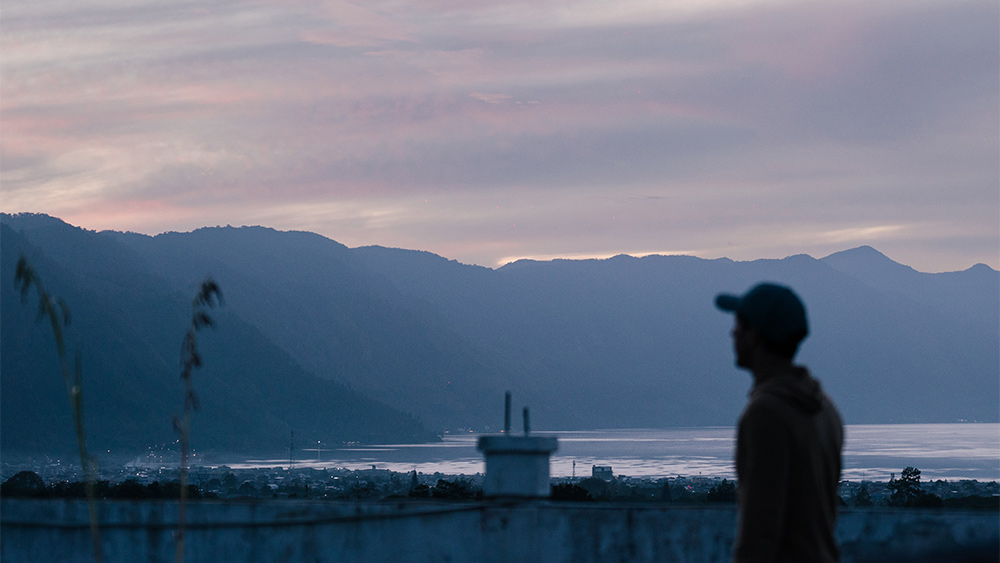
The remote location poses other challenges. Many of the farmers have children who attend secondary school in Takengon, a town in Aceh on the shores of Lake Laut Tawar. When families visit their children, embarking on a journey sometimes more than two hours away from home, they often have nowhere to stay once they arrive in town. Without a safe place to spend the night, visits to children are reduced to day trips.
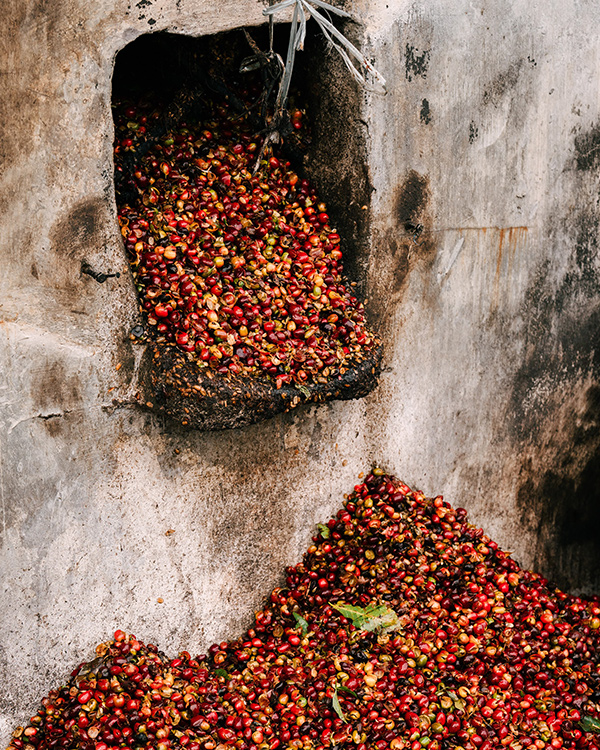
Ketiara is organic and Fairtrade certified.
Under Rahmah’s visionary leadership, the cooperative exports about 22,680 bags (60 kg/bag) of coffee per year. It exports to several European and Asian buyers and roasters, with most coffee bound for the U.S.A.
Among Ketiara’s strong partnerships is Grace Farms Tea & Coffee, a Certified B Corp whose values are also rooted in community and sustainability.
Grace Farms Tea & Coffee is the only U.S.-based tea brand that sources both Fairtrade International certified and organic ingredients. Ketiara’s organic and Fairtrade certified coffee beans are a cornerstone of several of their blends.
Countless people across nations, across oceans, from a tapestry of cultures, amidst busy lives, unknowingly start their day with the same ritual: savoring the rich aroma of cedar, cocoa, and spice carried by the steam wafting from a cup of coffee made with Ketiara’s beans, grown in volcanic ash, high above sea level, surrounded by laughter, song, and joy.
Countless people across nations, across oceans, from a tapestry of cultures, amidst busy lives, wake up every morning full of potential to make the world a better place. And they do, every single time they pour a cup of ethically and sustainably-sourced coffee grown by people who are paid fairly and part of a transparent supply chain.
Grace Farms Tea & Coffee was co-founded by Adam Thatcher and Sharon Prince, CEO & Founder of Grace Farms, a cultural and humanitarian center in New Canaan, Connecticut.
The Certified B Corp demonstrates what Grace Farms advocates for: ethical and sustainable supply chains.
Grace Farms’ humanitarian mission to create more grace and peace in local and global communities includes ending modern slavery. Invigorated by this mission, the Design for Freedom movement to eliminate forced labor in the building materials supply chain was realized by Sharon Prince in 2020, and Grace Farms Tea & Coffee was founded in 2021. The two initiatives work together to realize a world free of forced labor. 100% of Grace Farms Tea & Coffee’s profits support Design for Freedom.
Thatcher has visited Sumatra on several occasions, getting to know Rahmah and her cooperative of farmers that make up a transparent and ethical supply chain.
After his last visit to Sumatra, Thatcher brought back to Grace Farms Rahmah’s dream to equip women with tools to be more independent, and the community’s need for a space where they can spend time with their children in safety and peace.
Under Sharon Prince’s visionary leadership, Grace Farms is a new kind of public space. It’s a boundary-defying environment that actively drives humanitarian outcomes and reshapes the approach to global challenges. It’s also uniquely equipped to help steward the construction of new kind of shelter.
“When we first visited the Ketiara Co-op, we were struck by their commitment to sourcing and creating some of the finest organic and Fairtrade coffees. There’s an incredible sense of joy, friendship, and even song that they shared with us. And so, we’ve come back to share with them.”
– Adam Thatcher
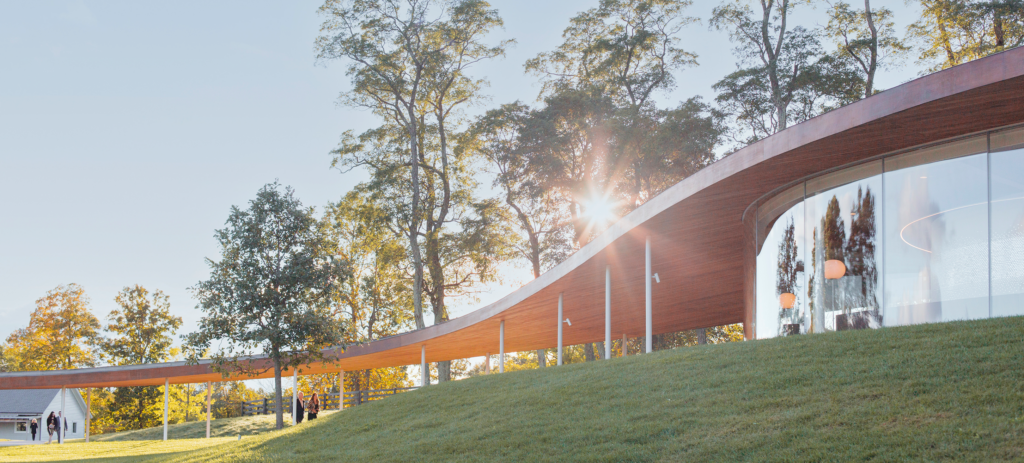
Grace Farms and Slade Architecture are exploring a way to create a community space for the farmers of Ketiara.
Based in New York City, the award-winning Slade Architecture is led by Founding Principles Hayes and James Slade. Hayes Slade, AIA, served as President of the American Institute of Architecture in 2019, and has served as an Architecture Fellow with Design Trust for Public Space and co-authored Design Guidelines for affordable housing for the NYC Department of Housing Preservation and Development. James Slade FAIA, IIDA, LEED-AP, is a past co-chair of the NY AIA Awards Committee. His awards include a NYC Design Excellence in Public Architecture Award, Progressive Architecture (PA) Awards, AIA Awards, and Interior Design Best of Year (BoY) Awards.
The firm is a longstanding contributor to the Design for Freedom movement and collaborators in developing the Design for Freedom Toolkit.
In July 2025, Adam and Hayes and James of Slade Architecture, packed their bags and headed to Sumatra, Indonesia.
Alongside Ibu Rahmah, Adam Thatcher, Hayes and James Slade immersed themselves in the Ketiara community to determine how it could support Ketiara through a meaningful and lasting building made with ethically-sourced materials free of forced labor.
The team spoke often with farmers, families, cooperative members, cultural leaders, and government representatives. Delicious dinners were shared. People took turns picking up the microphone to sing karaoke on a stage made specifically for this visit. Music, and the unmistakable laughter and joy of a tight-knit community echoed through the forested mountains of Sumatra’s Gayo Highlands.
“We’re working to find what would have the most impact and benefit to the community here. We had a couple of meetings with groups of women to discuss what they needed.”
– James Slade, FAIA, IIDA, LEED-AP
Through these insightful meetings and conversations, the community made it clear that above all, they hoped for a safe place to stay while visiting children and spending time with family in Takengon. But another hope emerged, too. And the vision for something greater than a rest house began to form.
Typically, members of the community only have three places to gather: at home, the farm, and the mosque. Each of these areas play an important role in their everyday lives. But they also voiced a desire for somewhere they can take professional trainings, learn English, build entrepreneurial skills, dance and sing together, and simply, relax. As of right now, there’s no dedicated, multi-faceted place to house this kaleidoscope of enriching activities.
Grace Farms and Slade Architecture are exploring whether this new kind of rest house can be that multi-faceted place—as well as something more. A place that recognizes Ibu Rahmah and Ketiara’s contributions not just as workers in a global supply chain, but as entrepreneurs, community builders, caretakers, and leaders. A place that could support and reflect Ketiara’s culture centered around women’s empowerment, learning, and entrepreneurship that Ibu Rahmah has fostered.
Adam, Hayes, and James scouted vacant lots within Takengon, as well as various landscapes surrounding the town.
“Wood is a very valuable, international building material and that’s no exception here in Sumatra. In fact, the majority of the structures we see are wood. And wood meranti was clearly a very strong, durable wood that everybody immediately acknowledged was certainly one of the best, if not the best. We learned that the same wood meranti is the wood we had seen the night before at the farmhouse. ”
– Hayes Slade, AIA
Adam, Hayes, and James returned to the U.S. with a better understanding of the land around Takengon and the sustainable and ethically-sourced materials that could be used in construction.
By leveraging open-source design principles, this project seeks to create globally adaptable solutions that uphold and demonstrate Design for Freedom principles, and a new era of buildings that prioritize ethical and sustainable supply chains.
In October, Ibu Rahmah and her team traveled to Grace Farms to talk to visitors during an interactive coffee tasting as part of Grace Farms’ 10 Year Celebration.
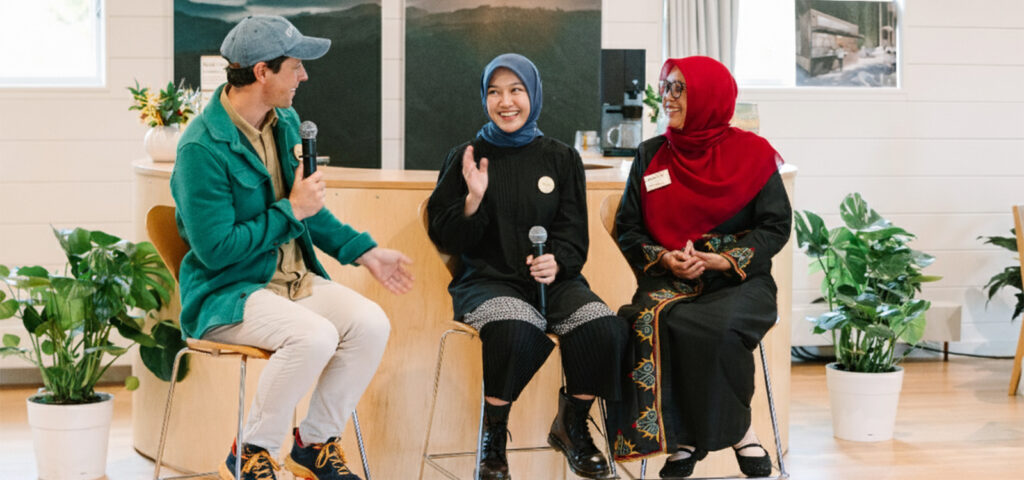
The following Monday, Rahmah and her team traveled to New York City. It was a rainy, windy, and busy morning when they met with Adam, Sharon, Hayes, and James at Slade Architecture’s office. Gathered around the table, among cups of coffee and tea, they put their best ideas together and looked forward to the project’s next steps.
Grace Farms and Slade Architecture invite the public into this Rest House Project during four upcoming workshops to be held at Grace Farms:
- November 8, 2025 (1 pm)
- January 10, 2026 (to coincide with Grace Farms Lectures | Sharon Prince)
- January 31, 2026 (during the Humanity in Architecture Film Festival)
- March 26, 2026 (during the 2026 Design for Freedom Summit)
Get to know the women and work of the Ketiara Coffee Cooperative, the mission behind Grace Farms Tea & Coffee, and the importance of sustainable and ethical building design as you follow along on this first-of-its-kind journey.
Join us for a Workshop





Translate »